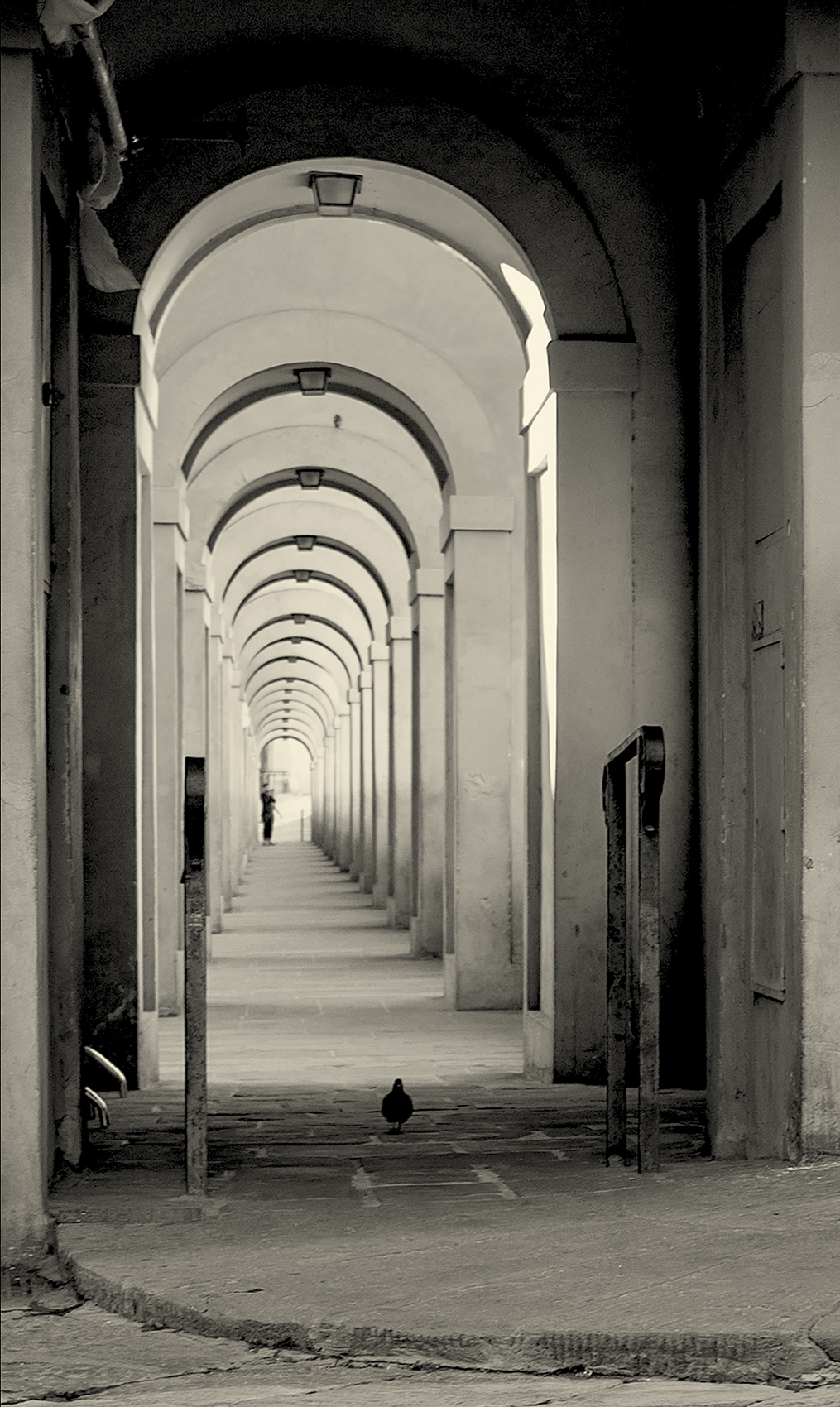
In 1565, Cosimo I de' Medici wanted to walk from his government offices in the Uffizi to his private residence at the Palazzo Pitti without ever setting foot on the street. The reason was practical: assassination was a genuine occupational hazard for Florentine rulers. He gave Giorgio Vasari five months to build a solution, and Vasari delivered a 750-meter enclosed corridor that runs above the shops of the Ponte Vecchio, through church walls, and over rooftops — essentially an elevated private highway connecting the two palaces.
The corridor crosses above the Ponte Vecchio, curves around the medieval Torre dei Mannelli (whose owners refused to let Vasari demolish it, forcing him to build bracket supports around it instead), passes through the facade of the church of Santa Felicita where the Medici could attend Mass from a private balcony without mixing with commoners, and ends at the Boboli Gardens. Five months. In the sixteenth century. Without power tools.
For centuries, the corridor housed the world's largest collection of artist self-portraits — over 700 works spanning from Raphael to Chagall. The passage was famously difficult to access, requiring special permits and connections. After years of closure for restoration, the corridor has been gradually reopening to limited visitor groups, making it one of the most exclusive art walks in the world.
The corridor is also the reason the Ponte Vecchio has gold shops instead of butchers — when Cosimo walked overhead and smelled the meat markets below, his descendant Ferdinando I ordered the butchers replaced with goldsmiths. Royal nose, permanent consequences.
Verified Facts
Built by Giorgio Vasari in just five months in 1565 to connect the Uffizi to the Palazzo Pitti
The corridor is 750 meters long and runs above the Ponte Vecchio and through church walls
The owners of Torre dei Mannelli refused to let Vasari demolish their tower, forcing him to build around it
The corridor housed over 700 artist self-portraits from Raphael to Chagall
Get walking directions
Centro Storico, Florence, Italy