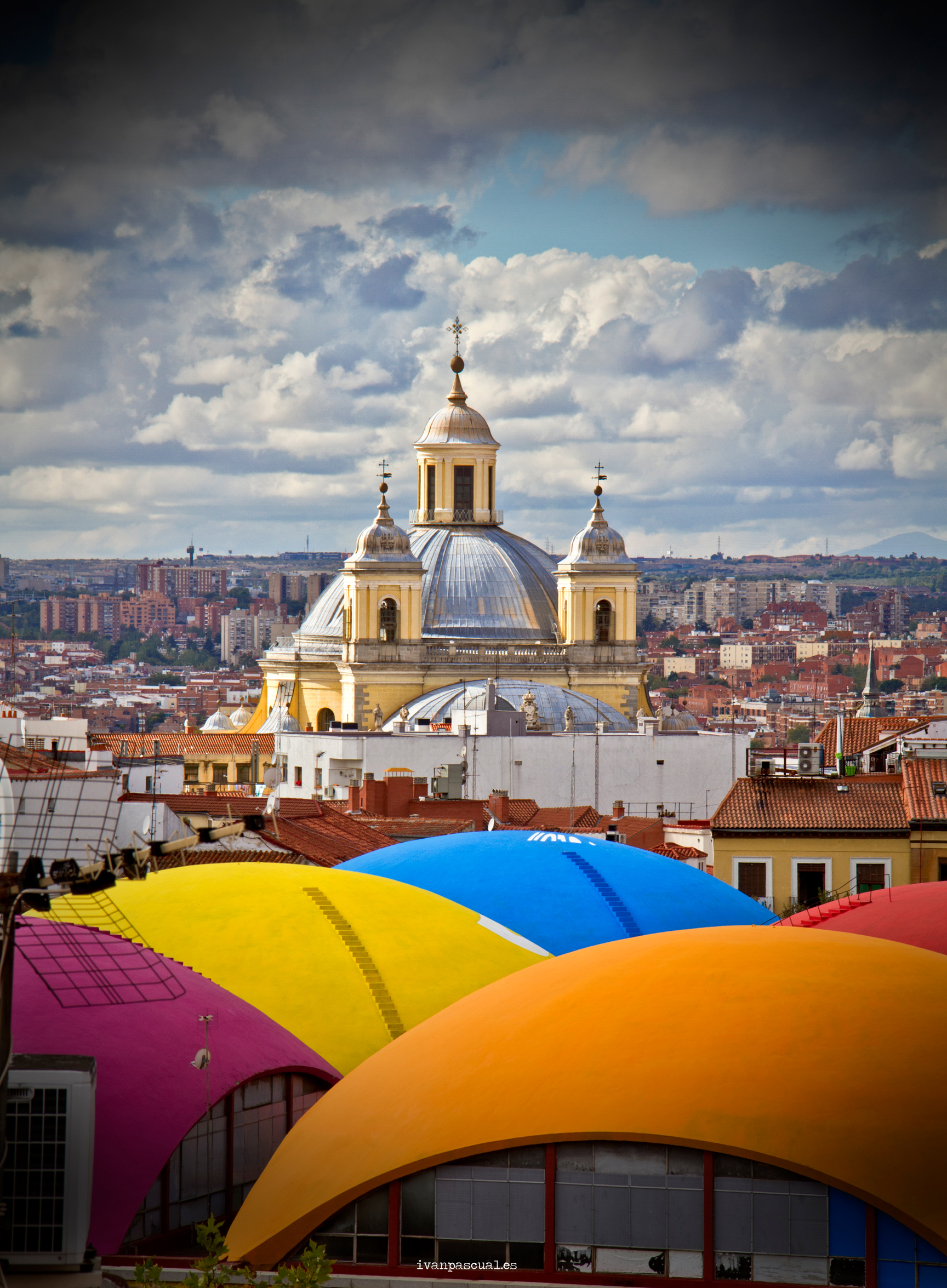
This is where Madrid began. La Latina sits on the exact footprint of the 9th-century Islamic fortress — the original walled citadel of Mayrit, founded by Muhammad I of Cordoba around 860 AD as a military outpost to defend Toledo from Christian kingdoms to the north. The narrow, winding streets follow the medieval street plan almost perfectly, tracing paths that Muslim soldiers and merchants walked over a thousand years ago.
The neighborhood's name comes from Beatriz Galindo, known as "La Latina" for her extraordinary command of Latin. Born around 1465, she became tutor to Queen Isabella I and one of the most educated women in 15th-century Europe. She founded a hospital on this site in 1499, and the neighborhood eventually took her nickname. It's a rare case of a major urban neighborhood being named after a woman — and a scholar at that.
The Plaza de la Paja (Straw Square) was the most important square in medieval Madrid, where farmers brought straw as a tithe to the Church. Today it's a quiet, leafy plaza surrounded by old palaces and churches that most tourists walk right past. The nearby Plaza de la Cebada was the old barley market. These names — straw, barley — are fossils of the agricultural economy that fed a frontier town.
But modern La Latina is all about Sunday. After the Rastro flea market wraps up, the entire neighborhood becomes an outdoor bar. Cava Baja, a narrow street lined with tapas bars and tascas, is ground zero for Madrid's Sunday afternoon ritual: standing in the street with a cana in one hand and a plate of croquetas in the other, shoulder to shoulder with half the city. La Latina on a Sunday afternoon is not a tourist experience — it's Madrid at its most authentically, gloriously social.
Verified Facts
La Latina sits on the footprint of the 9th-century Islamic fortress of Mayrit, founded by Muhammad I of Cordoba around 860 AD
The neighborhood is named after Beatriz Galindo "La Latina," tutor to Queen Isabella I and founder of a hospital here in 1499
Plaza de la Paja was medieval Madrid's most important square, where farmers brought straw as a tithe to the Church
Cava Baja is one of Madrid's most famous tapas streets, especially busy on Sunday afternoons after the Rastro market
Get walking directions
Plaza Paja, Centro, Madrid, 28005, Spain