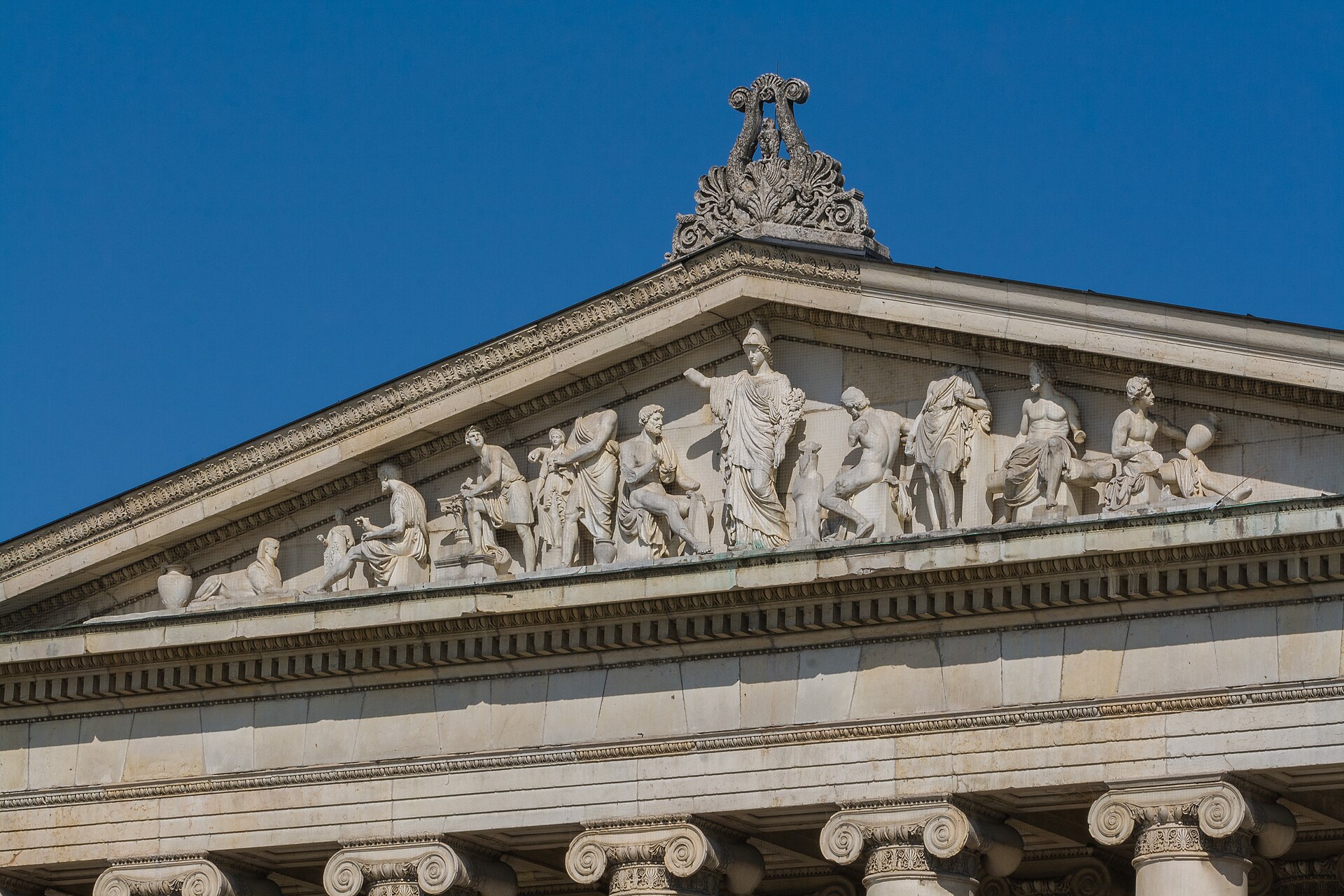
King Ludwig I wanted a German Athens, and Königsplatz was his Acropolis. Between 1816 and 1862, he built a neoclassical ensemble of museums and monuments around a grass-covered square: the Glyptothek on the north side for his Greek and Roman sculptures, the Antikensammlungen on the south for antiquities, and the Propyläen gateway on the west — modelled on the entrance to the Athenian Acropolis. The architecture was a philosophical statement: Bavaria, Ludwig believed, was the rightful heir to classical civilisation. The proportions are impeccable. The ambition is either magnificent or delusional, depending on your view of Bavarian kings.
Then the Nazis arrived and turned Ludwig's classical dream into a nightmare. In 1933, the area around Königsplatz became the administrative heart of the Nazi Party. The grassy square was paved over with 20,000 granite slabs to create a parade ground. Two "Honour Temples" were erected on the east side to enshrine the remains of the sixteen Nazis killed in the 1923 Beer Hall Putsch. Mass rallies, book burnings, and torch-lit ceremonies were staged on the spot where Ludwig had envisioned philosophical contemplation. The juxtaposition was deliberate — the Nazis understood the power of classical aesthetics and weaponised it.
After the war, the Honour Temples were demolished, and the granite paving was ripped up and replaced with grass again in the 1980s. Today Königsplatz has returned to something closer to Ludwig's original vision — an open, green square framed by museums. On summer evenings, open-air cinema screenings and concerts take place here. The NS-Dokumentationszentrum, opened in 2015 on the site of the former Nazi Party headquarters, ensures the square's darkest chapter is documented rather than buried.
Standing on Königsplatz today, you're looking at a physical argument about what classical architecture means — whether it serves philosophy or propaganda, democracy or tyranny. The buildings are identical to what they were in 1935. The meaning has been completely rewritten.
Verified Facts
King Ludwig I built the neoclassical ensemble between 1816 and 1862 to create a "German Athens"
The Nazis paved over the grass with 20,000 granite slabs in 1935 to create a parade ground
Two Honour Temples were built on the east side to enshrine remains of the 16 Beer Hall Putsch dead; demolished after WWII
The NS-Dokumentationszentrum opened in 2015 on the site of the former Nazi Party headquarters
Get walking directions
Maxvorstadt, Munich, Germany