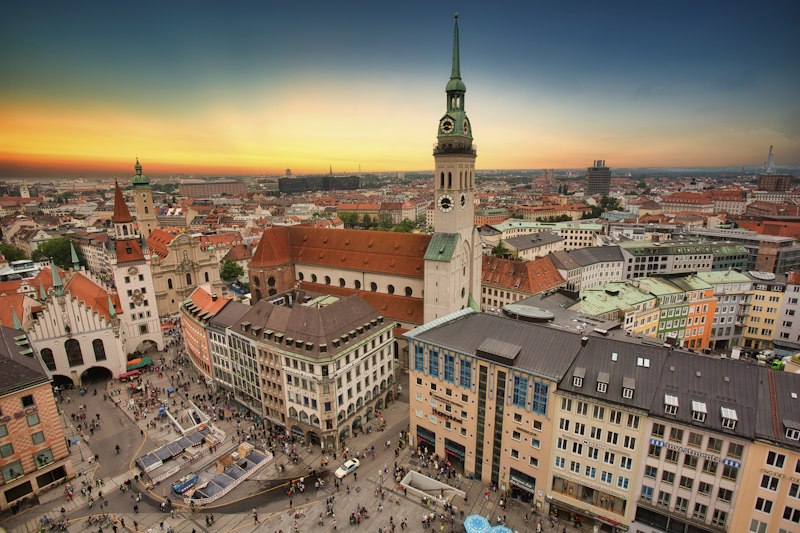
Walking Tours in Munich
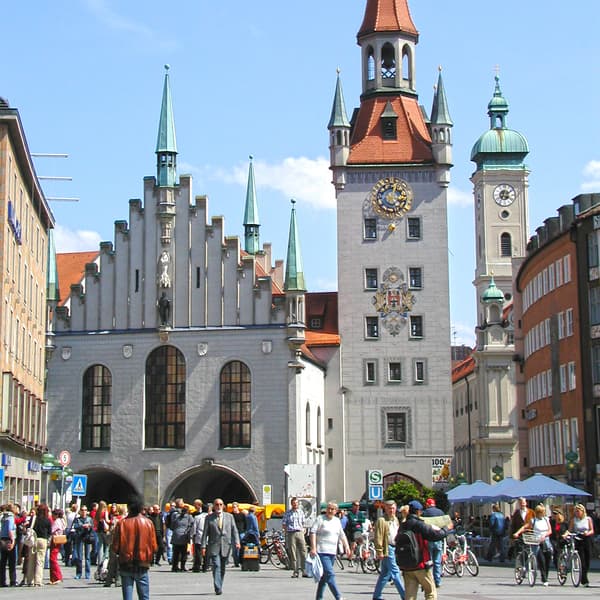
30 Landmarks in Munich
Alte Pinakothek
27 Barer Straße, Maxvorstadt, Munich, 80333, Germany
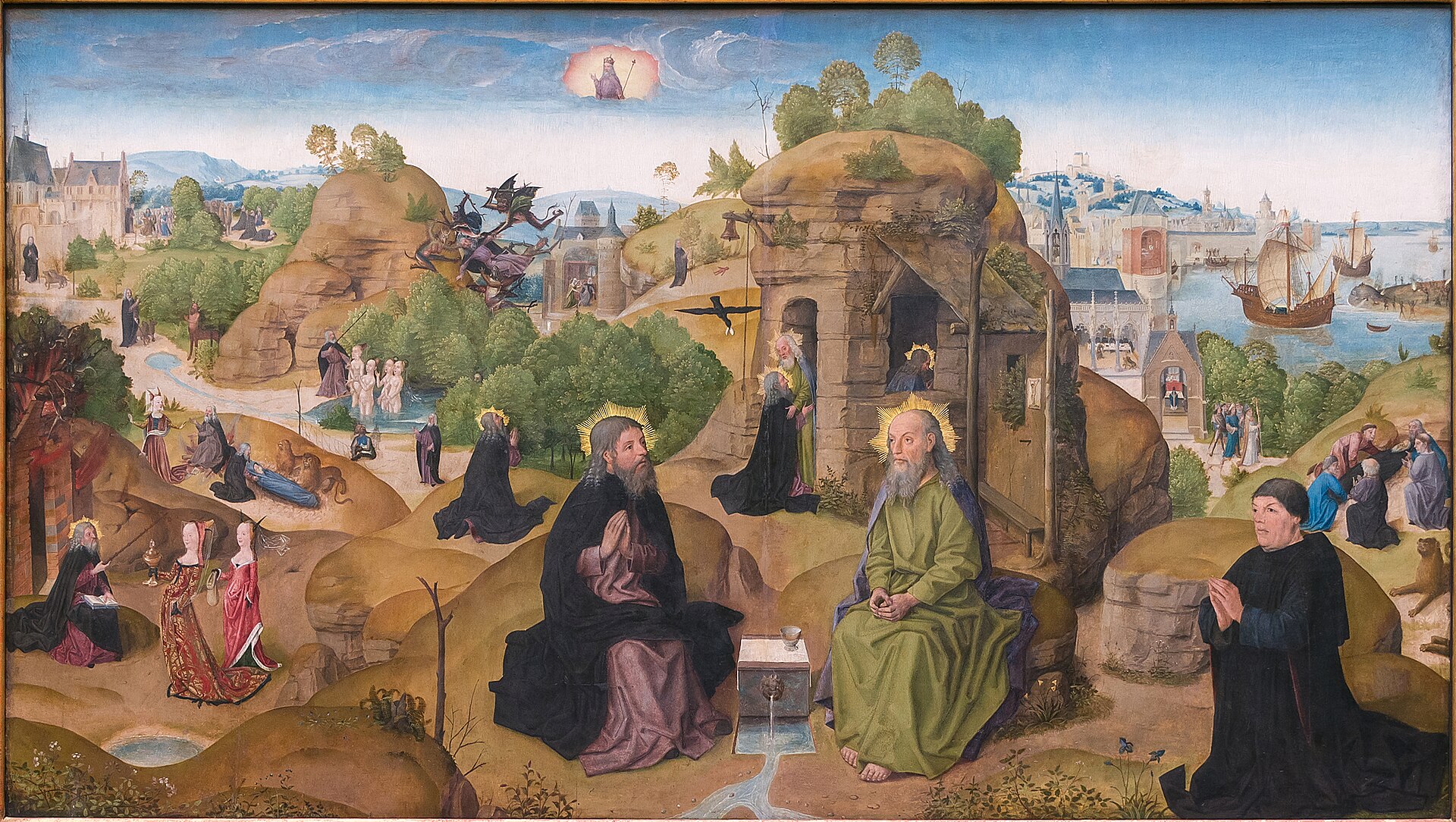
When King Ludwig I opened this gallery in 1836, it was the largest museum building in the world. He commissioned Leo von Klenze — the same architect behind the Glyptothek — to build a palace specifically for the Wittelsbach family's art collection, which had been accumulating since the 1500s. Klenze invented the top-lit gallery: grand halls illuminated by skylights rather than windows, a design so effective that it became the template for art museums worldwide, from London's National Gallery to New York's Met. The collection is staggering in its depth. Over 800 paintings cover European art from the 14th to the 18th century, with particular strengths in early German, Flemish, and Italian Renaissance works. This is the only museum in Germany that owns a Leonardo da Vinci painting — the "Madonna of the Carnation," painted around 1473 when Leonardo was barely twenty-one. Albrecht Dürer's iconic "Self-Portrait" from 1500, with its Christ-like frontal pose and searching gaze, hangs here and remains one of the most reproduced images in Western art. The Rubens collection alone would justify a museum. Ludwig I's ancestors were obsessive Rubens collectors, and the Alte Pinakothek houses one of the world's largest holdings: massive, muscular, exuberant canvases that fill entire walls. "The Great Last Judgement" stretches over six metres tall. Raphael, Titian, Rembrandt, Velázquez, El Greco, and Cranach are all represented with major works, not minor sketches. The building was devastated by bombing in 1944. Its paintings had been evacuated to safety, but the structure itself was gutted. The reconstruction, completed in 1957, deliberately left some bomb damage visible on the exterior brickwork — a decision that was controversial at the time but now reads as honest. The scars are part of the story, just as the art inside survived by being carried to shelter in the dark.
Altes Rathaus
15 Marienplatz, Altstadt-Lehel, Munich, 80331, Germany
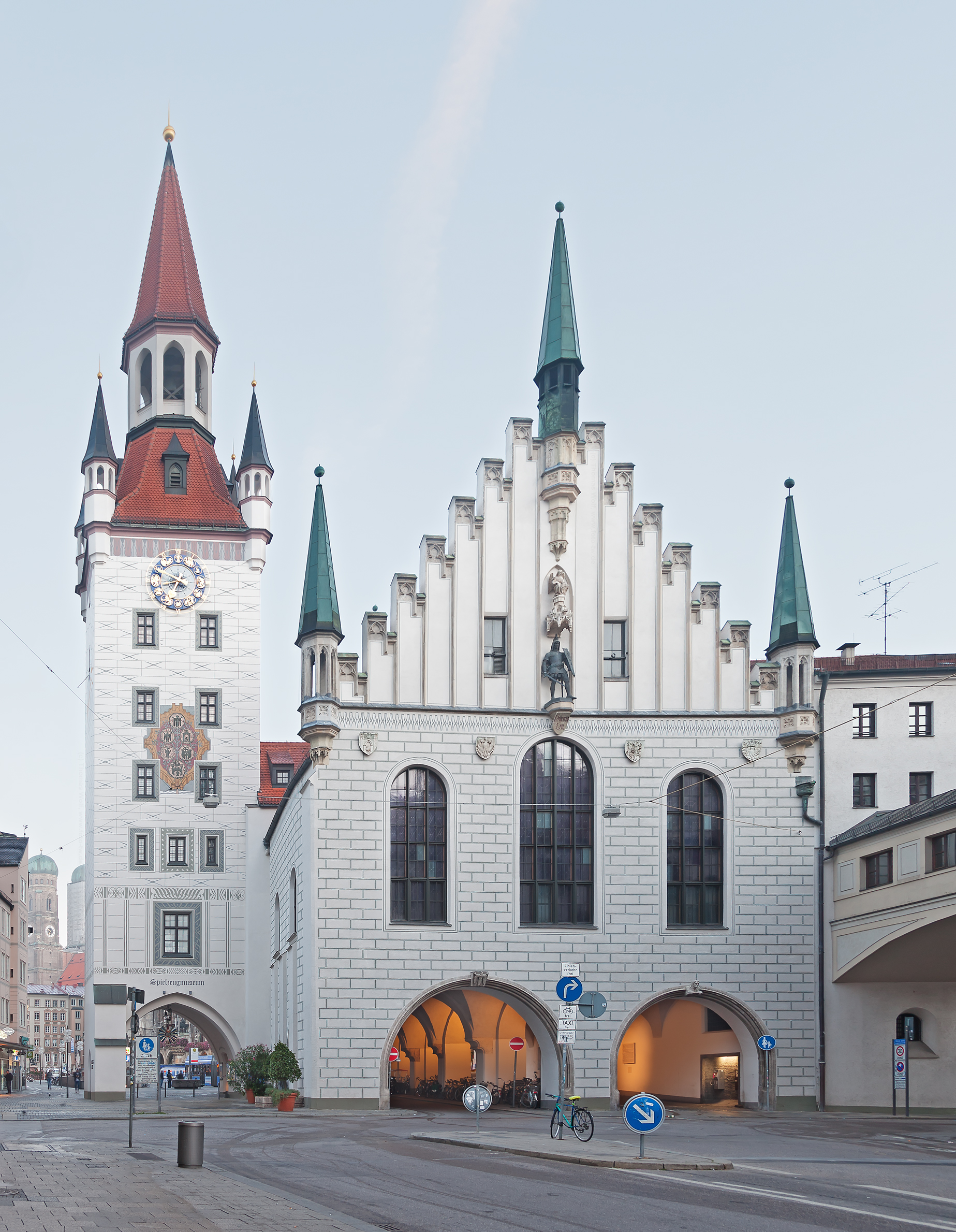
Most tourists walk under the Altes Rathaus's tower gate without realising they're passing through a building where one of the 20th century's worst atrocities was set in motion. On the evening of November 9, 1938, Joseph Goebbels stood in the Grand Hall upstairs and delivered the speech that triggered Kristallnacht — the night of broken glass, when Nazi mobs destroyed thousands of Jewish businesses and synagogues across Germany and Austria. The building itself had been documented since 1310 and rebuilt in Gothic style by Jörg von Halsbach between 1470 and 1480. Halsbach also built the Frauenkirche, making him responsible for two of Munich's most recognisable structures. The Grand Hall — the Festsaal — is the architectural star: a cavernous Gothic room with a wooden barrel-vaulted ceiling and a frieze of 96 coats of arms. After being destroyed by lightning in 1460 and rebuilt by Halsbach, it served as the city council's meeting chamber for over 400 years before the council moved to the Neues Rathaus in 1874. The hall has hosted celebrations, political assemblies, and at least one speech that led to murder on an industrial scale. Allied bombing in 1944 devastated the building. When restorers began work after the war, they chose to reconstruct based on Halsbach's original Gothic design rather than the Neo-Gothic renovation that architect Arnold Zenetti had applied in the 1860s. It was a deliberate archaeological decision: go back to the original, not the renovation. Today the tower houses a toy museum — the Spielzeugmuseum — which occupies the same structure that Goebbels spoke from. Children climb the spiral staircase to see teddy bears and model trains in rooms that once amplified hatred. The contrast isn't accidental; it's the kind of layered history that Munich does better than almost any city in Europe, even when it hurts.
Asam Church
32 Sendlinger Straße, Altstadt-Lehel, Munich, 80331, Germany
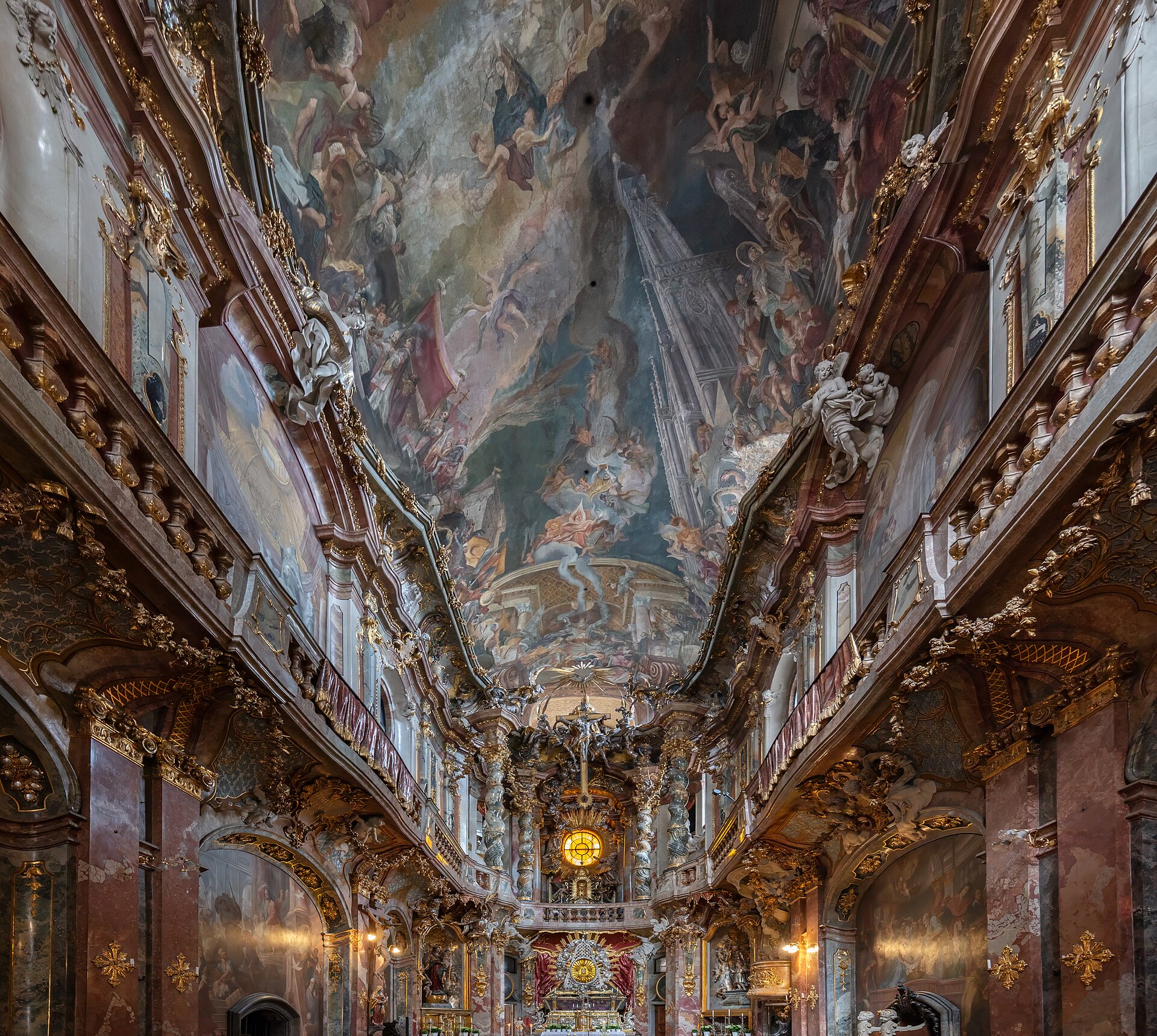
Two brothers bought the house next door and built a church in the gap. That's the short version of how the Asamkirche came to exist. Egid Quirin Asam, a sculptor, and Cosmas Damian Asam, a painter, constructed this tiny Baroque masterpiece between 1733 and 1746 as their private chapel. They weren't commissioned. Nobody asked them to do it. They just wanted a church, and they happened to be two of the most talented artists in 18th-century Bavaria. The result is an interior so dense with gold, marble, frescoes, and stucco that it feels like stepping inside a jewellery box. The church is only 8.8 metres wide and 22.2 metres long — barely larger than a living room — but the Asam brothers packed more visual drama per square metre than churches ten times this size. The design is deliberately theatrical: the lower level is kept dark and gloomy, symbolising earthly suffering. As your eye travels upward, the light increases, until the ceiling explodes into a radiant fresco depicting the life of St. John Nepomuk. The message is about as subtle as a Baroque trumpet fanfare. Egid Quirin Asam lived in the house directly next door and installed a window looking straight into the church so he could see the high altar from his bedroom. The four twisted columns framing that altar are a deliberate reference to Bernini's baldachin in St. Peter's Basilica in Rome — the Asam brothers had studied in Rome and brought Italian grandeur back to a Munich side street. The brothers intended the church to remain private, but their neighbours insisted on public access. When the Asam brothers reluctantly opened the doors, they created one of Munich's most treasured hidden gems. Locals still slip in from the busy Sendlinger Strasse shopping street, which makes for a gloriously disorienting transition — one moment you're dodging shoppers, the next you're surrounded by gilt angels and candlelight.
Augustiner-Keller
52 Arnulfstraße, Maxvorstadt, Munich, 80335, Germany
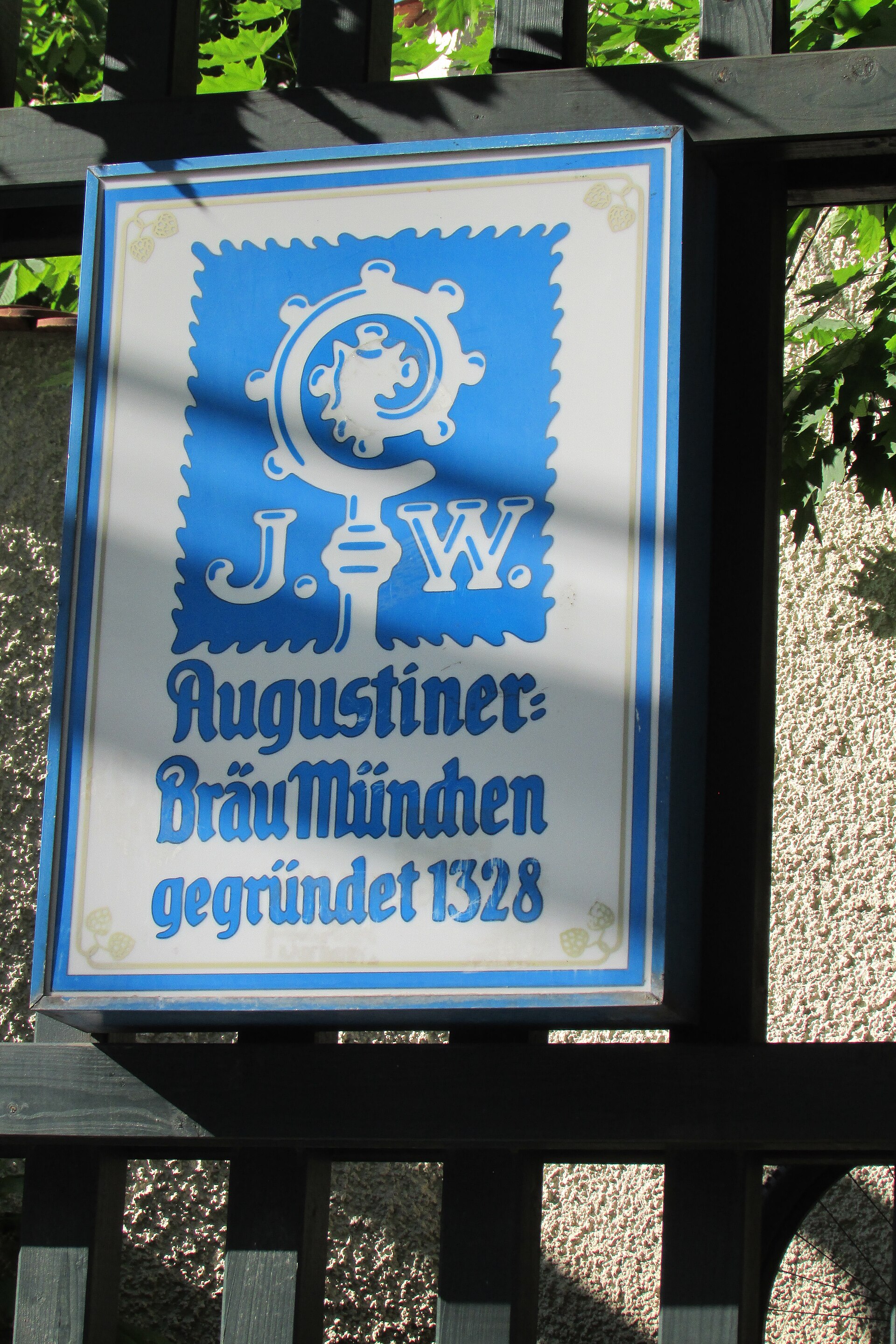
Ask any Münchner where to drink beer, and they'll say Augustiner. Not the tourist-packed Hofbräuhaus, not one of the flashy beer halls in the centre — Augustiner. The brewery was founded in 1328 by Augustinian monks, making it Munich's oldest independent brewery, and its beer garden on Arnulfstrasse has been open since 1812. The brewery doesn't advertise. It doesn't make light beer or flavoured varieties. It doesn't need to. Augustiner is Munich's beer, and everyone here knows it. The Augustiner-Keller beer garden sprawls beneath ancient chestnut trees just west of the Hauptbahnhof, with roughly 5,000 seats split between self-service and table-service areas. The beer is still tapped from traditional wooden barrels — Holzfässer — which Augustiner devotees insist produces a noticeably smoother, slightly sweeter flavour than draught from modern steel kegs. Whether this is scientific fact or beer-garden mythology is a debate best had after your second litre. What sets Augustiner apart from Munich's other five major breweries is its ownership structure. In 1996, Edith Haberland Wagner bequeathed her majority shareholding to a foundation, ensuring the brewery would remain independent and locally owned — the only one of Munich's Big Six to do so. While Löwenbräu, Spaten, and Paulaner are all owned by multinational conglomerates, Augustiner answers to nobody but Munich. The monks who started it all supplied beer to the Wittelsbach royal family for 261 years until Duke Wilhelm V got tired of paying them and founded his own brewery in 1589 — the Hofbräuhaus. In a beautiful twist of history, the monks' brewery outlasted the duke's by centuries in popular affection. The Augustiner-Keller on a warm evening, with the smell of grilled Steckerlfisch drifting between the chestnut trees and the satisfying thunk of wooden barrel taps, is as close to a secular church as Munich gets.
BMW Museum & BMW Welt
2 Am Olympiapark, Milbertshofen-Am Hart, Munich, 80809, Germany
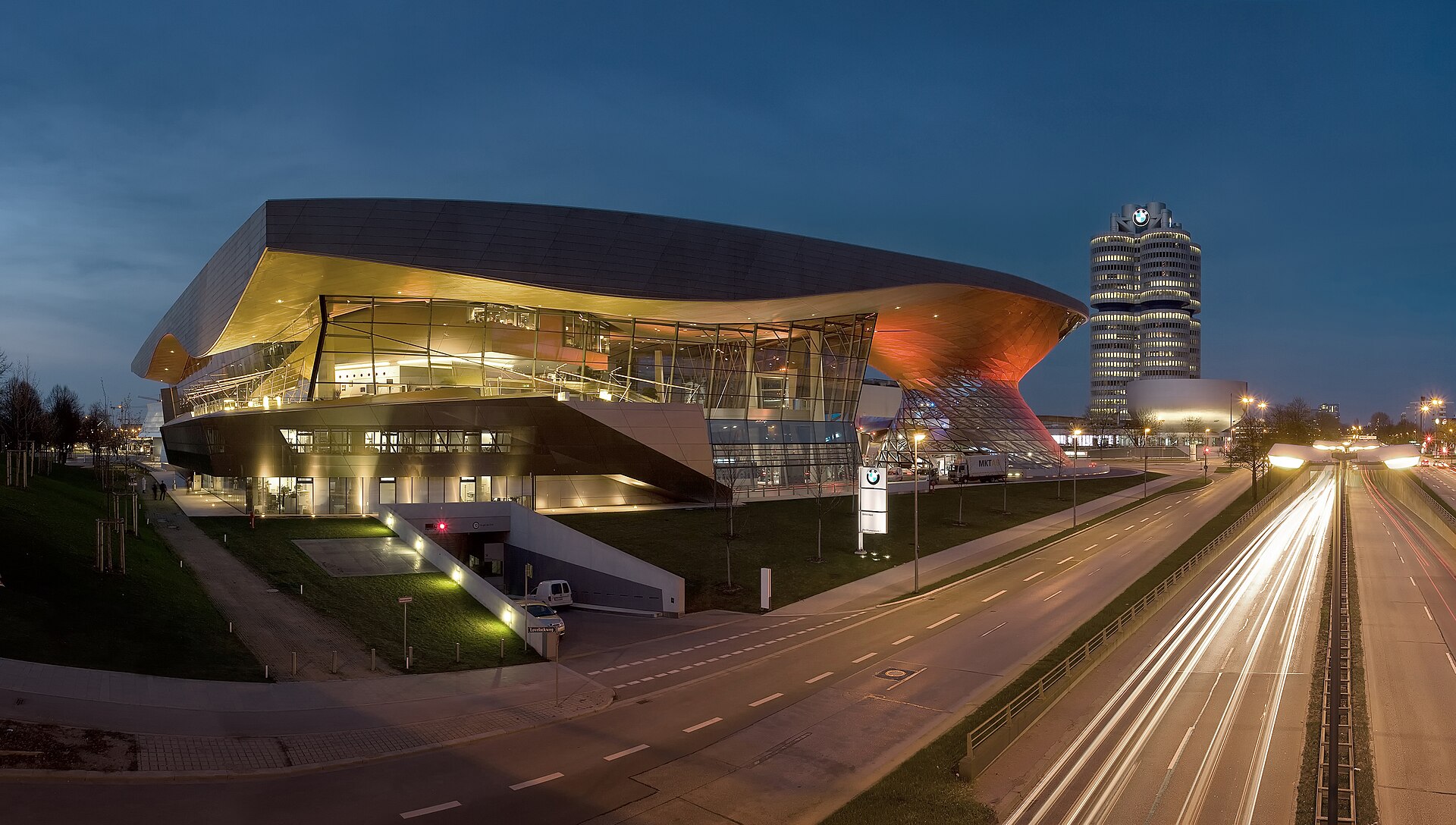
The BMW Museum looks like a silver salad bowl from the outside, and that's entirely intentional. Designed by Viennese architect Karl Schwanzer and opened in 1973 alongside the distinctive four-cylinder BMW headquarters tower, the bowl-shaped building was conceived as a road continuing in an enclosed spiral — visitors walk a continuous descending ramp past a century of automotive and motorcycle history. Schwanzer envisioned movement even in a stationary building, which is exactly the kind of thinking you'd expect from a car company. Across the street, BMW Welt — designed by the Viennese firm Coop Himmelb(l)au and opened in 2007 — is a 73-million-euro architectural statement that doubles as the world's most elaborate car dealership. Roughly 30,000 customers per year come here to pick up their new BMWs in a ceremony that treats a car purchase like a product launch. The double-cone structure of twisted steel and glass has won multiple architecture awards, and admission is free, which makes it one of Bavaria's most visited attractions — drawing millions of visitors annually. The museum itself spreads across 5,000 square metres with around 125 exhibits tracking BMW's evolution from a World War I aircraft engine manufacturer (the blue-and-white logo represents a spinning propeller against a Bavarian sky, though BMW now says this is a myth they're happy to keep alive) to electric vehicles. Highlights include the original 1997 James Bond car from "Tomorrow Never Dies," the tiny BMW Isetta that saved the company from bankruptcy in the 1950s, and Art Cars commissioned from artists like Andy Warhol, Roy Lichtenstein, and Jeff Koons. Together, the museum, BMW Welt, and the four-cylinder tower form a campus that functions as an architectural timeline: 1970s Brutalism, 2000s deconstructivism, and the ongoing production plant behind them all. It's corporate storytelling done with genuine ambition.
Chinese Tower Beer Garden
Englischer Garten, Altstadt-Lehel, Munich, 80538, Germany
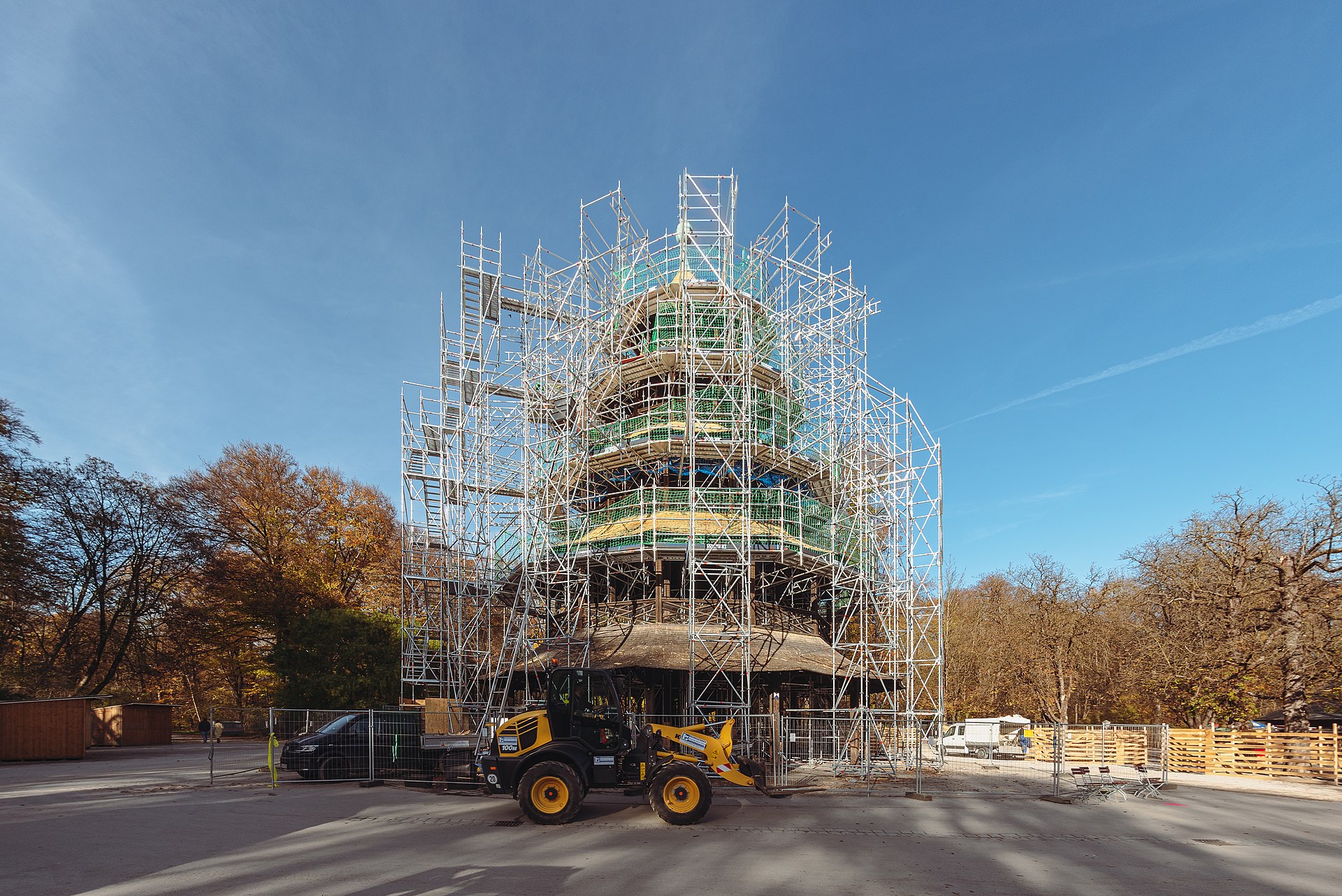
A five-storey wooden pagoda standing in the middle of a Bavarian beer garden is exactly the kind of thing that shouldn't work but absolutely does. The Chinesischer Turm was built in 1790, just a year after the Englischer Garten itself was created, and its design was inspired by the Great Pagoda at London's Kew Gardens. The 25-metre tower has a diameter of 19 metres at ground level, narrowing to 6 metres at the top, and on summer evenings a brass band plays from its first-floor balcony while 7,000 people drink beer below. This is Munich's second-largest beer garden, and it runs on a system that would confuse anyone unfamiliar with Bavarian customs. The self-service area — by far the larger section — lets you bring your own food. Locals arrive with elaborate picnic spreads: cheese boards, radishes carved into spirals (the Radi), obatzda cheese dip, and pretzels the size of steering wheels. The only thing you must buy from the garden is the beer, which comes in one-litre Mass steins and is consumed with a seriousness that borders on devotional. The original pagoda was destroyed by an air raid in 1944 and faithfully rebuilt in 1952. Münchners didn't wait for the tower to be fully restored before they started drinking around it again — the beer garden reopened before the tower was even finished, because priorities are priorities. Every July, the Kocherlball takes place here at 6am on a Sunday morning. The tradition began in the 19th century, when up to 5,000 servants from Munich's noble households would meet at the Chinese Tower on Saturday mornings for a dance before their masters woke up. The modern revival draws thousands of early risers in traditional Bavarian dress, dancing waltzes and polkas at dawn. By 8am it's over, and the beer garden returns to its usual rhythm.
Dachau Memorial
75 Alte Römerstraße, Dachau-Ost, Dachau, 85221, Germany
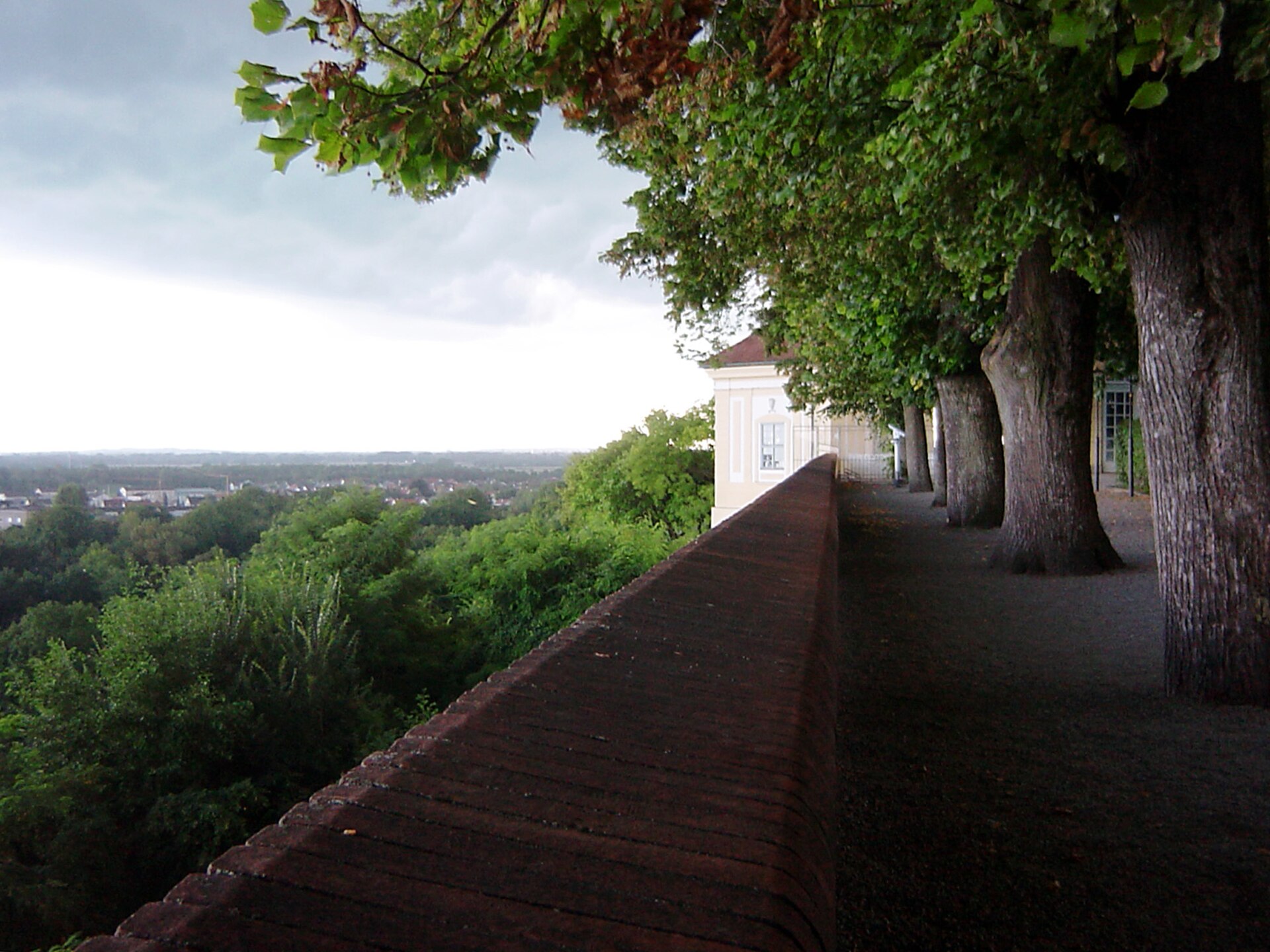
On March 22, 1933 — less than two months after Hitler became Chancellor — approximately 200 prisoners arrived at an abandoned munitions factory 16 kilometres northwest of Munich. Dachau was the first regular concentration camp the Nazis established, and it became the template for every horror that followed. Heinrich Himmler announced its opening in a Munich newspaper with bureaucratic matter-of-factness, as if opening a municipal building. The camp was initially intended for political opponents: communists, social democrats, trade unionists, anyone who might resist. Over twelve years, Dachau expanded into a system of nearly 100 sub-camps spread across southern Germany and Austria. More than 200,000 prisoners from across Europe were held here. The official death toll of 41,500 is almost certainly an undercount — records were destroyed, and thousands died on forced marches in the final weeks of the war. On April 29, 1945, American soldiers of the 42nd and 45th Infantry Divisions liberated the camp and found roughly 30,000 survivors in catastrophic condition. The memorial site, established in 1965 at the initiative of survivors, occupies the grounds of the original camp. The former utility building houses the main exhibition, which traces the prisoners' path through six sections and thirteen rooms using photographs, documents, and personal testimonies. Two reconstructed barracks show living conditions. The crematorium buildings, including the gas chamber that was built but whose extent of use remains debated by historians, stand at the northern end of the site. Admission is free. Most visitors spend about four hours here. The experience is deliberately unflinching — this is not a place that softens its message or offers easy comfort. Religious memorials built by Catholic, Protestant, Jewish, and Russian Orthodox communities stand on the grounds, each processing the same incomprehensible facts through different traditions of grief. Roughly 800,000 people visit annually.
Deutsches Museum
1 Museumsinsel, Ludwigsvorstadt-Isarvorstadt, Munich, 80538, Germany
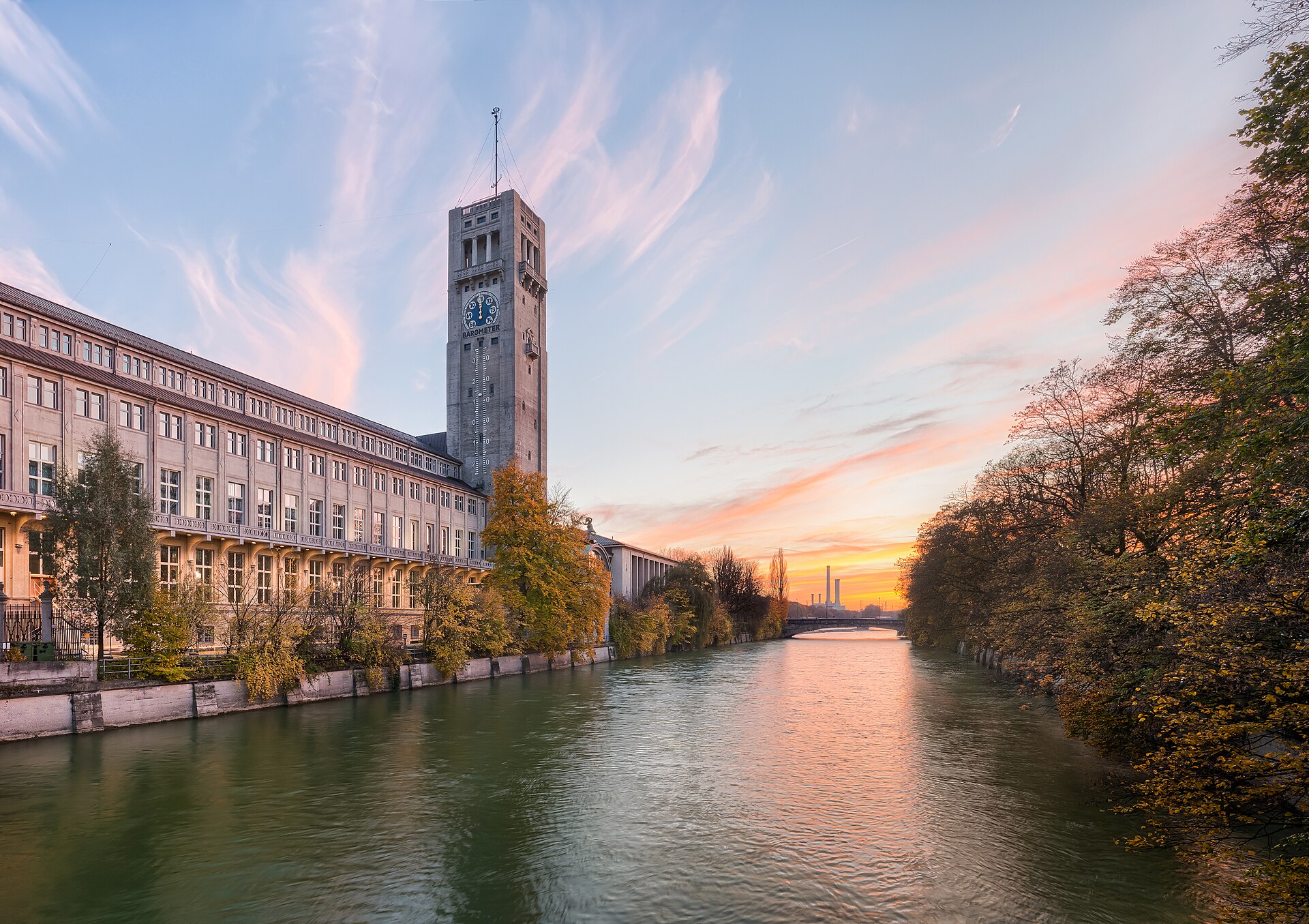
The world's largest museum of science and technology sits on a small island in the Isar river that was used for rafting timber in the Middle Ages. Founded in 1903 by Oskar von Miller — a visionary electrical engineer who believed science should be experienced, not just read about — the Deutsches Museum opened on its island home in 1925 with a mission that was revolutionary: make visitors touch things, push buttons, and understand how the world works through their own hands. The numbers are staggering. Some 125,000 objects across 73,000 square metres of exhibition space cover fifty fields of science and technology. You could spend a week here and still miss entire wings. The collection includes the first diesel engine, one of the earliest automobiles, a genuine V-2 rocket, a reconstructed coal mine you can walk through underground, and a planetarium that was the world's first when it opened in 1925. The museum's organisational model was so successful that it became the template for Chicago's Museum of Science and Industry. Von Miller's founding principle was radical egalitarianism: he wanted farmers, factory workers, and professors to all understand the machines reshaping their world. The interactive approach — considered eccentric in 1903 — is now standard in science museums worldwide, but the Deutsches Museum did it first and still does it with a thoroughness that borders on obsessive. The mining exhibit alone descends through 800 metres of underground tunnels recreating centuries of extraction techniques. The museum has been undergoing a massive modernisation since 2015, with entire wings closed, renovated, and reopened in phases. The newly completed sections — including exhibitions on aerospace, robotics, and electronics — combine the original hands-on philosophy with contemporary design. Nearly 1.4 million visitors come through annually, making it not just the largest science museum in the world but one of the most visited museums in Germany.
Eisbach Wave
Prinzregentenstraße, Altstadt-Lehel, Munich, 80538, Germany
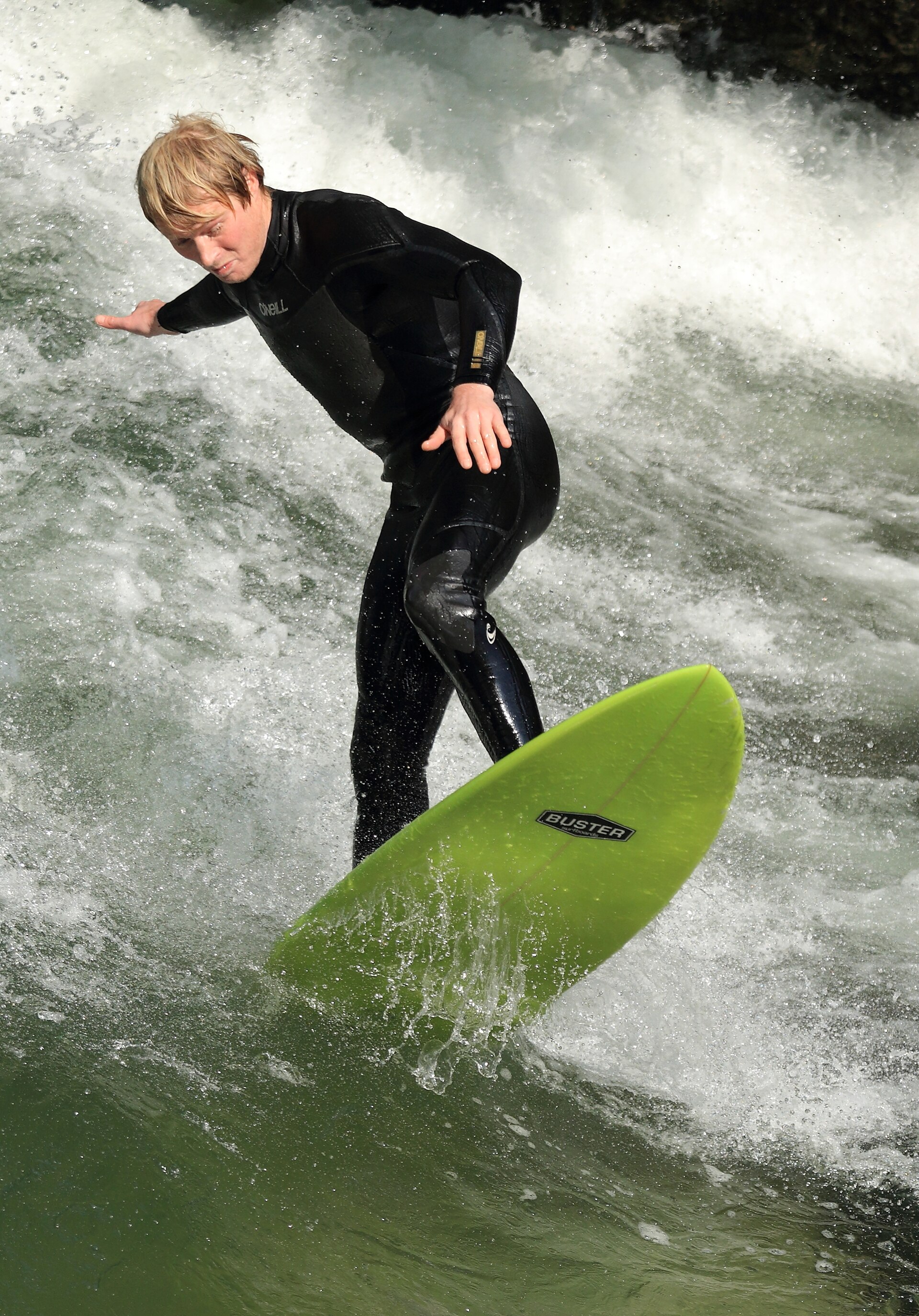
There's a standing wave in the middle of Munich, and people surf it year-round. The Eisbachwelle forms where a man-made canal called the Eisbach — "ice brook" — emerges from underground near the Haus der Kunst art museum and crashes over a concrete ledge. The result is a roughly one-metre-high wave that never stops breaking, creating what may be the world's most famous river surfing spot in a city that's 500 kilometres from the nearest ocean. Surfers discovered the wave in the 1970s, and for decades the practice was technically illegal. The water is cold, shallow — sometimes only 40 centimetres deep — and powerful enough to pin an inexperienced swimmer against the bottom. The current is relentless. Despite the dangers, surfers kept coming, developing a distinctive style adapted to a wave you can't paddle into. You jump in, land on the wave, and ride until you fall off or pull out. There's an unwritten queue system, and cutting the line will earn you a verbal thrashing in Bavarian dialect. The city finally legalised Eisbach surfing in 2010, effectively acknowledging what Münchners had known for decades: you can't stop people from doing something this fun. On any given day, especially in summer, a crowd gathers on the bridge and along the banks to watch wetsuit-clad surfers carve turns on water that runs about 300 metres before it disappears under another bridge. The spectator sport is almost as good as the surfing itself. There's a second, gentler wave a few hundred metres downstream — the E2 or Kleine Eisbachwelle — where beginners can practice without the intimidation factor of the main wave and its audience. The whole scene is peak Munich: athletic, outdoorsy, slightly defiant, and happening in a park designed in the 18th century by a man who could never have imagined neoprene.
Englischer Garten
Englischer Garten, Altstadt-Lehel, Munich, 80538, Germany
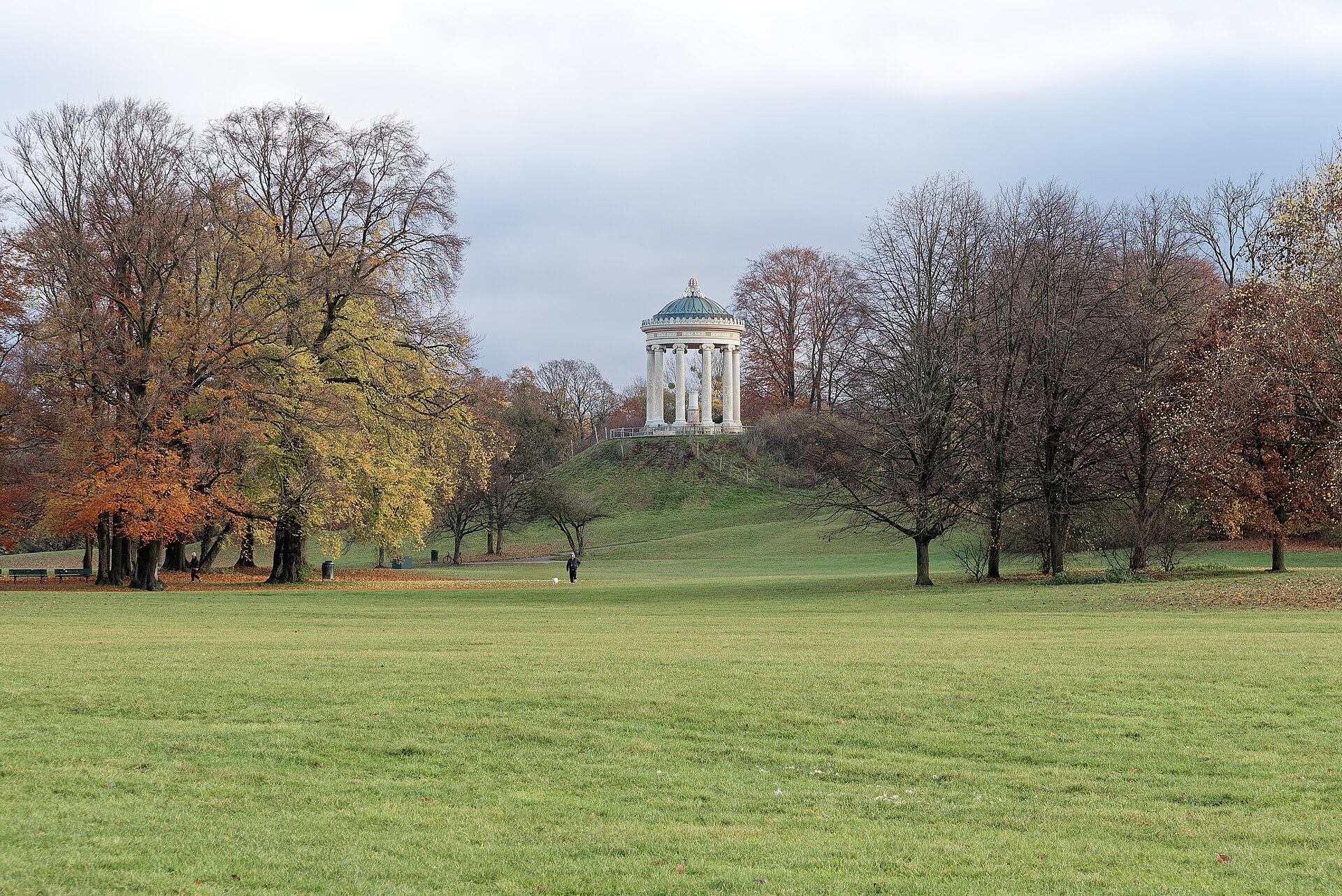
Central Park is 341 hectares. Hyde Park is 140. The Englischer Garten is 417 hectares, making it one of the largest urban parks in the world and bigger than both of those famous comparisons. It was created in 1789 by an American-born physicist named Benjamin Thompson — later Count Rumford — who convinced the Bavarian Elector Karl Theodor to transform a royal hunting ground into a public green space. An American designed Munich's most beloved park. History enjoys irony. Thompson's vision was radical for its time: a park for all social classes, with no fences or admission fees, modelled on the English landscape garden tradition of rolling meadows, winding paths, and naturalistic plantings. The result is a park so convincingly natural that you forget someone designed it. Münchners use it as an extension of their living rooms — on warm days, entire families set up camp with picnics, barbecues, and footballs. The nude sunbathing in the Schönfeldwiese meadow is technically legal and thoroughly unsurprising to anyone who's spent time in Bavaria. The park contains several distinct destinations. The Monopteros, a Greek-style temple on an artificial hill, offers panoramic views and excellent people-watching. The Japanese Tea House on an island in the park's lake hosts traditional tea ceremonies — a gift from Japan for the 1972 Olympics. And threaded through the whole landscape are streams, bridges, meadows, and wooded paths that make the city feel a thousand miles away. What makes the Englischer Garten truly Munich is the combination of high culture and beer. You can watch surfers ride a standing wave, attend a Japanese tea ceremony, admire neoclassical architecture, and end up at one of Germany's largest beer gardens — all without leaving the park. No other city in Europe offers quite that sequence.
Frauenkirche
12 Frauenplatz, Altstadt-Lehel, Munich, 80331, Germany
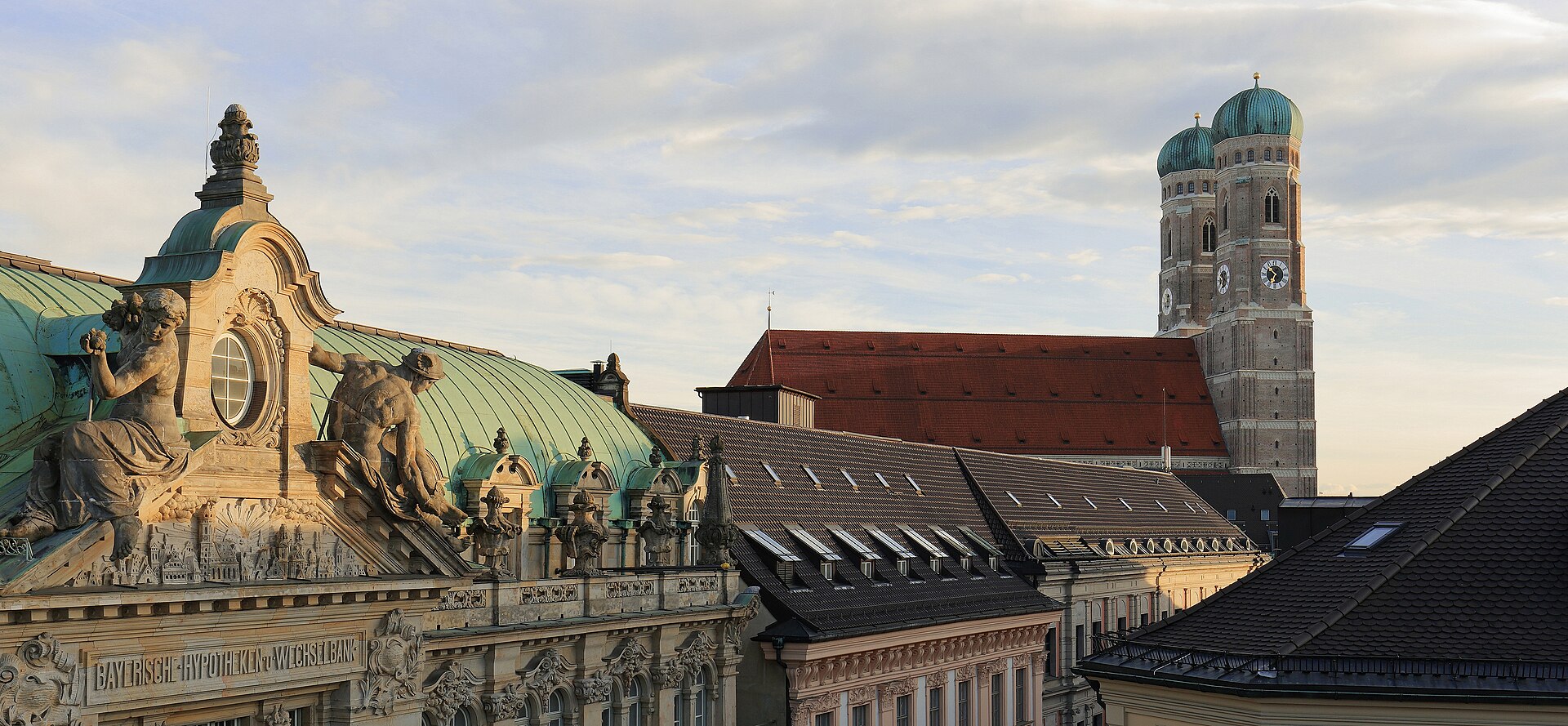
Just inside the entrance of Munich's cathedral, there's a dark footprint stamped into the floor tile. According to legend, the Devil made a bet with the architect Jörg von Halsbach that the church would have no windows. When the Devil came to inspect, he stood in the entrance and — thanks to cleverly positioned columns blocking every window from that exact spot — saw nothing but walls. By the time he realised he'd been tricked, the church was already consecrated and he could only stomp his foot in rage. That footprint, the Teufelstritt, is still there. So is the wind the Devil supposedly left behind when he stormed off — locals say it never stops blowing around the Frauenkirche. The twin onion-domed towers are Munich's most recognisable silhouette, and by law no building in the city centre can be taller than their 99-metre height. They were actually a last-minute design change — the original plans called for pointed Gothic spires, but the money ran out in 1525 and the builders capped each tower with Renaissance-style copper domes instead. The happy accident became the city's defining architectural feature. Built between 1468 and 1488, the cathedral is a masterwork of late Gothic brick construction. It can hold 20,000 standing worshippers — an astonishing capacity for a building that took only twenty years to complete. Halsbach, who also built Munich's Altes Rathaus, managed to create a vast interior space using just twenty-two octagonal pillars. The optical illusion from the entrance, where the pillars seem to block all natural light, only works from that one spot. Walk a few steps forward and the church floods with light from seventy-two windows. Emperor Ludwig the Bavarian is entombed here in a grand black marble cenotaph surrounded by kneeling bronze figures. The real tomb is in the crypt below — a fact that confuses roughly everyone who visits.
Glyptothek
3 Königsplatz, Maxvorstadt, Munich, 80333, Germany
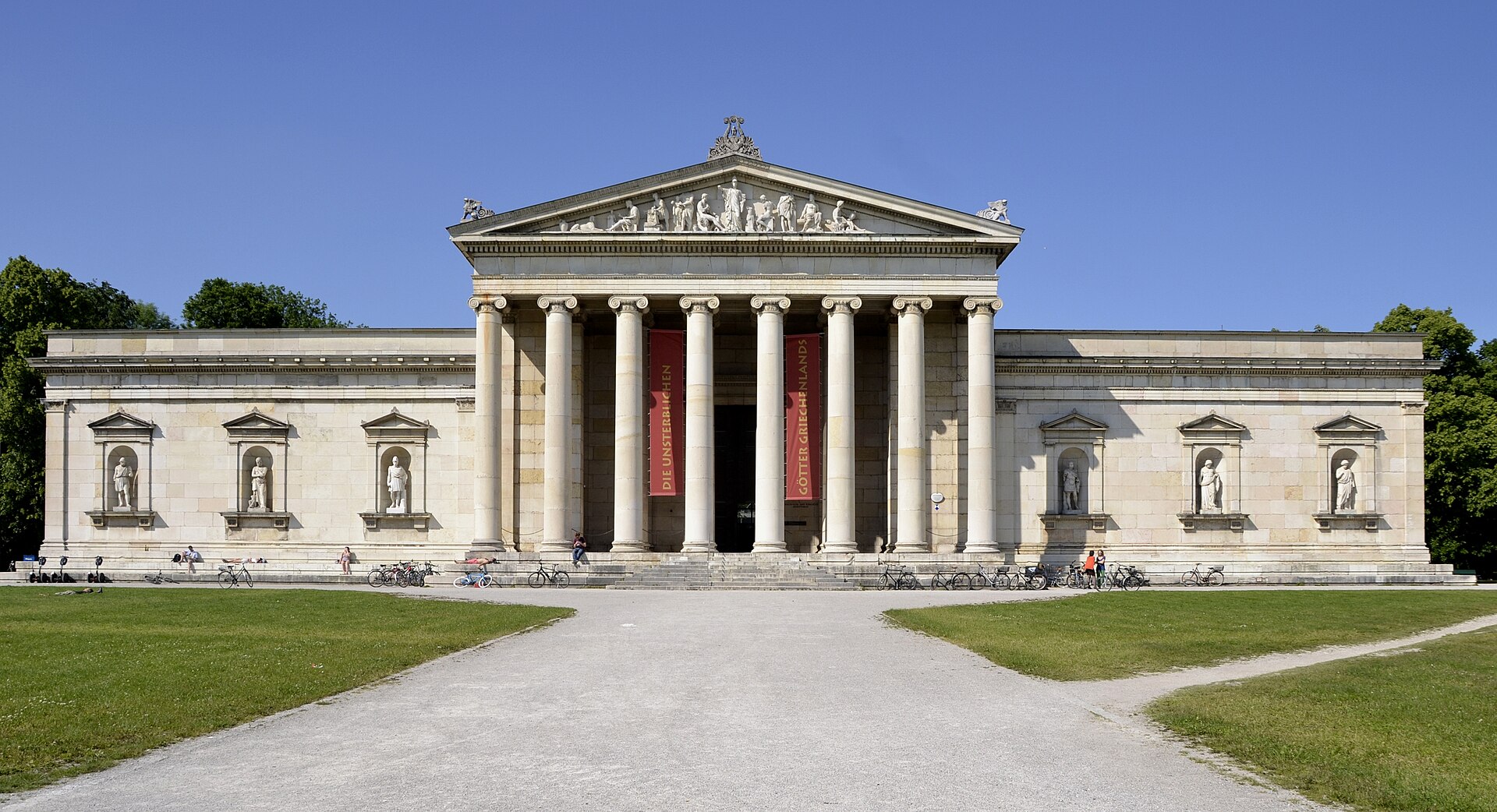
The name literally means "sculpture storage" in Greek — glyphein (to carve) plus theke (container) — which is the most honest museum name in the world. Commissioned by Crown Prince Ludwig and designed by Leo von Klenze between 1816 and 1830, the Glyptothek is Munich's oldest public museum and one of the finest collections of Greek and Roman sculpture anywhere outside Italy and Greece. Ludwig was obsessed. Through agents stationed across Europe, he competed with the British Museum and the Louvre to acquire the best ancient sculpture money could buy. His greatest coup was the Aegina Marbles — pediment sculptures from the Temple of Aphaea on the Greek island of Aegina, purchased in 1813 and arguably the most important Greek temple sculptures in any collection outside Athens. The Barberini Faun, a stunning second-century BC marble of a sleeping satyr, was another prize acquisition. Ludwig bought it in Rome and shipped it to Munich with the care normally reserved for living royalty. The museum's thirteen rooms are arranged around an open courtyard, each designed to evoke a different historical period. You walk from archaic Greek kouroi (c. 650 BC) through classical Athenian masterpieces to late Roman portraits, covering roughly 1,200 years of sculpture in an afternoon. The Ionic portico on the exterior holds eighteen original Roman and Greek statues in wall niches — sculptures that would be headline pieces in lesser museums, casually displayed on the outside of this one. World War II bombed the interior to rubble. The reconstructed rooms, reopened in 1972, stripped away the ornate 19th-century decoration and left the walls as bare brick — a decision that puts all attention on the sculptures themselves. The result is unexpectedly powerful: ancient marble figures standing against raw masonry, the passage of time made visible in every surface.
Hofbräuhaus
9 Platzl, Altstadt-Lehel, Munich, 80331, Germany
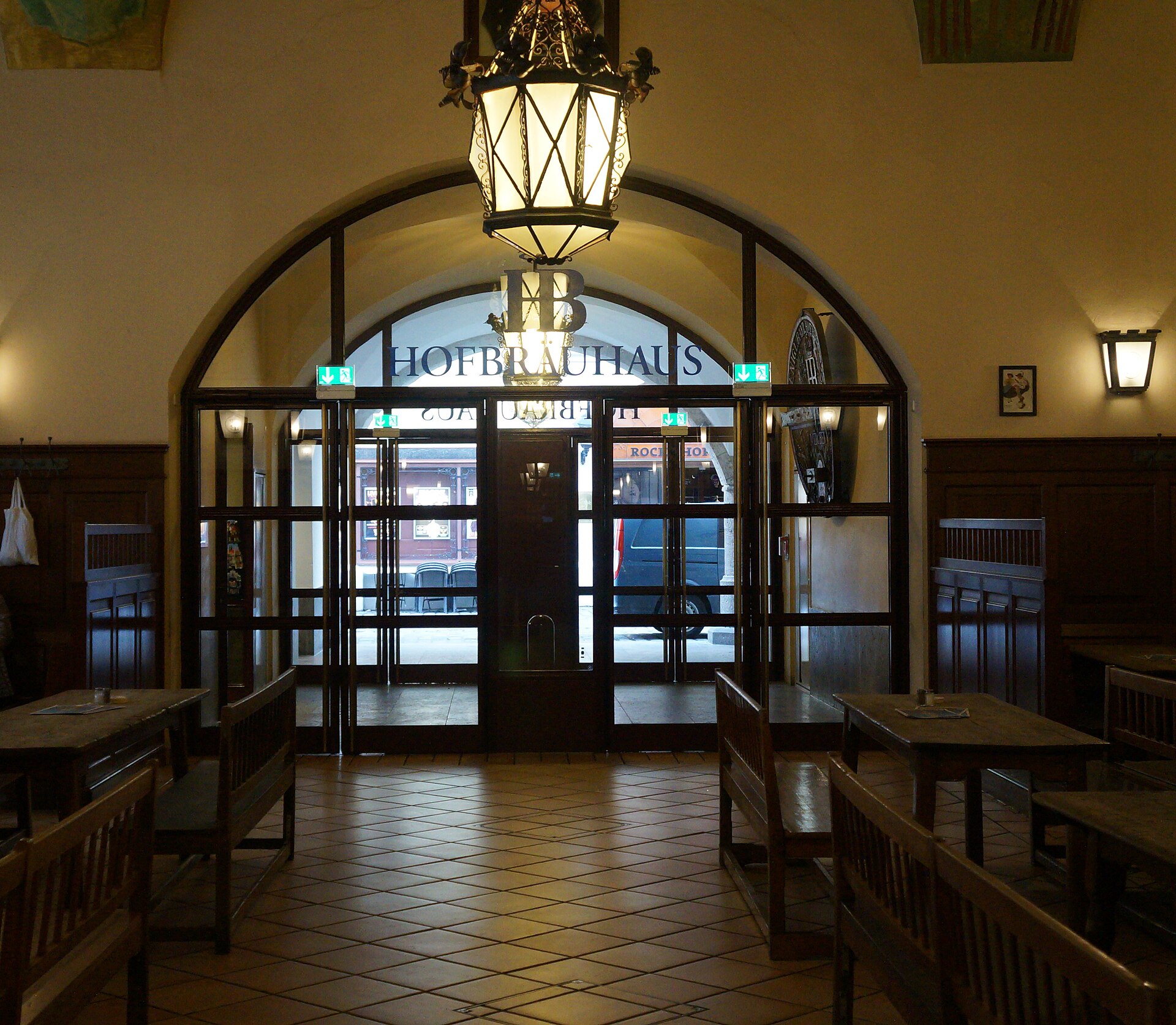
Duke Wilhelm V founded this place in 1589 because he thought Munich's beer was terrible. That's not a simplification — the Bavarian royal household was importing expensive beer from Lower Saxony, and the Duke decided it would be cheaper and better to brew his own. The result is the world's most famous beer hall, which started as a royal brewery that ordinary Münchners couldn't even enter for the first 239 years. King Ludwig I finally opened the Hofbräuhaus to the public in 1828, and it quickly became the centre of Munich's social and political life. The regulars' table tradition runs deep here — some families have held the same reserved spot for generations, and the personal beer steins locked in the hall's storage cabinets number in the hundreds. Mozart lived around the corner and was a regular. Lenin reportedly spent time here plotting revolution while living in Munich in 1902. The building has attracted an astonishing range of people who had nothing in common except a taste for wheat beer. The Schwemme — the ground-floor beer hall — is the only room that survived World War II bombing. Everything else was rebuilt by 1958, but the Schwemme's vaulted ceiling, painted with Bavarian folk scenes, is original 1897 architecture by Max Littmann, who redesigned the building when the actual brewery moved to the suburbs. On any given evening, the hall seats 1,300 people across rows of heavy wooden tables while an oompah band plays and litre-sized Mass steins crash together. After World War II, American soldiers stationed in Munich adopted the Hofbräuhaus as their unofficial living room. They brought home thousands of "HB" beer steins as souvenirs, inadvertently turning a Bavarian state brewery into an international brand. The Hofbräuhaus now has licensed locations on six continents, but this one — the original, the noisy, beery, slightly chaotic one — remains irreplaceable.
Hofgarten
1 Hofgartenstraße, Altstadt-Lehel, Munich, 80539, Germany
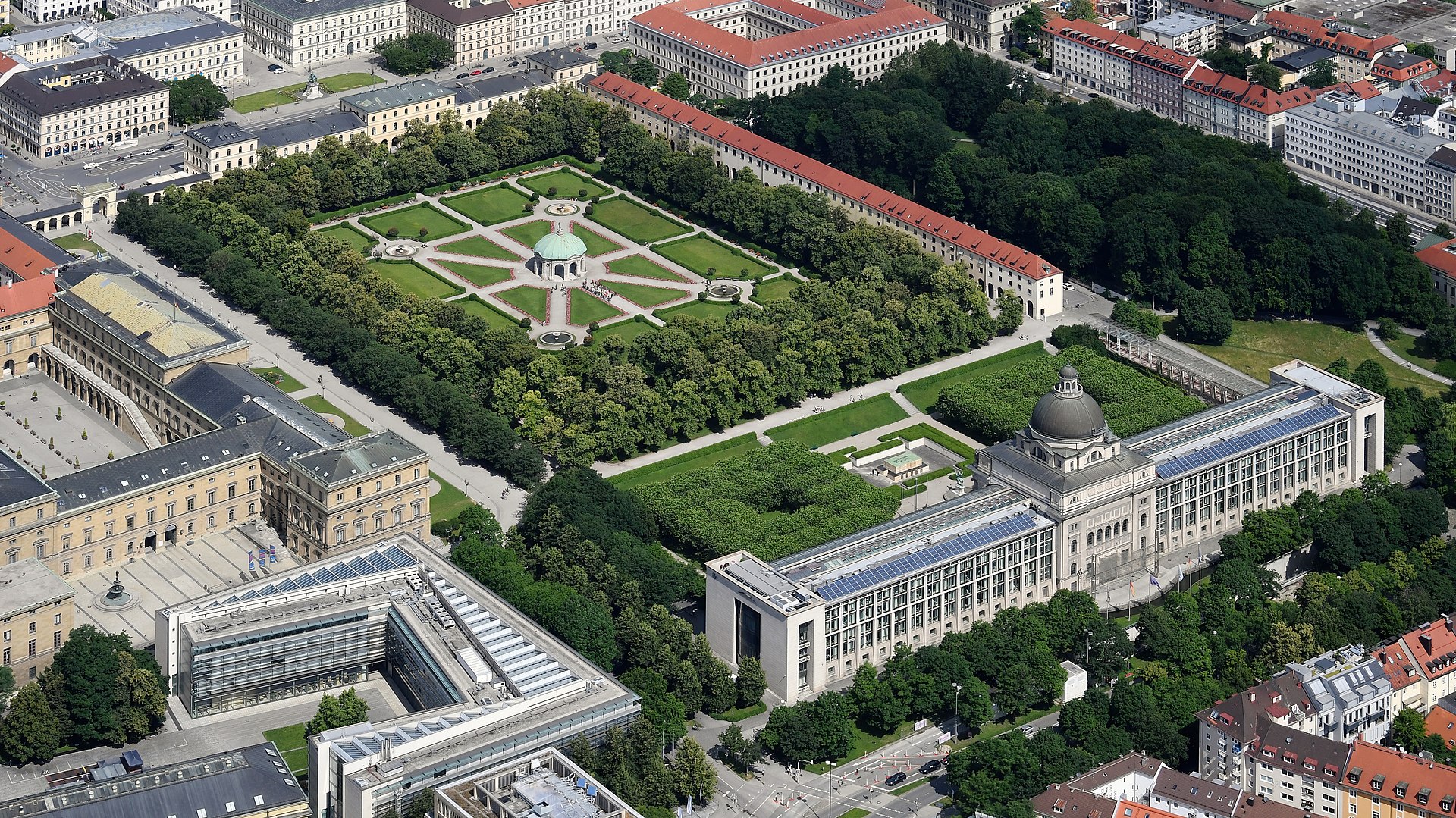
Between the Residenz and the Englischer Garten lies a Renaissance court garden that has survived four centuries of war, revolution, and one very destructive Frenchman. Maximilian I built the Hofgarten between 1613 and 1617 in the Italian Renaissance style — geometric paths radiating from a central pavilion, framed by arched galleries, the whole thing designed to make Bavarian royalty feel like they were strolling through a Tuscan villa. The Diana Pavilion at the centre, built by Heinrich Schön the Elder in 1615, is an octagonal temple topped with a bronze figure of Bavaria — not the goddess Diana, despite the name. On any given afternoon, you'll find people playing boules on the gravel paths around it, a tradition so embedded in Munich's social fabric that the regular players have unofficial reserved spots. The arched walkways along the north and west sides display changing art exhibitions, turning the garden's perimeter into an open-air gallery. Napoleon occupied Munich in 1806 and ordered part of the Hofgarten demolished to make room for his troops. After Waterloo, King Ludwig I restored and expanded the garden with fountains and sculptures, but the French-inflicted damage left a mark on the layout that never fully healed. Then World War II destroyed the garden almost entirely. The post-war rebuild compromised between the original 17th-century formality and the softer English landscape style it had acquired in the 19th century. In 1780, Elector Karl Theodor opened the formerly private royal garden to the public — the same reformer who commissioned the Englischer Garten nine years later. Today the Hofgarten is one of Munich's most peaceful places: classical music drifts from the Residenz, elderly Münchners play cards under the linden trees, and the view north toward the Theatinerkirche dome is one of the city's quiet visual treasures. It's the sort of garden you find when you stop looking for attractions and start looking for shade.
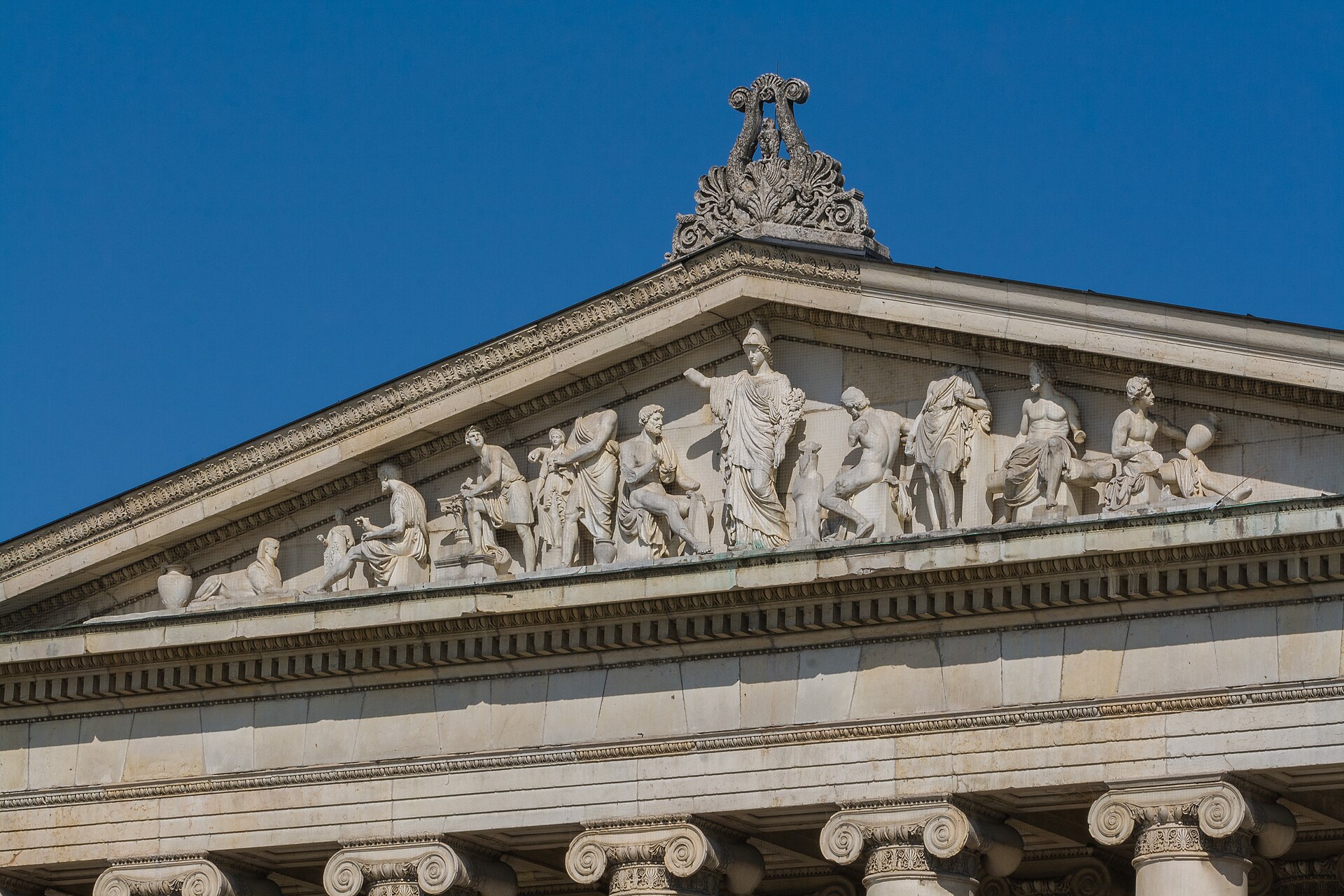
Königsplatz
Maxvorstadt, Munich, Germany
King Ludwig I wanted a German Athens, and Königsplatz was his Acropolis. Between 1816 and 1862, he built a neoclassical ensemble of museums and monuments around a grass-covered square: the Glyptothek on the north side for his Greek and Roman sculptures, the Antikensammlungen on the south for antiquities, and the Propyläen gateway on the west — modelled on the entrance to the Athenian Acropolis. The architecture was a philosophical statement: Bavaria, Ludwig believed, was the rightful heir to classical civilisation. The proportions are impeccable. The ambition is either magnificent or delusional, depending on your view of Bavarian kings. Then the Nazis arrived and turned Ludwig's classical dream into a nightmare. In 1933, the area around Königsplatz became the administrative heart of the Nazi Party. The grassy square was paved over with 20,000 granite slabs to create a parade ground. Two "Honour Temples" were erected on the east side to enshrine the remains of the sixteen Nazis killed in the 1923 Beer Hall Putsch. Mass rallies, book burnings, and torch-lit ceremonies were staged on the spot where Ludwig had envisioned philosophical contemplation. The juxtaposition was deliberate — the Nazis understood the power of classical aesthetics and weaponised it. After the war, the Honour Temples were demolished, and the granite paving was ripped up and replaced with grass again in the 1980s. Today Königsplatz has returned to something closer to Ludwig's original vision — an open, green square framed by museums. On summer evenings, open-air cinema screenings and concerts take place here. The NS-Dokumentationszentrum, opened in 2015 on the site of the former Nazi Party headquarters, ensures the square's darkest chapter is documented rather than buried. Standing on Königsplatz today, you're looking at a physical argument about what classical architecture means — whether it serves philosophy or propaganda, democracy or tyranny. The buildings are identical to what they were in 1935. The meaning has been completely rewritten.
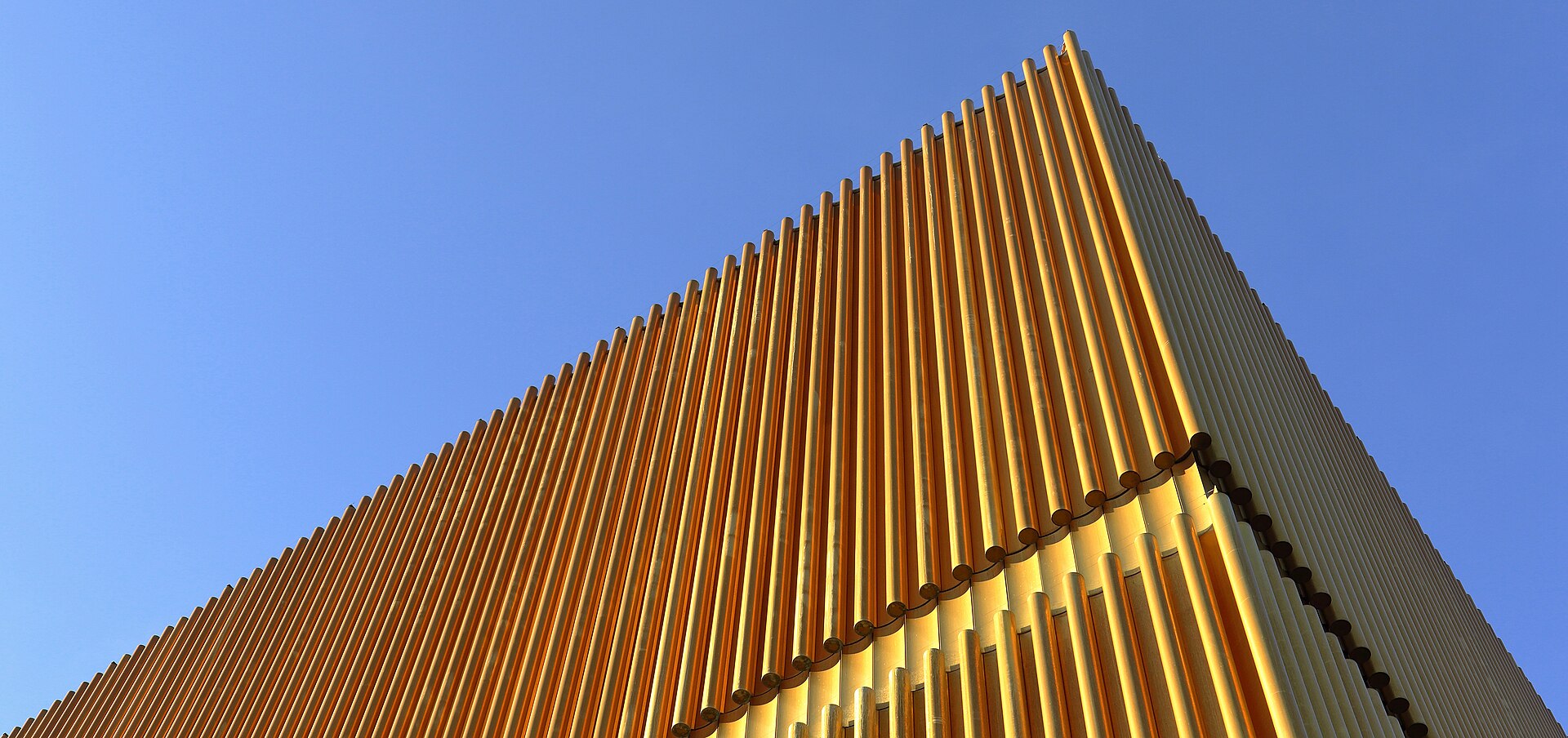
Lenbachhaus
33 Luisenstraße, Maxvorstadt, Munich, 80333, Germany
This museum owns the world's largest collection of Blauer Reiter paintings, and if you know nothing about the Blauer Reiter, you're about to understand why Munich matters to modern art. In 1911, Wassily Kandinsky and Franz Marc founded Der Blaue Reiter — The Blue Rider — in Munich, a movement that pushed painting toward pure abstraction and changed everything that came after. Kandinsky, Marc, Gabriele Münter, August Macke, Alexej von Jawlensky, and Paul Klee all worked in and around Munich, and their most important works ended up here. The collection exists because of Gabriele Münter, Kandinsky's partner and a formidable artist in her own right. When the Nazis came to power, Münter hid hundreds of paintings from both her own collection and Kandinsky's in her house in Murnau, south of Munich. The Nazis had classified the work as "degenerate art" and would have destroyed it. Münter guarded the paintings for decades and donated them to the Lenbachhaus in 1957, on her 80th birthday. Without her, the collection — and a significant chapter of art history — would have been lost. The building itself began as the Tuscan-style villa of Franz von Lenbach, a portrait painter so fashionable in the late 19th century that he could afford to build an Italian palazzo on Königsplatz. The villa was converted into a gallery in 1929 and expanded dramatically by architect Norman Foster in 2013, who wrapped the original building in a shimmering golden façade that divides opinion exactly as intended. The permanent collection traces Munich's art scene from the 19th-century Romantic landscapes of the Munich School through Jugendstil, Expressionism, and the Blauer Reiter to contemporary art by Joseph Beuys, Gerhard Richter, and Anselm Kiefer. Kandinsky's "Composition VII" and Marc's "Blue Horse I" are here — two of the most reproduced paintings of the 20th century, hanging in the city where they were conceived.
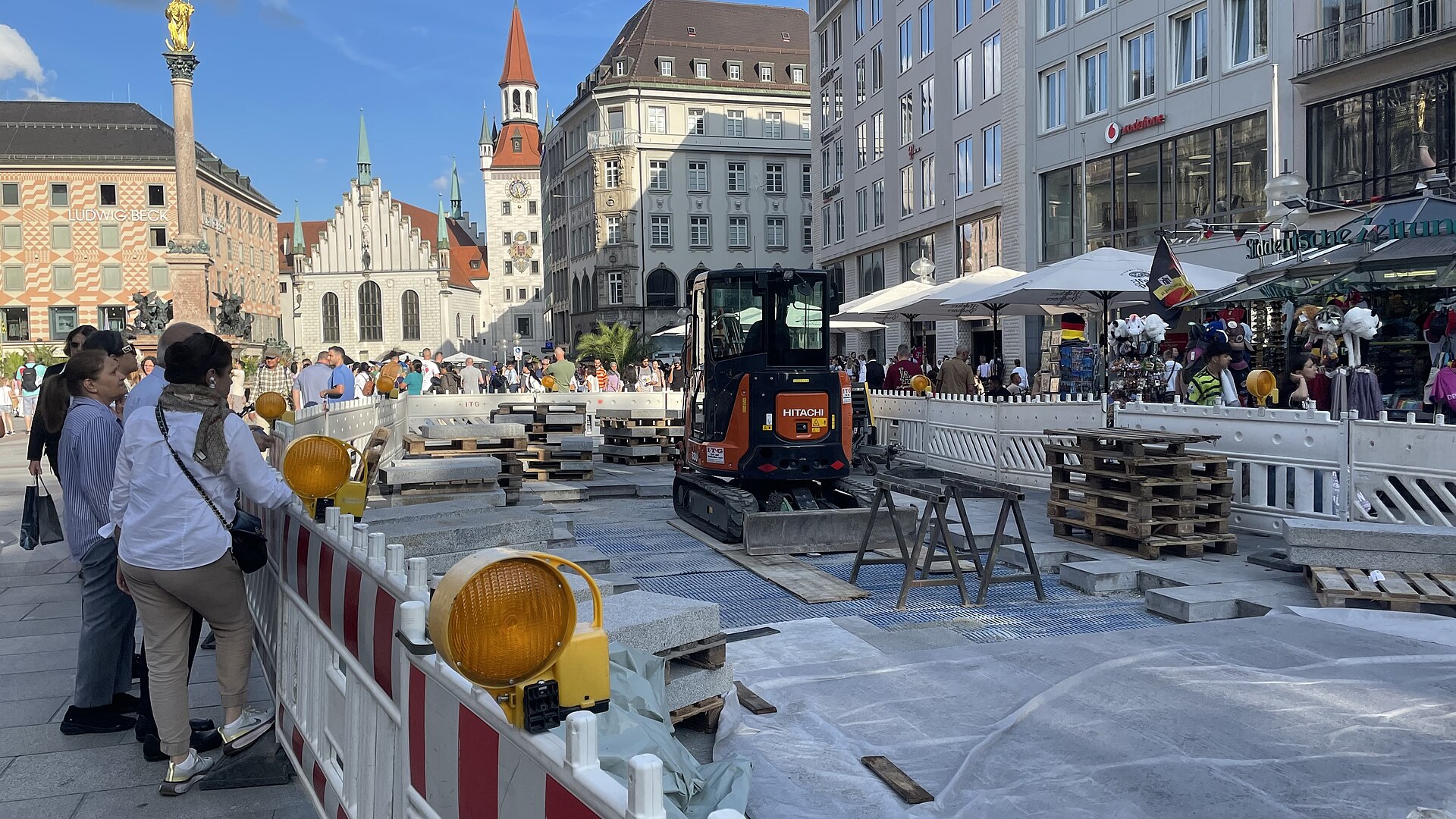
Marienplatz & Neues Rathaus
1 Marienplatz, Altstadt-Lehel, Munich, 80331, Germany
Every day at 11am, hundreds of tourists crane their necks at exactly the same spot to watch copper figures joust, twirl, and re-enact a royal wedding from 1568. The Glockenspiel in the tower of the Neues Rathaus is the largest in Germany and the fourth-largest in Europe, with 43 bells and 32 life-sized figures putting on a twelve-minute show that hasn't gotten old since 1908. What most visitors miss is the 9pm performance, when a night watchman and guardian angel tuck the Münchner Kindl — Munich's child monk mascot — into bed while Brahms' lullaby plays from the tower. The New Town Hall itself is a neo-Gothic fever dream designed by Georg von Hauberrisser, who won the competition at just twenty-five years old. Construction dragged on from 1867 to 1909, expanding three times because the city kept running out of office space. The facade stretches nearly 100 metres across the north side of Marienplatz, bristling with gargoyles, saints, and Bavarian rulers. A dragon clings to one corner — look for it near the left side of the building. Marienplatz has been Munich's central square since 1158, when Henry the Lion founded the city by rerouting the salt trade across his new bridge over the Isar. The golden Mariensäule column in the centre was erected in 1638 to celebrate the city surviving both the Swedish invasion and the plague — though "surviving" is generous, given how much destruction came first. The four warrior cherubs at the base are fighting a lion (war), a dragon (hunger), a serpent (heresy), and a basilisk (plague). At 9pm on most nights, Marienplatz empties out and the Glockenspiel plays its lullaby to almost no one. It's the best-kept secret performance in Munich — the whole square to yourself, with a medieval tower singing a child to sleep.
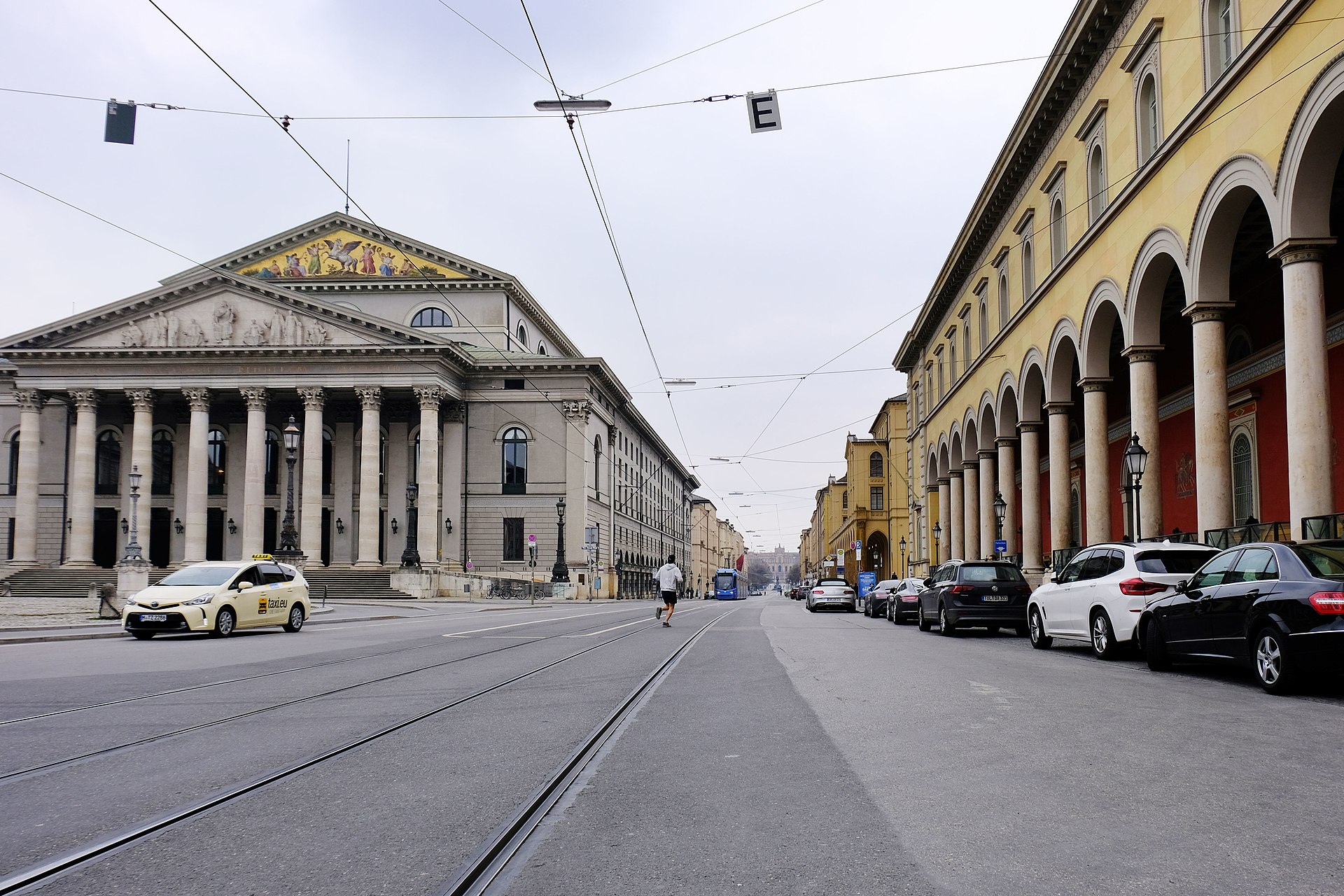
Maximilianstrasse
Maximilianstraße, Altstadt-Lehel, Munich, 80539, Germany
King Maximilian II had a problem with his father. Ludwig I had covered Munich in Greek and Roman architecture — the Glyptothek, the Propyläen, the Alte Pinakothek — and Maximilian wanted to build something that was distinctly his own. In 1850, he commissioned architect Friedrich Bürklein to create a boulevard in a style that didn't exist yet. The result was the "Maximilianstil" — a hybrid of neo-Gothic, Renaissance, and English Gothic influences that belonged to no particular era and no particular country. It belongs entirely to this street. Maximilianstrasse runs east from the National Theatre at Max-Joseph-Platz, crossing the Isar river and terminating at the Maximilianeum — a palace that now houses the Bavarian state parliament. The Maximilianeum's foundation stone was laid in 1857, and Bürklein spent seventeen years on the project, dying before it was finished in 1874. The whole boulevard functions as an architectural thesis: a king's deliberate rejection of his father's classical obsession, expressed in stone, steel, and a style so unique it was never used anywhere else. Today the western stretch of Maximilianstrasse is Munich's most exclusive shopping address. Every luxury brand with a German outpost is here — Chanel, Louis Vuitton, Bulgari, Cartier — along with the Hotel Vier Jahreszeiten, one of Europe's grand 19th-century hotels. The street transforms from luxury retail to cultural boulevard as you move east, passing the Museum of Ethnology and the Bavarian State Parliament before reaching the tree-lined Isar embankment. Along with Brienner Strasse, Ludwigstrasse, and Prinzregentenstrasse, Maximilianstrasse is one of Munich's four royal boulevards — each built by a different ruler, each in a different style, each expressing a different idea about what Bavaria should look like. Walking all four is an architectural history of 19th-century ambition.
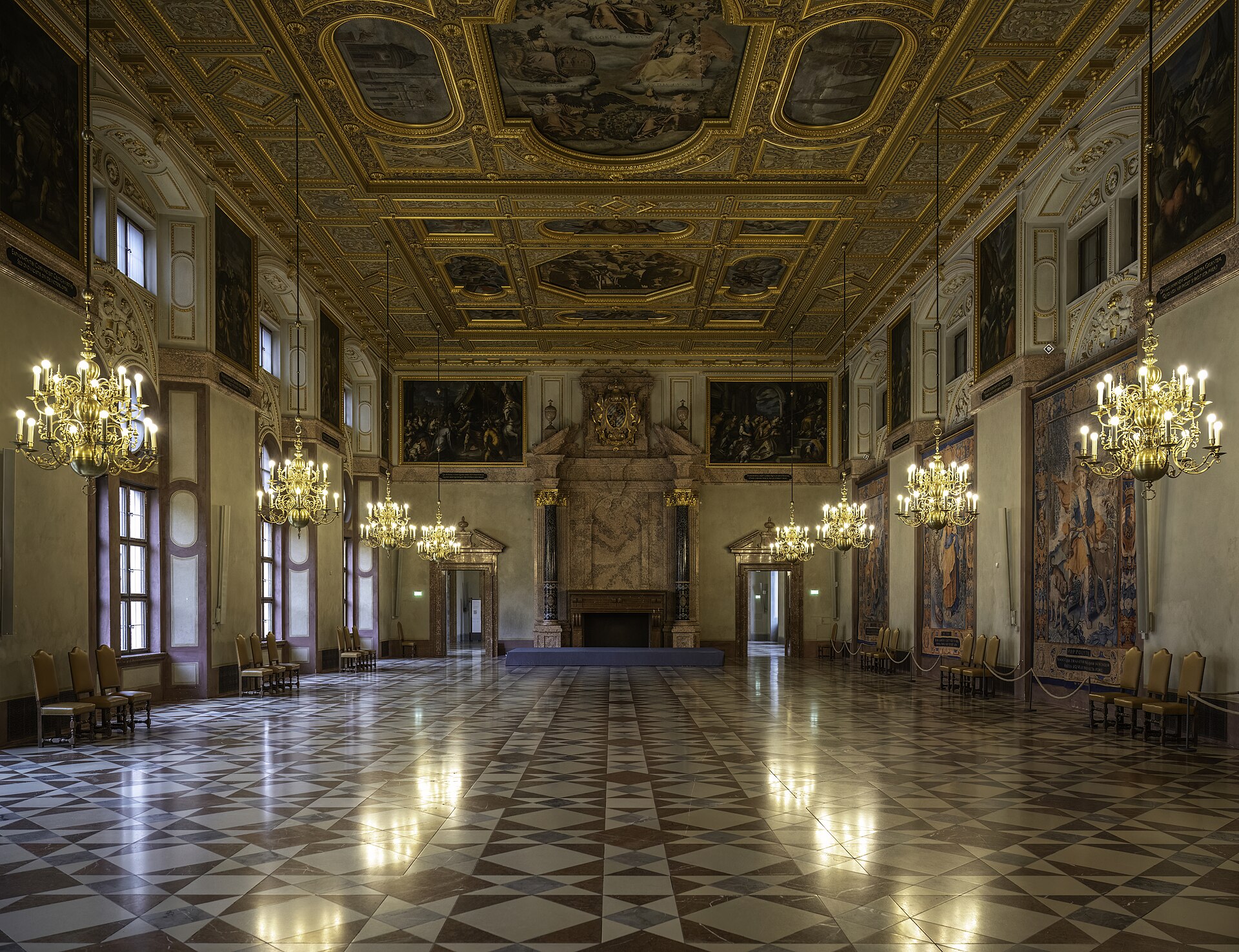
Munich Residenz
1 Residenzstraße, Altstadt-Lehel, Munich, 80333, Germany
This is the largest city palace in Germany, and the Wittelsbach dynasty spent over four centuries making sure everyone knew it. What started as a modest Gothic moated castle in 1385 grew into a 40,000-square-metre complex with ten courtyards and 130 rooms open to visitors — the architectural equivalent of a family that could never stop renovating. Between 1508 and 1918, it served as the seat of Bavarian dukes, electors, and finally kings, each generation adding their own wing in whatever style was fashionable at the time. The Antiquarium is the showstopper — a 69-metre-long barrel-vaulted hall built in 1571 to house Duke Albrecht V's collection of classical sculptures. It's the largest Renaissance interior north of the Alps, with frescoes covering every surface and views of over a hundred Bavarian towns painted into the lunettes. The room doubled as a banqueting hall, because apparently dining surrounded by Roman busts was the Wittelsbach idea of a casual dinner. The Treasury holds one of Europe's most significant collections of royal regalia, spanning a thousand years. The star piece is the statuette of St. George, a dazzling work from around 1599 encrusted with 2,291 diamonds, 209 pearls, and 406 rubies. The Bavarian crown jewels are here too, along with the prayer book of Charles the Bold and exotic treasures from the dynasty's centuries of strategic marriages and diplomatic gift exchanges. World War II destroyed much of the Residenz — Allied bombing raids between 1943 and 1945 gutted most of the interior. The painstaking reconstruction took decades, with some rooms not completed until the 1980s. Today, walking through the Ancestral Gallery with its 121 portraits of Wittelsbach family members, it's easy to forget that nearly every surface you see was rebuilt from rubble. The quality of the restoration is itself a remarkable achievement.
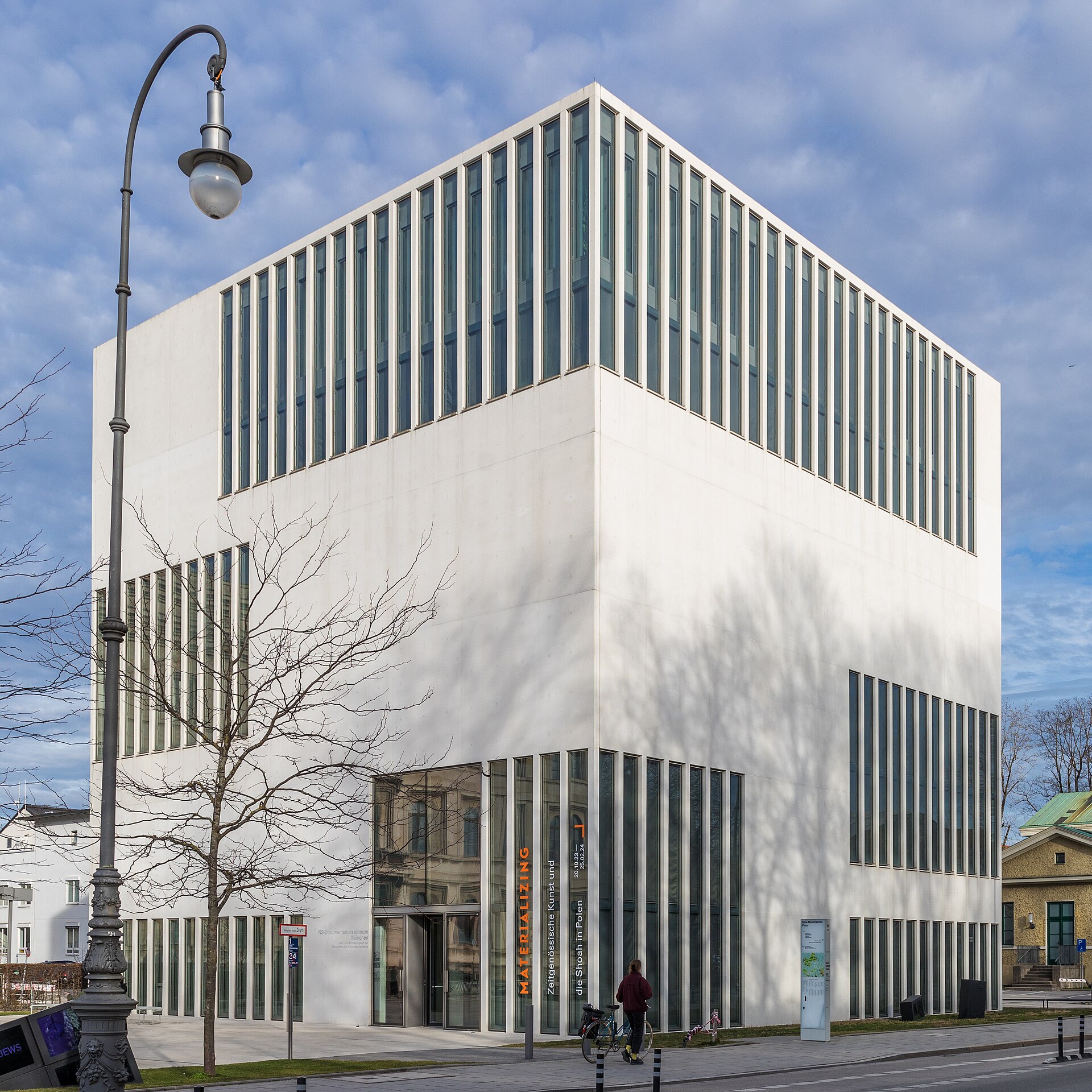
NS-Dokumentationszentrum
1 Max-Mannheimer-Platz, Maxvorstadt, Munich, 80333, Germany
This white cube stands on the exact spot where the "Brown House" once stood — the national headquarters of the Nazi Party from 1930 until Allied bombs destroyed it in 1945. Munich was designated the "Capital of the Movement" by the Nazis, and this neighbourhood around Königsplatz was the administrative nerve centre from which the party ran a continent-wide catastrophe. Opening a documentation centre here in 2015 was a decision that took the city decades to make, and the result is one of the most important museums in Germany. The architecture is deliberately confrontational. A stark white box with horizontal louvred windows that frame views of the surrounding Nazi-era buildings — the former Führerbau (now a music university) and the former NSDAP administrative building — without mimicking them. The architect's intention was to create a building that acknowledges the site without referencing the building that stood here before. It's architecture as refusal. The permanent exhibition, "Munich and National Socialism," spans four floors and traces how a cultured, prosperous city became the birthplace of the Nazi movement. It doesn't just document what happened — it investigates how and why, using large-format photographs, personal documents, and media installations to reconstruct the social conditions that made Nazism possible. The exhibition is unsparingly honest about Munich's role: this wasn't a city that had Nazism imposed on it from elsewhere. Hitler lived here. The party was founded here. The first concentration camp was built nearby. Admission is free — a deliberate policy choice. The building regularly hosts temporary exhibitions, art interventions, and educational programmes that connect the history of National Socialism to contemporary questions about democracy, discrimination, and populism. It's not a comfortable visit, but it's one of the most essential things you can do in Munich.
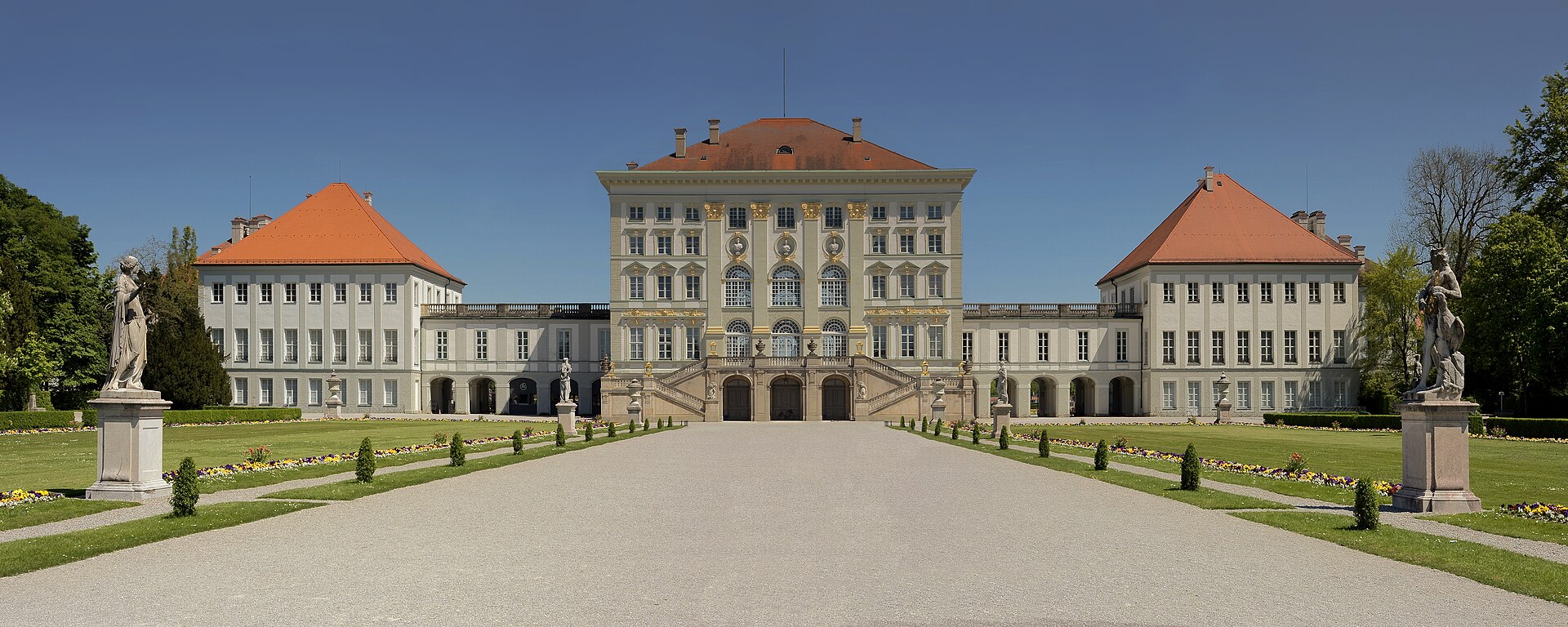
Nymphenburg Palace
Schloss Nymphenburg 1, 80638 Munich
This palace exists because of a baby. When the long-awaited heir Max Emanuel was born in 1662, Elector Ferdinand Maria was so overjoyed that he commissioned an entire summer residence as a celebration. His wife, the Italian-born Henriette Adelaide of Savoy, chose the architect — Agostino Barelli, who also designed Munich's Theatinerkirche — and the result was a Baroque palazzo that grew over the next century into one of the grandest palace complexes in Europe. The Steinerner Saal — the Stone Hall — occupies three full floors of the central pavilion and hits you with a ceiling fresco by Johann Baptist Zimmermann that practically levitates. But the room most visitors come for is King Ludwig I's Gallery of Beauties: 36 portraits of the women he considered the most attractive in Munich, painted by Joseph Stieler between 1827 and 1850. The collection includes a dancer, a shoemaker's daughter, and Ludwig's notorious mistress Lola Montez, whose affair with the king contributed to his forced abdication during the 1848 revolution. Ludwig's taste was democratic; his judgement was questionable. The park surrounding the palace covers 200 hectares and has been redesigned three times — first as an Italian garden in 1671, then remodelled in the French style by a pupil of Versailles' Le Nôtre, and finally reworked into an English landscape garden in the early 1800s by Friedrich Ludwig von Sckell, the same landscape architect behind the Englischer Garten. A central canal stretches from the palace westward to a marble cascade decorated with Greek and Roman gods. King Ludwig II was born here on August 25, 1845. The room where Bavaria's most famous eccentric first drew breath is part of the palace tour — an oddly intimate detail in a building of such formal grandeur. The palace also houses the Marstallmuseum, one of Europe's finest collections of royal carriages and sleighs, including the fantastical gilded coaches Ludwig II used for his midnight rides through the Bavarian countryside.
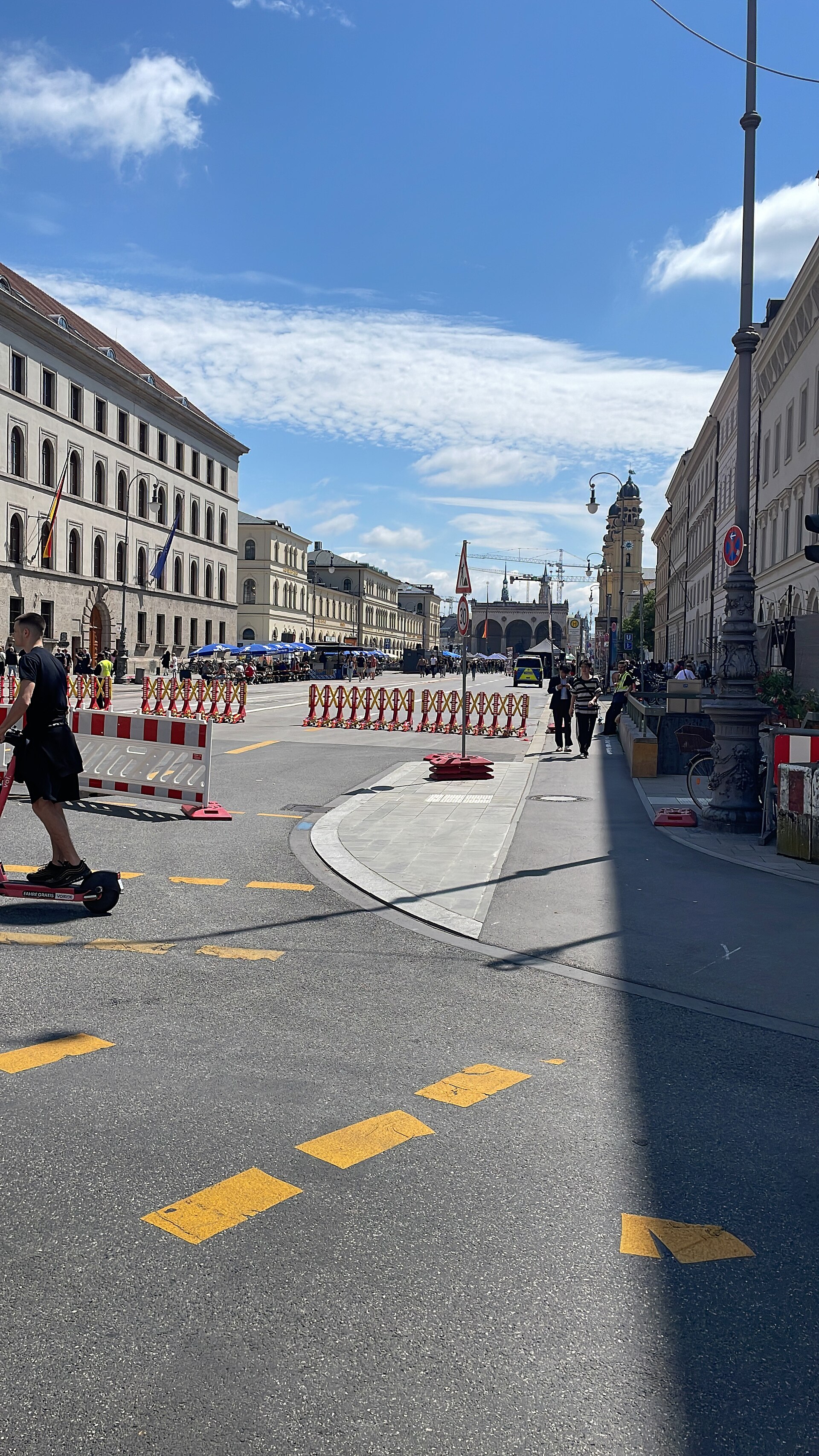
Odeonsplatz & Feldherrnhalle
Odeonsplatz, 80539 Munich
The Feldherrnhalle looks like it was stolen from Florence, and in a sense it was. King Ludwig I commissioned it in 1841 as a copy of the Loggia dei Lanzi, built to honour Bavaria's military commanders. Two bronze statues stand inside — Count Tilly, who commanded Catholic forces in the Thirty Years' War, and Prince Wrede, a Napoleonic-era general. Between them, a third monument honours the Bavarian army itself. It's a perfectly dignified 19th-century war memorial, which makes what happened next all the more disturbing. On November 9, 1923, roughly two thousand Nazi supporters marched from the Bürgerbräukeller toward the Feldherrnhalle in an attempted coup led by Adolf Hitler. Police opened fire. Sixteen Nazis, four police officers, and one bystander were killed. Hitler was arrested, tried, and imprisoned — where he wrote Mein Kampf. When the Nazis took power in 1933, they turned the Feldherrnhalle into a shrine to their fallen, installing a permanent honour guard and requiring every pedestrian to give the Nazi salute when passing. Many Münchners refused. They took a detour through the narrow Viscardigasse behind the hall, which locals nicknamed "Drückebergergasse" — Shirkers' Alley. This small act of defiance was hardly revolutionary, but it was persistent and widespread. In 1995, the city installed a trail of golden bronze cobblestones along the alley to commemorate those who chose the detour. It's one of Munich's most quietly powerful memorials — no grand statue, just a shining path that says: some people walked a different way. Today Odeonsplatz is a lively gathering point framed by the Theatinerkirche, the Hofgarten entrance, and the beginning of Ludwigstrasse. The dark history has been absorbed into the fabric of the square rather than erased, which feels like the right approach for a city that has learned the cost of forgetting.
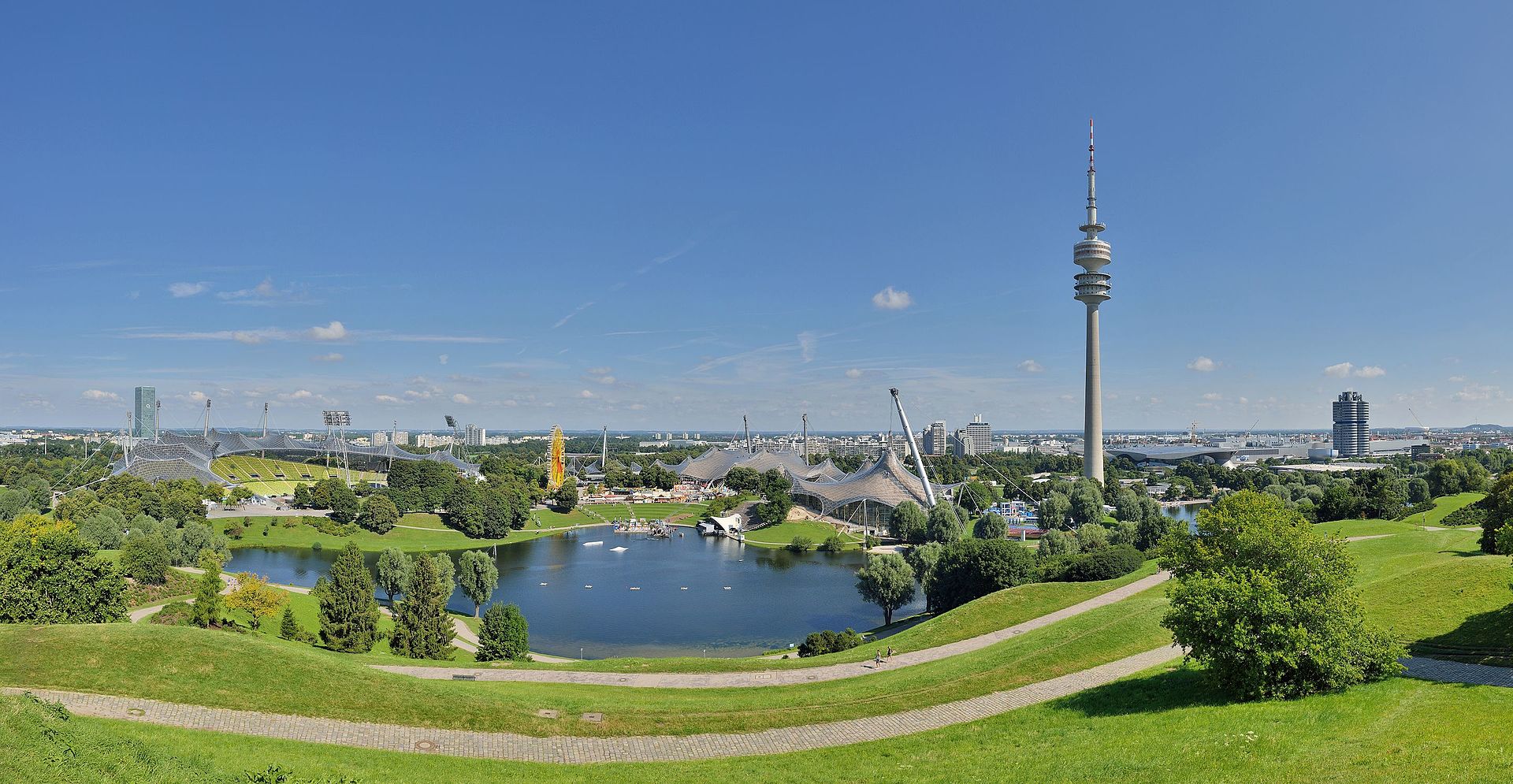
Olympiapark
Spiridon-Louis-Ring 21, 80809 Munich
The 1972 Munich Olympics were supposed to be the "Cheerful Games" — Germany's deliberate contrast to the militaristic spectacle of Berlin 1936. Architect Günther Behnisch designed a park that rejected monumental grandeur in favour of lightness and transparency. The iconic tent-like roof structure, engineered by Frei Otto using pre-stressed cable nets suspended from pylons up to 80 metres high and covered in acrylic glass panels, was a revolution in architecture. It made the stadium look like it was floating. The entire site was built on a hill of World War II rubble — the debris from a bombed city, landscaped into an optimistic vision of the future. Then came September 5, 1972. Palestinian terrorists from the Black September group took eleven Israeli athletes hostage in the Olympic Village. A botched rescue attempt at the military airfield in Fürstenfeldbruck ended with all eleven hostages, five of the terrorists, and a German police officer dead. The massacre shattered the Games' hopeful narrative and changed security at international events forever. A memorial now stands at 31 Connollystrasse in the Olympic Village, marking the building where the athletes were held. The park has emphatically refused to become a relic. Since 1972, it has hosted over 14,800 events attended by more than 221 million people. The Olympic Tower rises 291 metres and offers panoramic views extending to the Alps on clear days. The Olympic swimming hall, the events arena, and the stadium itself — where Franz Beckenbauer's West Germany won the 1974 World Cup — remain in active use. What makes Olympiapark remarkable is that it holds its contradictions without resolving them. It's a place of architectural joy and historical grief, of athletic celebration and political violence. The acrylic roof still lets light through exactly as Otto intended, and the memorial for the murdered athletes is a five-minute walk away. Both things are true at the same time.
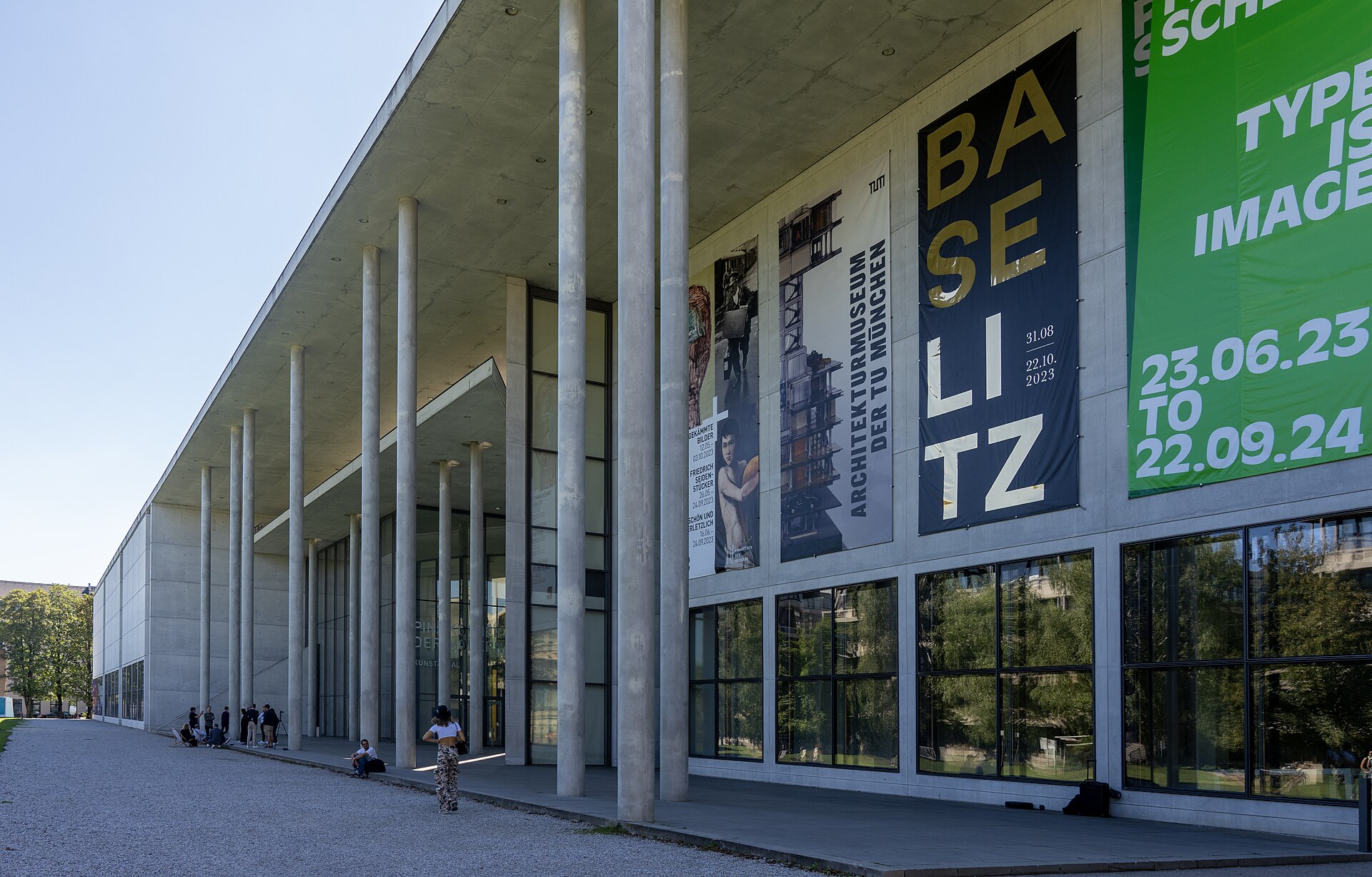
Pinakothek der Moderne
Barer Straße 40, 80333 Munich
Four museums in one building. The Pinakothek der Moderne, opened in 2002, houses four independent collections under a single roof designed by architect Stephan Braunfels: modern and contemporary art, graphic arts, architecture, and design. At 12,000 square metres of exhibition space, it's one of the largest museums of modern art in the world, and its central rotunda — a vast, light-flooded circle where all four collections converge — is an architectural experience in itself. The art collection alone justifies the visit. German Expressionism is a particular strength — major works by Kirchner, Beckmann, Kandinsky, and Klee, many of them from Munich's Blauer Reiter movement, which was founded here in 1911 and changed the course of 20th-century art. The collection moves through Surrealism, Pop Art, and contemporary installation, with pieces by Picasso, Magritte, Warhol, Beuys, and Baselitz arranged in galleries that feel spacious enough to let each work breathe. The Neue Sammlung — the design collection — is internationally recognised as one of the most important design museums in the world. It holds over 100,000 objects spanning furniture, industrial design, graphic design, and automotive design from the 20th and 21st centuries. Everything from a Bauhaus chair to a vintage Porsche to a 1960s Braun radio is exhibited here, tracing how the things we use every day have been shaped by aesthetic decisions. The building sits in Munich's Kunstareal — the art quarter — within walking distance of the Alte Pinakothek, the Neue Pinakothek, the Glyptothek, and the Lenbachhaus. This concentration of world-class museums in a single neighbourhood rivals any art district on the planet, and the Pinakothek der Moderne is the contemporary anchor that brings the whole story up to date.
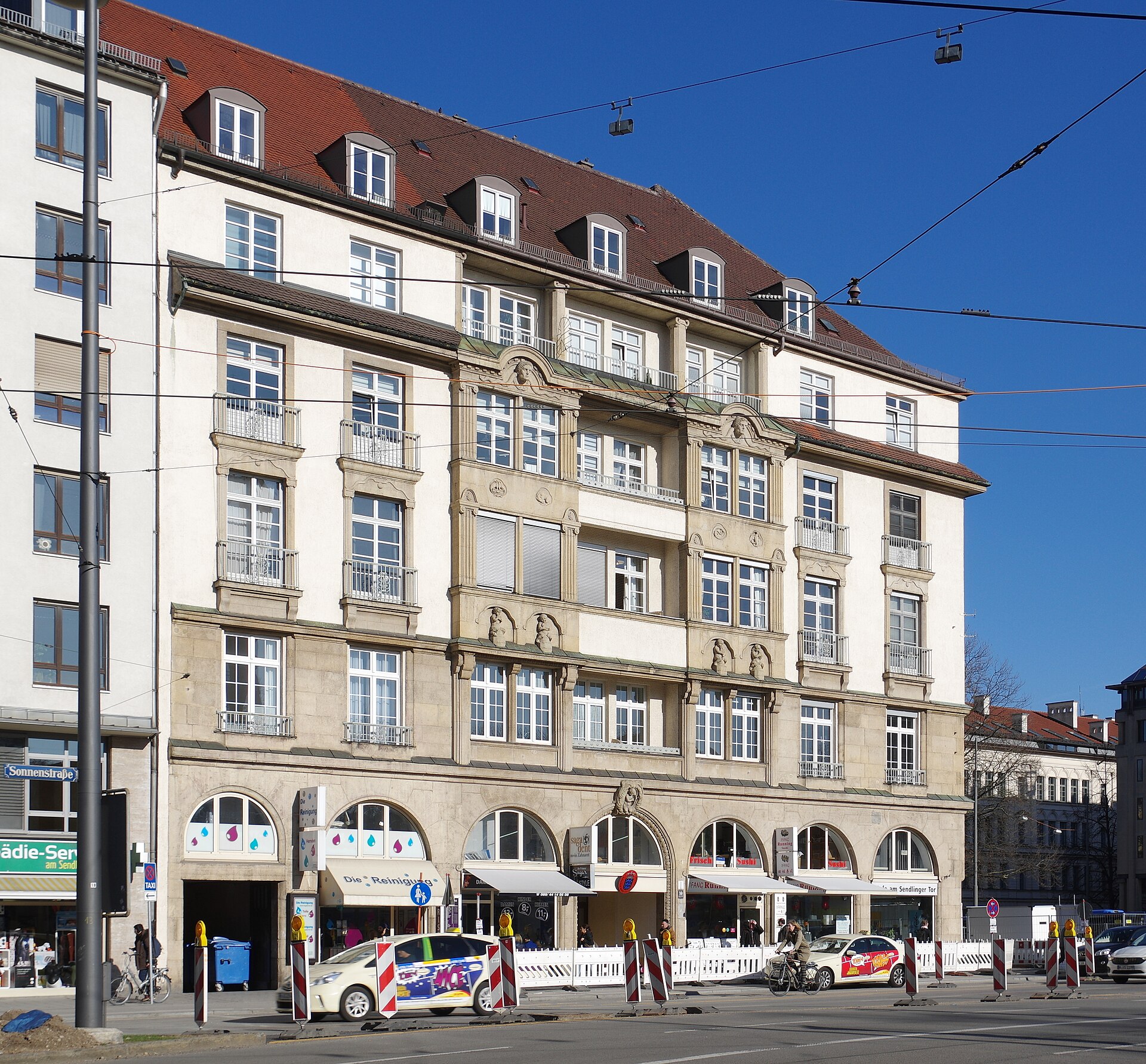
Sendlinger Tor
Sendlinger-Tor-Platz, 80336 Munich
Munich once had a complete ring of medieval walls with multiple gates. Most were demolished in the 19th century when the city burst its medieval boundaries. Three survived: the Isartor, the Karlstor, and this one — the Sendlinger Tor, which has stood at the southern approach to the old town since the first written record in 1318. For centuries, this was where the road to Italy began. Every merchant, pilgrim, and army heading south passed through these arches. King Ludwig the Bavarian built the gate as part of Munich's second city wall expansion in the 14th century. The original design featured a central tower flanked by two octagonal side towers — a standard medieval arrangement that survived remarkably intact for 500 years. In 1808, the central tower was removed. In 1906, architect Wilhelm Bertsch converted the three small pedestrian archways into a single large arch to accommodate modern traffic, which was both practical and aesthetically painful. The two flanking towers, connected by a wall with a pointed arch, are the 14th-century originals. The gate sits at the southern end of Sendlinger Strasse, one of Munich's oldest shopping streets and home to the Asam Church just a few hundred metres to the north. The contrast between the medieval stonework of the gate and the busy modern traffic circle surrounding it is jarring — Sendlinger Tor looks like a castle guard who fell asleep and woke up in a roundabout. During the Sendling Christmas Massacre of 1705, Bavarian peasants mustered near this gate in an uprising against Austrian occupation. The revolt was crushed and hundreds were killed — an event still commemorated annually in the Sendling district. The gate has watched seven centuries of Munich pass through its arches, from medieval salt traders to S-Bahn commuters, and it looks like it plans to watch seven more.
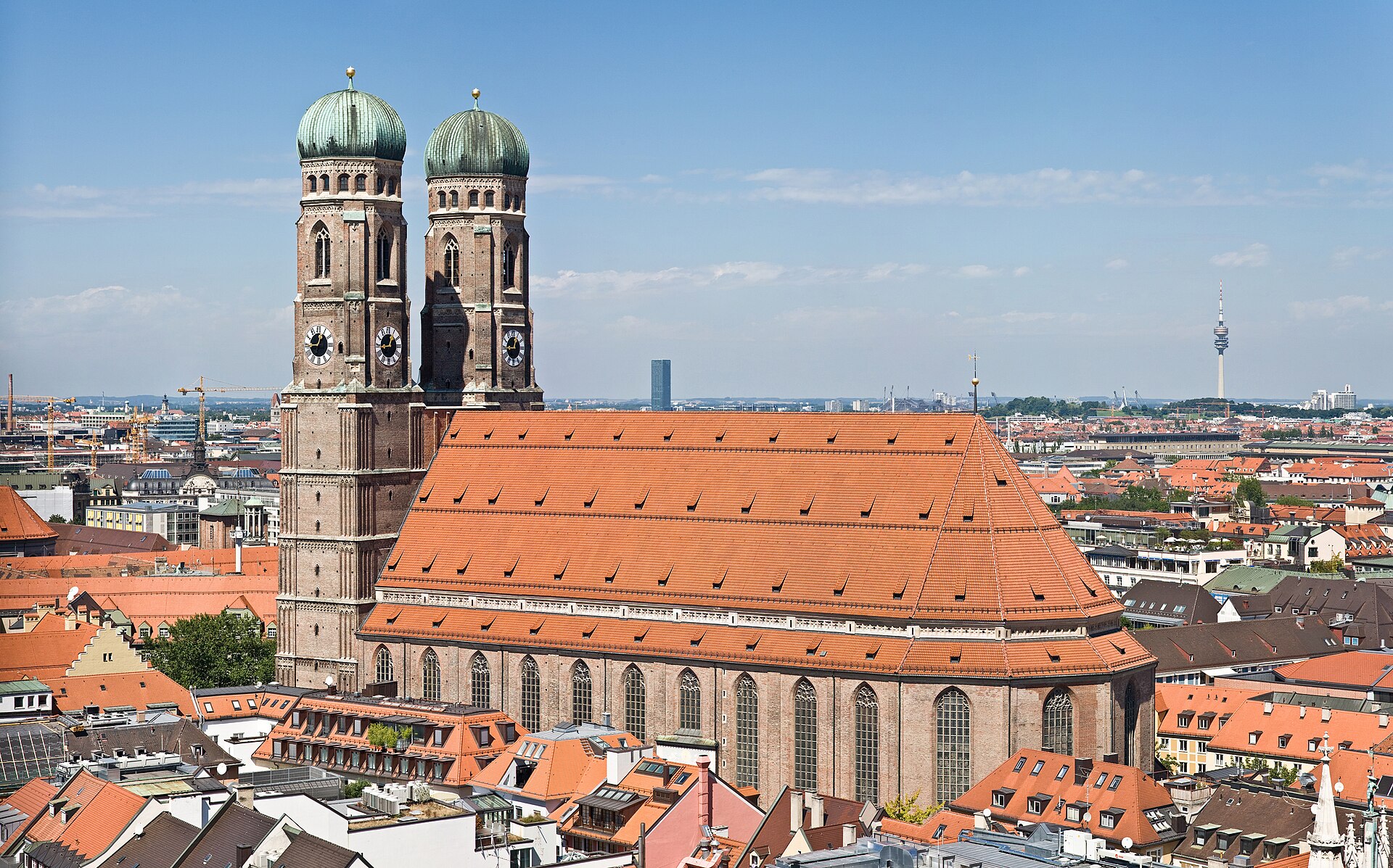
St. Peter's Church
Rindermarkt 1, 80331 Munich
Before Munich was Munich, there was a church on this hill. The Petersbergl — Peter's Hill — had a settlement of monks and a church as early as the 8th century, making this the oldest recorded parish site in the city. When Duke Henry the Lion officially founded Munich in 1158, he built around what was already here. In a very real sense, Munich didn't create St. Peter's — St. Peter's created Munich. The current building is a palimpsest of catastrophe and reconstruction. The original Romanesque church burned in the city fire of 1327 and was rebuilt in Gothic style. Baroque renovations in the 17th and 18th centuries added the ornate high altar with its golden figure of St. Peter, now one of Munich's most recognised pieces of ecclesiastical art. Then Allied bombs devastated the building in 1944, and Munich spent decades piecing it back together. Every era left its mark, which gives the interior a layered richness that purpose-built churches rarely achieve. The real draw is "Alter Peter" — Old Peter — the 91-metre tower with its viewing platform. There's no lift. Just 306 narrow, spiralling steps up to a cramped outdoor gallery that rewards you with a 360-degree panorama of the city, the Alps on clear days, and a God-like view straight down into Marienplatz. It's the best vantage point in central Munich, and the locals know it — the platform gets packed on sunny afternoons. Inside the church, look for the jewelled skeleton of St. Mundita, lying in a glass coffin near the left aisle. She's a catacomb saint whose remains were brought from Rome in the 17th century, adorned with gold, gems, and silk, and placed on display as the patron saint of single women. Her skull wears a crown, her teeth are visible, and she gazes at visitors through glass eyes. It's simultaneously beautiful, macabre, and very Munich.
Theatinerkirche
Theatinerstraße 22, 80333 Munich
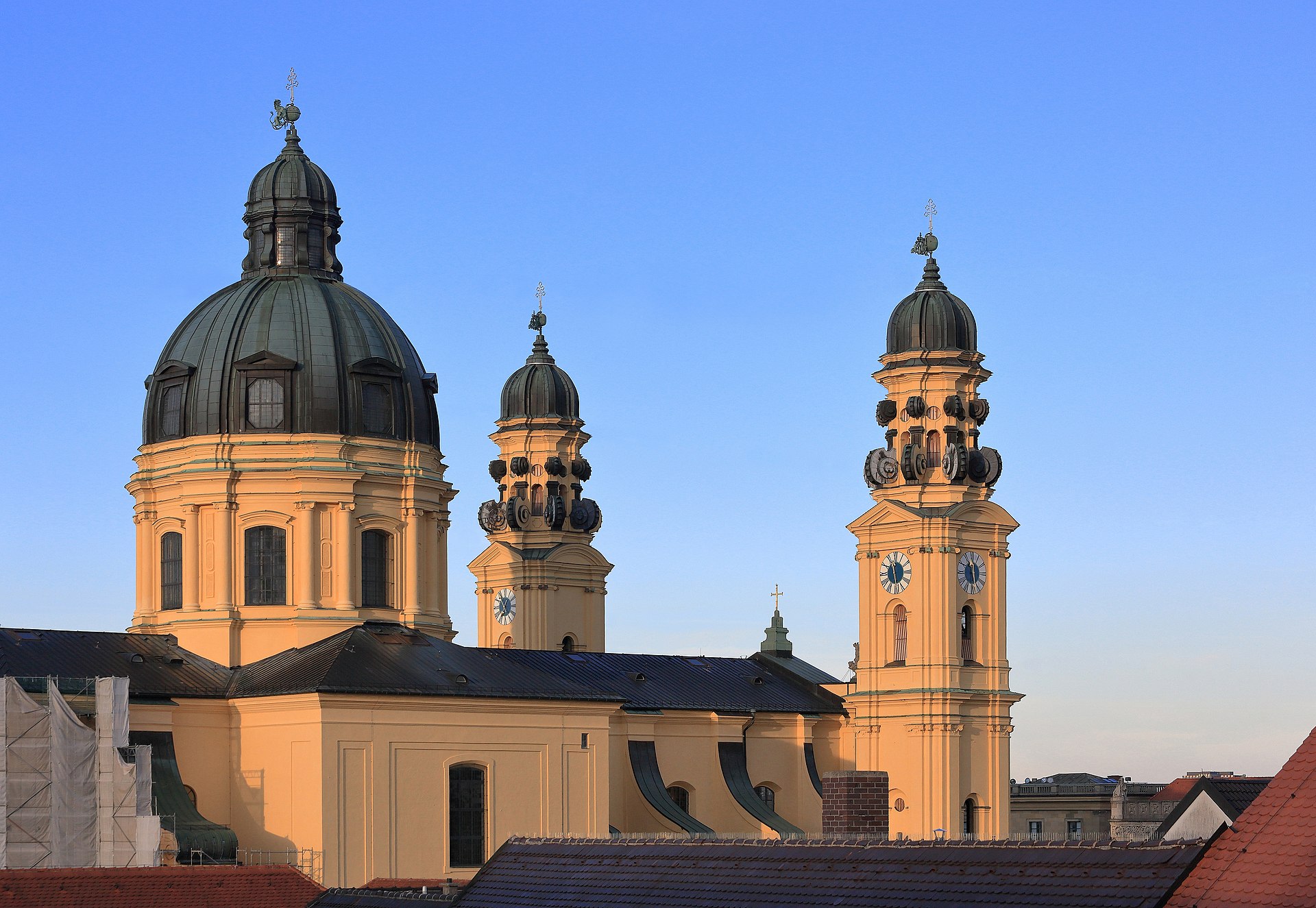
Like Nymphenburg Palace, this church exists because of a baby. When the long-awaited heir Max Emanuel was born in 1662, Elector Ferdinand Maria and his wife Henriette Adelaide commissioned both a palace and a church to celebrate. The Theatinerkirche — officially St. Cajetan — was designed by the Italian architect Agostino Barelli, modelled after Sant'Andrea della Valle in Rome, and built between 1663 and 1690. It brought Italian High Baroque to Bavaria with such conviction that southern German church architecture was never the same. The yellow façade is the church's signature. Completed nearly a century after the rest of the building by François de Cuvilliés the Elder in a Rococo style his son later finished, it became such an iconic Munich image that it influenced Baroque architecture across all of southern Germany. The colour — a warm Mediterranean ochre — stands out against Munich's grey skies like a postcard from Henriette Adelaide's native Italy, which was almost certainly the point. The twin towers rise to 64.6 metres, framing a dome that reaches 71 metres — dimensions that make the Theatinerkirche one of the most prominent silhouettes on the Munich skyline alongside the Frauenkirche. Enrico Zuccalli, who replaced Barelli after the Italian architect was dismissed mid-construction (church politics were as vicious then as now), added the towers that weren't part of the original plan. Below the church lies the Fürstengruft — the Princely Crypt — containing the remains of 49 members of the Wittelsbach dynasty, including four electors, three kings, Emperor Karl VII, and Prince Regent Luitpold. It's one of the most significant royal burial sites in Germany, hidden beneath a church that most visitors admire only from the outside as they cross Odeonsplatz. The crypt is open to visitors and usually empty — the royals finally have the quiet they were promised.
Theresienwiese & Bavaria Statue
Theresienwiese, 80339 Munich
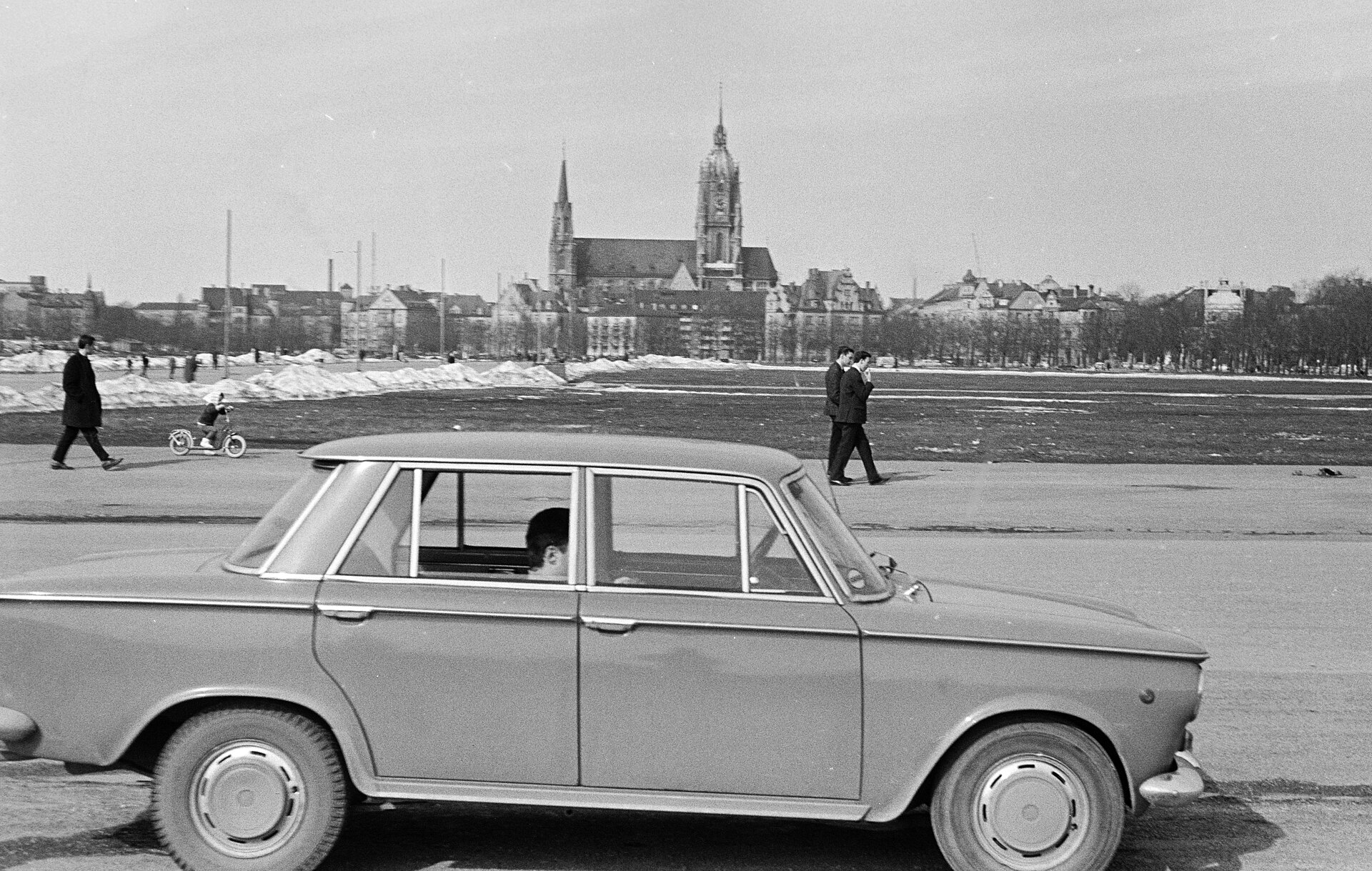
It started as a wedding. On October 12, 1810, Crown Prince Ludwig married Princess Therese of Saxe-Hildburghausen, and the citizens of Munich were invited to celebrate with horse races on a meadow at the city's edge. The party was such a hit that they did it again the next year, and the year after that, and now — over two hundred years later — Oktoberfest draws roughly six million visitors over sixteen days, making it the largest folk festival in the world. The meadow is still called Theresienwiese — Theresa's Meadow — after the bride. For most of the year, the Theresienwiese is an enormous, empty field. Then, in late September, it transforms into a temporary city of beer tents, roller coasters, and roasted-almond stands. The fourteen large tents each hold between 5,000 and 11,000 people, and the biggest — the Hofbräu-Festzelt — is the size of an aircraft hangar. Seven million litres of beer are consumed during the festival, served exclusively by Munich's six major breweries in specially brewed Oktoberfest Märzen. The first keg is tapped by the mayor at noon on opening day with the traditional cry: "O'zapft is!" — "It's tapped!" Overlooking the meadow from the west is the Bavaria statue — an 18-metre bronze figure completed in 1850 that was the first colossal statue since antiquity that could be entered. You climb a spiral staircase inside her and look out through her eyes at the city below. The statue was cast in four enormous pieces by Ferdinand von Miller at the same foundry that produced the doors of the US Capitol, and she holds a sword and a wreath of oak leaves with a lion at her feet. The Ruhmeshalle — Hall of Fame — stretches behind the Bavaria statue in a Doric colonnade housing busts of noteworthy Bavarians. It's almost always empty, because everyone is either at Oktoberfest or recovering from it. But the view from Bavaria's head on a clear day, with the Alps behind the city and the meadow sprawling below, is one of Munich's great secrets — hiding in plain sight, eighteen metres above the beer.
Viktualienmarkt
Viktualienmarkt 3, 80331 Munich
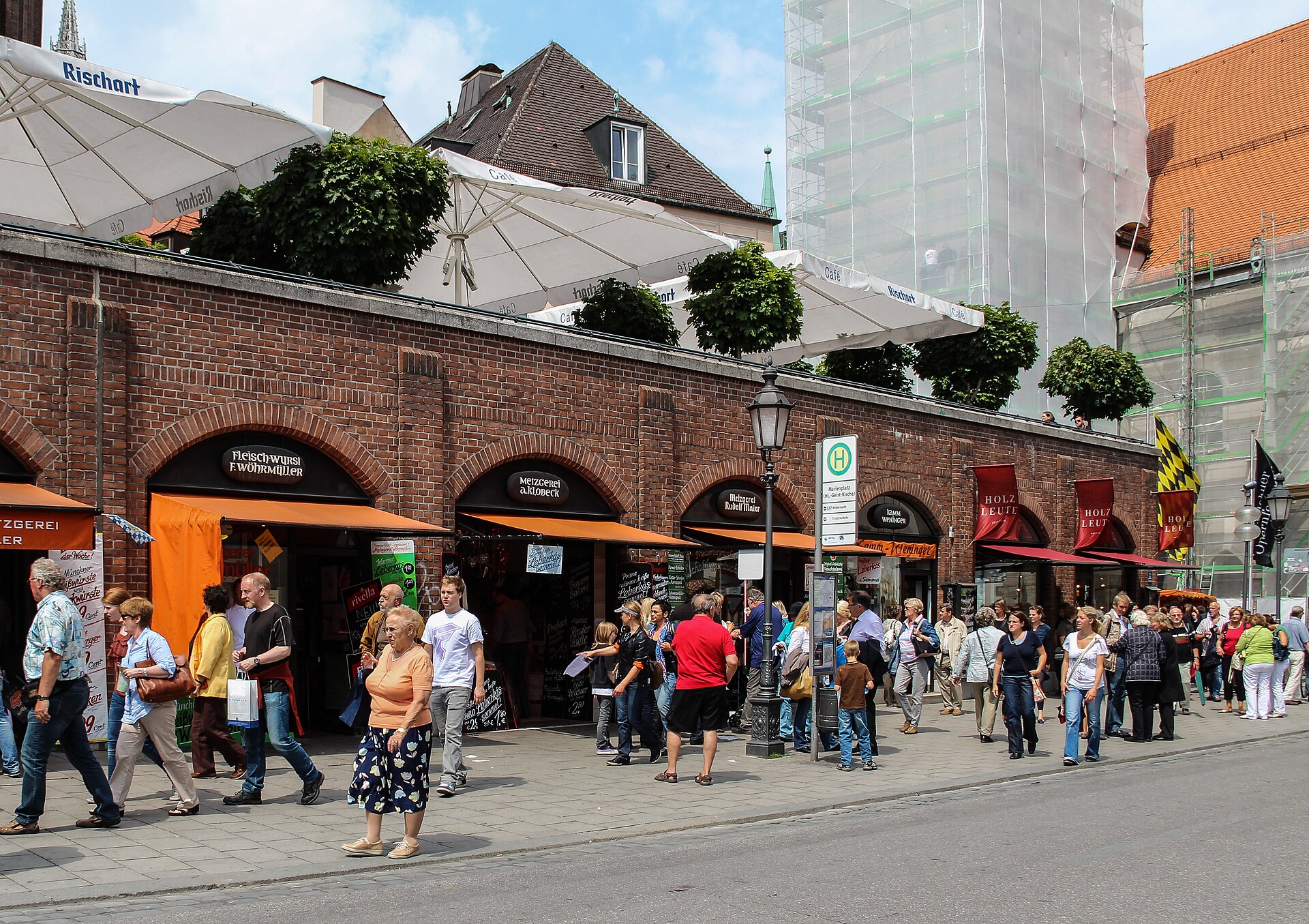
Munich's belly has been rumbling at this spot since 1807, when King Maximilian I decreed that the farmers' stalls choking Marienplatz needed to move somewhere bigger. The name comes from the Latin "victualia" meaning provisions, though locals originally just called it the Green Market. Within sixteen years the new site was already packed to the brim, and it's been expanding and reinventing itself ever since — 22,000 square metres of open-air food market right in the heart of the old town. The 35-metre maypole standing over the market arrived in 1962, courtesy of a mayor who declared, "If we're already a village, then we need a maypole." Its painted figures depict Munich's essential character: brewery teams, Oktoberfest scenes, the Schäffler coopers' dance, and the patron saints of brewers. It's a folk-art totem pole for a city that takes both its beer and its traditions seriously enough to put them on a stick. What makes the Viktualienmarkt genuinely unusual is the beer garden at its centre. Every five to six weeks, the tap switches to a different one of Munich's six major breweries — Augustiner, Hacker-Pschorr, Löwenbräu, Hofbräu, Paulaner, and Spaten — making it the only beer garden in the city where you can eventually drink them all without changing seats. The 800-seat garden sits under ancient chestnut trees, surrounded by stalls selling everything from Bavarian truffles to hand-made pasta to exotic spices. Six bronze fountain statues scattered around the market honour Munich's most beloved folk comedians and singers — Karl Valentin, Liesl Karlstadt, Weiß Ferdl, Ida Schumacher, Elise Aulinger, and Roider Jackl. Most visitors walk right past them, which these sharp-tongued Bavarian entertainers would probably find hilarious.
White Rose Memorial
Geschwister-Scholl-Platz 1, 80539 Munich
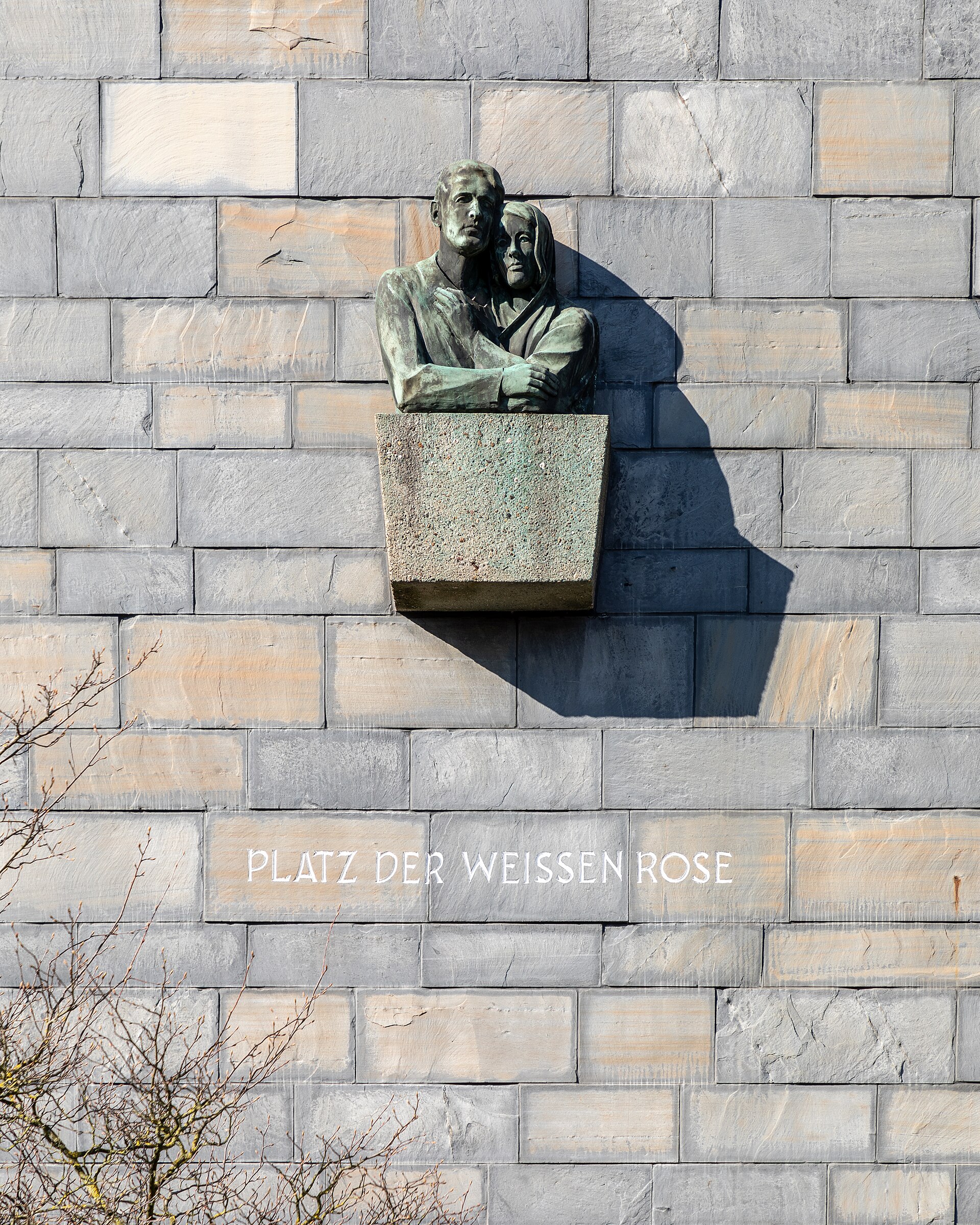
On February 18, 1943, a twenty-one-year-old biology student named Sophie Scholl and her brother Hans carried a suitcase full of leaflets into the main building of Ludwig-Maximilians-Universität. They placed stacks on windowsills and in corridors, then Sophie threw the remaining copies from the third-floor balustrade into the atrium below. A janitor saw them. Four days later, Sophie, Hans, and their friend Christoph Probst were tried by a Nazi court and executed by guillotine. Sophie was twenty-one. Hans was twenty-four. Probst was twenty-three and a father of three. The White Rose was a non-violent resistance group of five students and one professor who wrote and distributed six leaflets between June 1942 and February 1943, calling on Germans to resist the Nazi regime. Their words were extraordinary — literate, philosophical, and furious. "We will not be silent," the fourth leaflet declared. "We are your bad conscience. The White Rose will not leave you in peace." In a country where millions chose silence, six people chose words, knowing the cost. Today, the memorial at LMU operates on multiple levels. Inside the main building, the DenkStätte Weiße Rose exhibition occupies the space where the Scholls were caught. A plaque marks the exact spot where Sophie threw the leaflets. Outside, bronze replicas of the group's leaflets are scattered across the cobblestones in front of the university — looking like dropped papers, caught mid-flight, frozen in metal. It's one of the most effective memorials in Germany precisely because it's so understated. The square itself is now named Geschwister-Scholl-Platz — Scholl Siblings Square. The university that failed to protect them now teaches in buildings named after them. It's a small, insufficient act of correction, but Sophie Scholl has become one of the most admired figures in German history, regularly voted the most important German woman of the 20th century in national polls.