On February 18, 1943, a twenty-one-year-old biology student named Sophie Scholl and her brother Hans carried a suitcase full of leaflets into the main building of Ludwig-Maximilians-Universität. They placed stacks on windowsills and in corridors, then Sophie threw the remaining copies from the third-floor balustrade into the atrium below. A janitor saw them. Four days later, Sophie, Hans, and their friend Christoph Probst were tried by a Nazi court and executed by guillotine. Sophie was twenty-one. Hans was twenty-four. Probst was twenty-three and a father of three.
The White Rose was a non-violent resistance group of five students and one professor who wrote and distributed six leaflets between June 1942 and February 1943, calling on Germans to resist the Nazi regime. Their words were extraordinary — literate, philosophical, and furious. "We will not be silent," the fourth leaflet declared. "We are your bad conscience. The White Rose will not leave you in peace." In a country where millions chose silence, six people chose words, knowing the cost.
Today, the memorial at LMU operates on multiple levels. Inside the main building, the DenkStätte Weiße Rose exhibition occupies the space where the Scholls were caught. A plaque marks the exact spot where Sophie threw the leaflets. Outside, bronze replicas of the group's leaflets are scattered across the cobblestones in front of the university — looking like dropped papers, caught mid-flight, frozen in metal. It's one of the most effective memorials in Germany precisely because it's so understated.
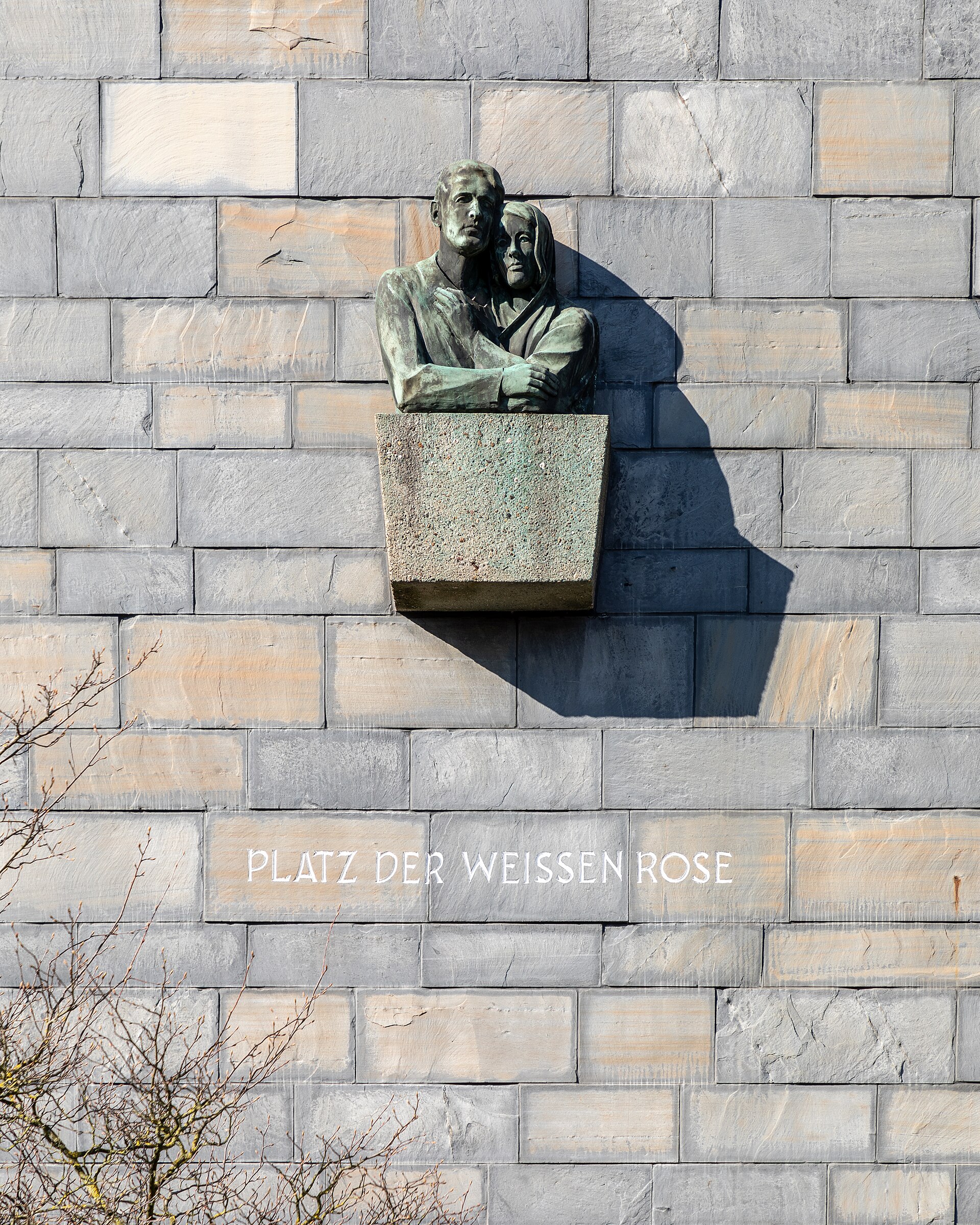
The square itself is now named Geschwister-Scholl-Platz — Scholl Siblings Square. The university that failed to protect them now teaches in buildings named after them. It's a small, insufficient act of correction, but Sophie Scholl has become one of the most admired figures in German history, regularly voted the most important German woman of the 20th century in national polls.
Verified Facts
Sophie and Hans Scholl were arrested on February 18, 1943 at LMU and executed by guillotine four days later
The White Rose distributed six leaflets between June 1942 and February 1943 calling for resistance against Nazism
Bronze replicas of the leaflets are embedded in the cobblestones outside the university building
Sophie Scholl is regularly voted the most important German woman of the 20th century in national polls
Get walking directions
Geschwister-Scholl-Platz 1, 80539 Munich