The name of this palace is based on a misunderstanding, but it is a beautiful one. In 1519, Don Fadrique Enriquez de Rivera — first Marquis of Tarifa — returned from a pilgrimage to Jerusalem and noticed that the distance from his Seville palace to the Cruz del Campo was the same as the distance from Pontius Pilate's Praetorium to Calvary. He established a Stations of the Cross route between the two points, and the name Casa de Pilatos — House of Pilate — stuck, even though the building has absolutely nothing to do with Pilate.
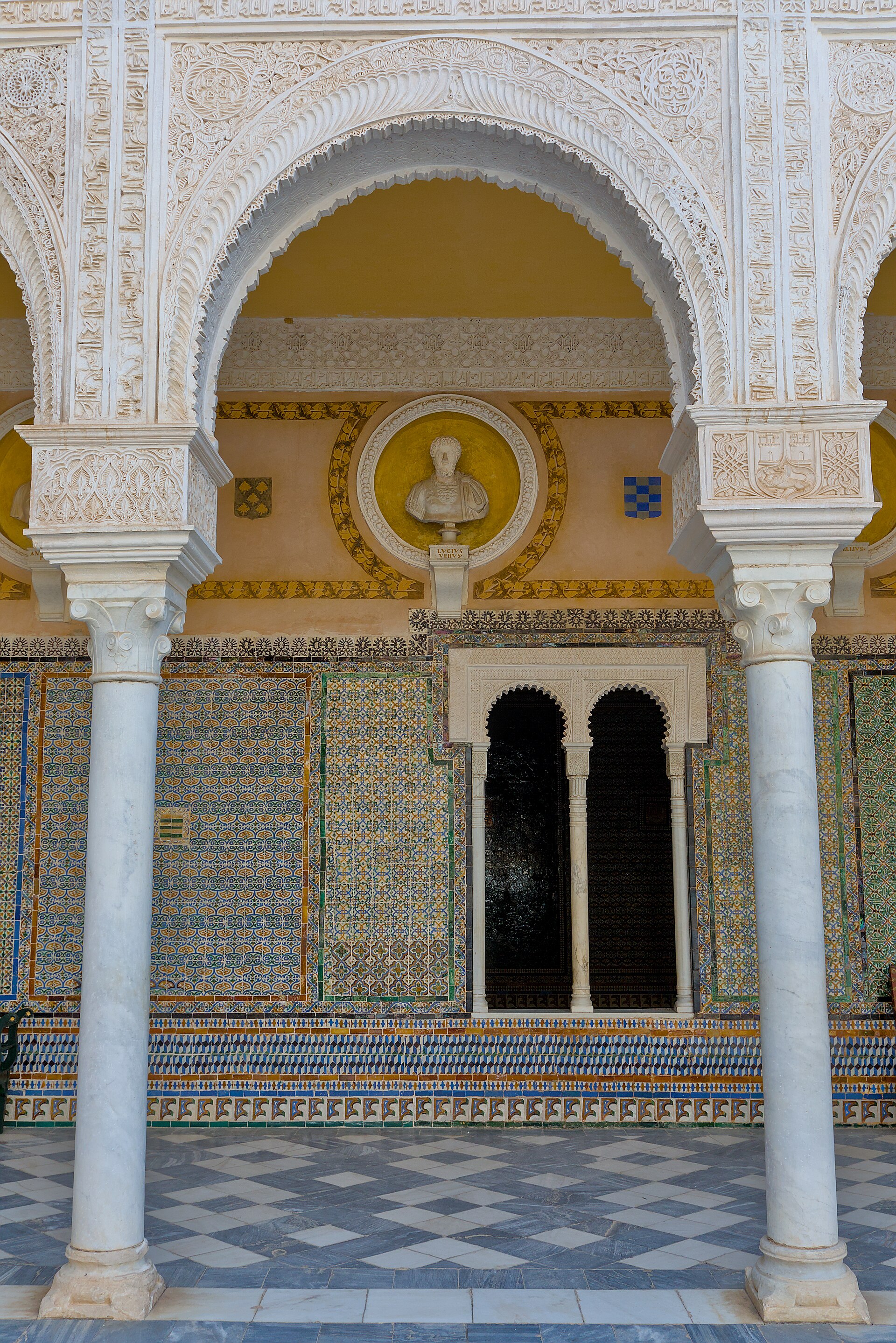
What it does have is arguably the finest collection of azulejo tilework in all of Andalusia. The Pulido brothers, Diego and Juan, created over 150 different tile designs for the palace in the 1530s, making it one of the largest early-modern azulejo collections in the world. The tiles cover every surface of the ground floor — walls, stairways, even bench seats — in an explosion of geometric and vegetal patterns that blend Mudejar tradition with Renaissance innovation.
The palace itself is a masterclass in layered architecture. Started in 1483 by Pedro Enriquez de Quinones and his wife Catalina de Rivera, it mixes Italian Renaissance elements with Mudejar craftsmanship in ways that feel entirely natural. The main patio, with its Roman statues in each corner and central fountain, could be a courtyard in Florence if not for the horseshoe arches and intricate stucco overhead. Upstairs, the rooms hold a collection of Roman antiquities that the marquises brought back from Italy.
The palace was declared a National Monument in 1931 and is still owned by the Ducal House of Medinaceli. It receives a fraction of the visitors that the Alcazar gets, which means you can stand alone in the courtyard and hear nothing but the fountain.
Verified Facts
The palace name derives from Don Fadrique's 1519 observation that the distance to Cruz del Campo matched the path from Pilate's Praetorium to Calvary
The Pulido brothers created over 150 different azulejo tile designs for the palace in the 1530s
Construction began in 1483 and the building was declared a National Monument in 1931
The palace is still owned by the Ducal House of Medinaceli and blends Italian Renaissance and Mudejar architectural styles
Get walking directions
1 Plaza de Pilatos, Casco Antiguo, Seville, 41003, Spain