Walking Tours in Sevilla
30 Landmarks in Sevilla
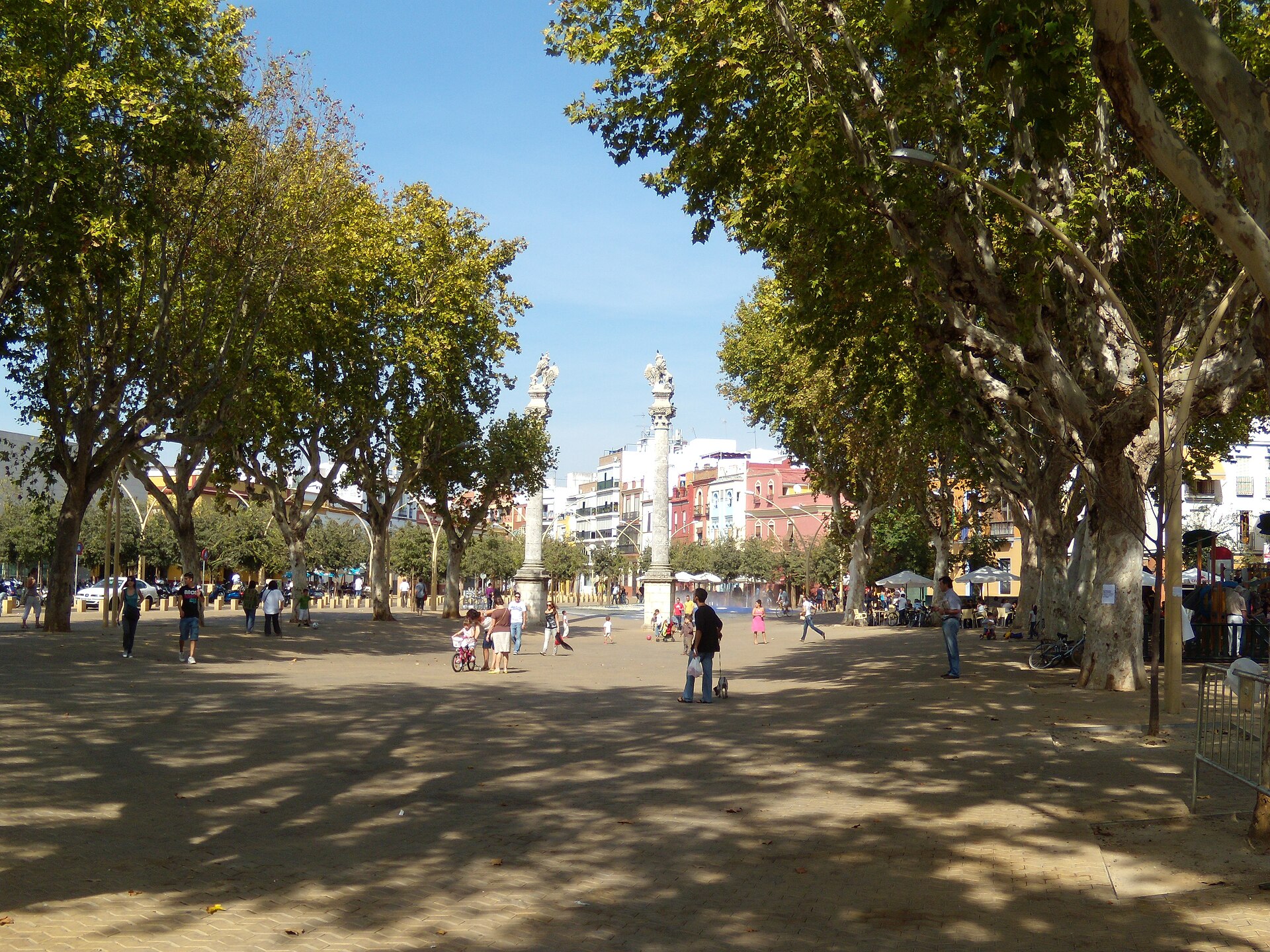
Alameda de Hércules
Plaza Alameda de Hercules, Casco Antiguo, Seville, 41002, Spain
Laid out in 1574, this is the oldest public garden in Spain and one of the oldest in all of Europe. That statistic alone would make it noteworthy, but the Alameda's real story is about reinvention. The site was originally a marshy flood plain along the Guadalquivir that the Count of Barajas drained by building channels and planting rows of white poplar trees — "alamos" in Spanish, which gave the promenade its name. Two Roman columns were hauled from a temple on nearby Calle Marmoles and erected at the southern end, topped with statues of Hercules (mythological founder of Seville) and Julius Caesar (credited with restoring the city during Roman rule). For centuries the Alameda was a fashionable promenade, then it became a market, then in the twentieth century it slid into decline and became one of Seville's roughest neighborhoods — a no-go zone of drugs and prostitution that respectable Sevillanos avoided. The turnaround began slowly in the 1990s, and a major city-funded renovation between 2006 and 2008 repaved the boulevard, added fountains, and turned it into the most vibrant plaza in modern Seville. Today the Alameda is the heart of Seville's alternative scene. It is the center of the city's LGBTQ nightlife, home to independent bookshops and vintage stores, and ringed by terrace bars that fill every evening with a crowd that skews younger and more bohemian than the tourist zones across the old town. On Sunday mornings, a flea market takes over part of the square. The northern columns are modern reproductions, but the two southern ones are genuinely Roman — roughly 2,000 years old and still standing exactly where the sixteenth-century engineers placed them. They are easy to miss in the bustle of the evening crowd, which is part of the Alameda's charm: ancient history hiding in plain sight.
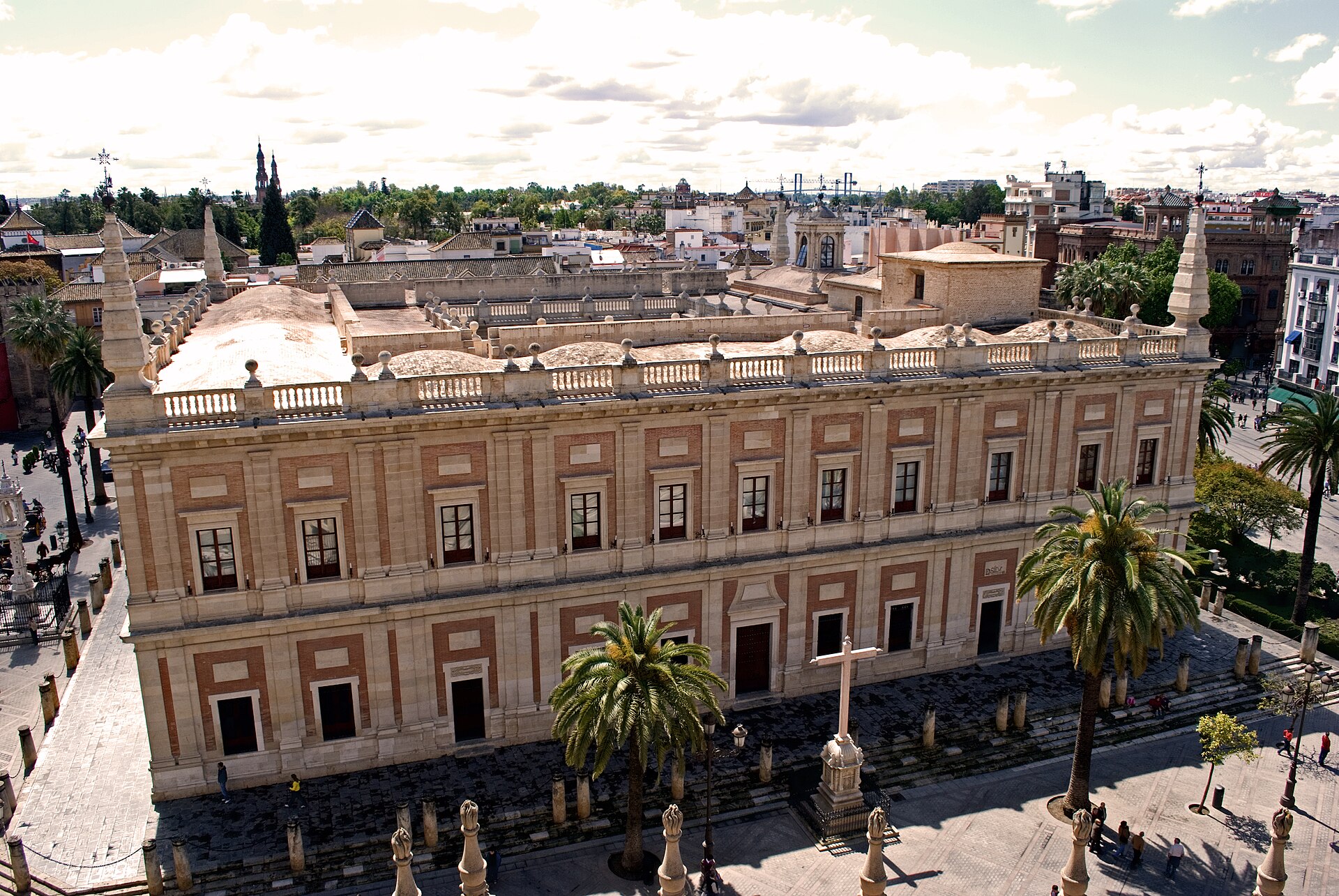
Archivo General de Indias
3 Avenida de la Constitución, Casco Antiguo, Seville, 41004, Spain
Every piece of paper that shaped the colonization of the Americas — treaties, letters, maps, ship manifests, death warrants — ended up here. The General Archive of the Indies holds more than 80 million original document pages stored on eight kilometres of shelving, making it the single most important repository of colonial history in the world. When historians want the original Treaty of Tordesillas that divided the New World between Spain and Portugal, they come to this building. When they want to read Columbus's handwriting or study maps drawn by Magellan, they come here too. The building itself predates its archival mission by two centuries. It was designed in 1572 by Juan de Herrera — the same architect who built the Escorial for Philip II — as the Lonja de Mercaderes, the merchants' exchange where Seville's traders conducted business during the city's golden age as gateway to the Americas. The elegant Renaissance structure, with its open courtyard and harmonious proportions, was one of the finest commercial buildings in Europe until trade shifted to Cadiz in the eighteenth century. King Carlos III ordered the conversion in 1785, consolidating colonial documents that had been scattered across archives in Simancas, Cadiz, and elsewhere. The idea was radical for its time: a single, centralized repository of imperial knowledge. The original wooden shelving, designed by the master carpenter Blas Molner, is itself a work of art — floor-to-ceiling mahogany cases that line the upper galleries. The archive was included in the 1987 UNESCO World Heritage listing alongside the cathedral and Alcazar. Entry is free, and the ground-floor exhibition rotates original documents — you might see a letter from Hernan Cortes to the king or a map of a Caribbean island drawn before anyone in Europe knew the Pacific Ocean existed.
Avenida de la Constitución
Av. de la Constitución, 41001 Sevilla
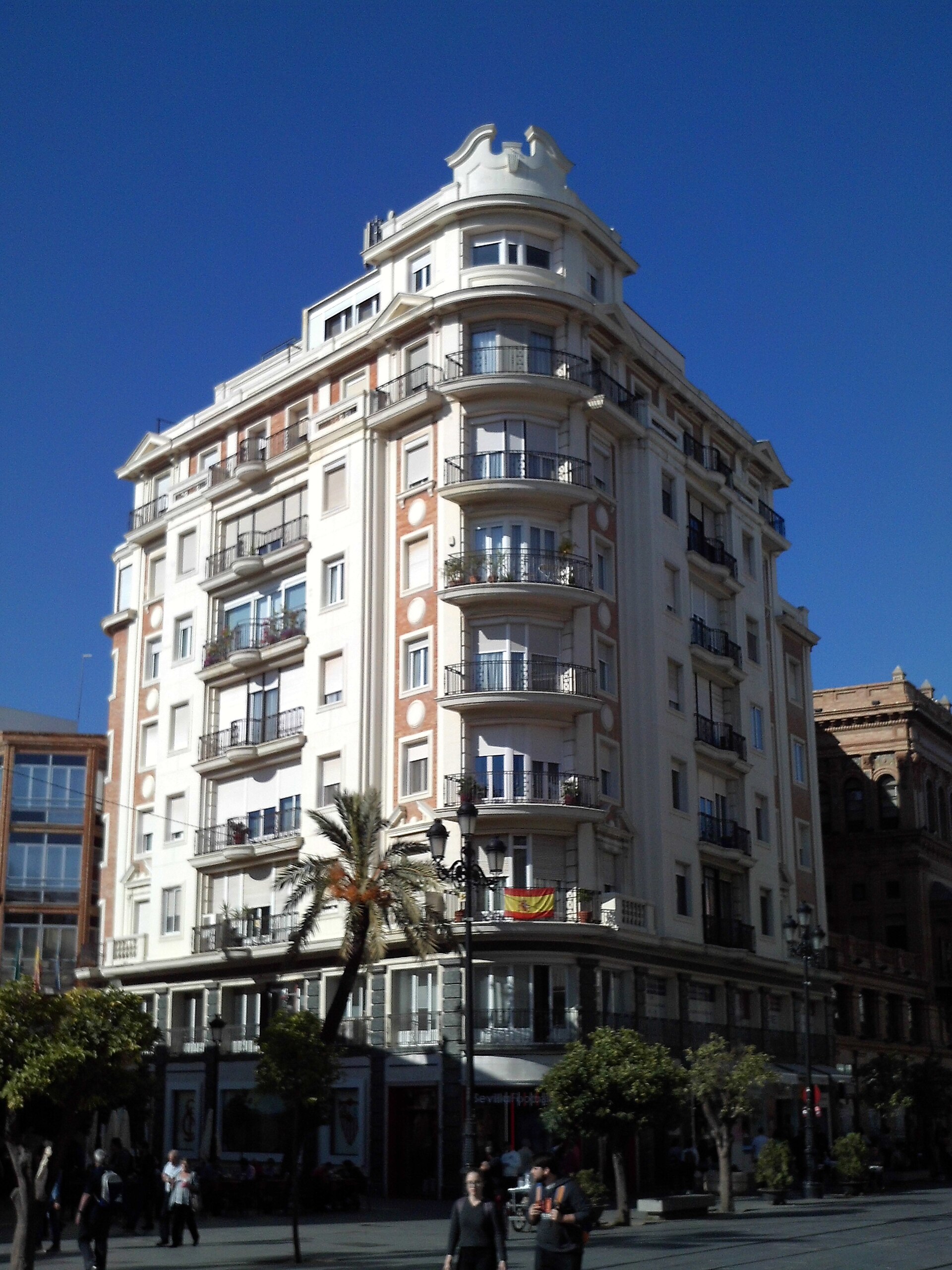
This broad boulevard is the ceremonial spine of Seville, the street where every Semana Santa procession passes and where the city puts itself on display. But for most of the twentieth century, it was a traffic-choked nightmare — cars, buses, and motorbikes fighting for space alongside pedestrians trying to reach the cathedral. In 2007, the city finally pedestrianized large sections and installed the MetroCentro tram, transforming it from a polluted thoroughfare into one of Spain's most elegant promenades. The architecture along the avenue reads like a timeline of Seville's ambitions. The neo-Gothic Edificio de la Adriatica, built in 1922, was designed by Jose Espiau y Munoz and crowned with a small tower and weather vane that locals still use as a landmark for giving directions. Across the street, the Banco de Espana building flaunts its Regionalist credentials, while further along, the former Hotel Alfonso XIII — built for the 1929 Exposition — is considered one of the most beautiful hotel buildings in Spain. During Semana Santa, this avenue becomes an outdoor cathedral. Thousands of spectators line both sides as the brotherhoods carry their pasos — enormous floats bearing life-sized religious sculptures — from their home churches to the cathedral and back. Some of these floats weigh over 5,000 kilograms and are carried by teams of 40 costaleros who cannot see where they are going. The silence when a paso passes is absolute, broken only by the occasional spontaneous saeta — an emotional flamenco prayer sung from a balcony. Walk the avenue on a normal evening and you get Seville at its most relaxed: families on the paseo, kids chasing pigeons, and the Giralda glowing gold at the far end.
Barrio Santa Cruz
Barrio Santa Cruz, 41004 Sevilla
This tangled labyrinth of whitewashed alleyways and jasmine-draped patios was once the most feared address in Seville. When Ferdinand III conquered the city from the Moors in 1248, he corralled the entire Jewish population — the second largest on the Iberian Peninsula after Toledo — into this walled neighborhood. For nearly 150 years the juderia thrived behind its locked gates, producing scholars, merchants, and physicians. Then came the pogrom of 1391, when mobs slaughtered thousands and forced mass conversions. A century later, the Alhambra Decree of 1492 finished the job, expelling every remaining Jew from Spain. The neighborhood fell into centuries of neglect after that, which ironically preserved its medieval character. The narrow streets were originally designed to provide maximum shade — some alleys are barely a metre wide, and on Calle Reinoso, legend says you can lean out of a balcony and kiss your neighbor across the way. The whitewashed walls reflect heat, and the enclosed patios create natural cooling systems that predate air conditioning by half a millennium. In the early twentieth century, the city gave Santa Cruz a romantic makeover for the 1929 Exposition, planting gardens in former convents and creating small plazas like the Plaza de Santa Cruz, where an ornate iron cross marks the site of the demolished parish church. But the bones of the medieval quarter survive underneath: follow any alley far enough and you will hit a dead end, a remnant of the neighborhood's original defensive layout. Look for the former synagogue-turned-church of San Bartolome, and duck into the tiny Plaza de Dona Elvira at dusk, when guitar music drifts out of hidden courtyards and the orange trees fill the air with the scent that defines Seville.
Basílica de la Macarena
1 Calle Bécquer, Casco Antiguo, Seville, 41002, Spain
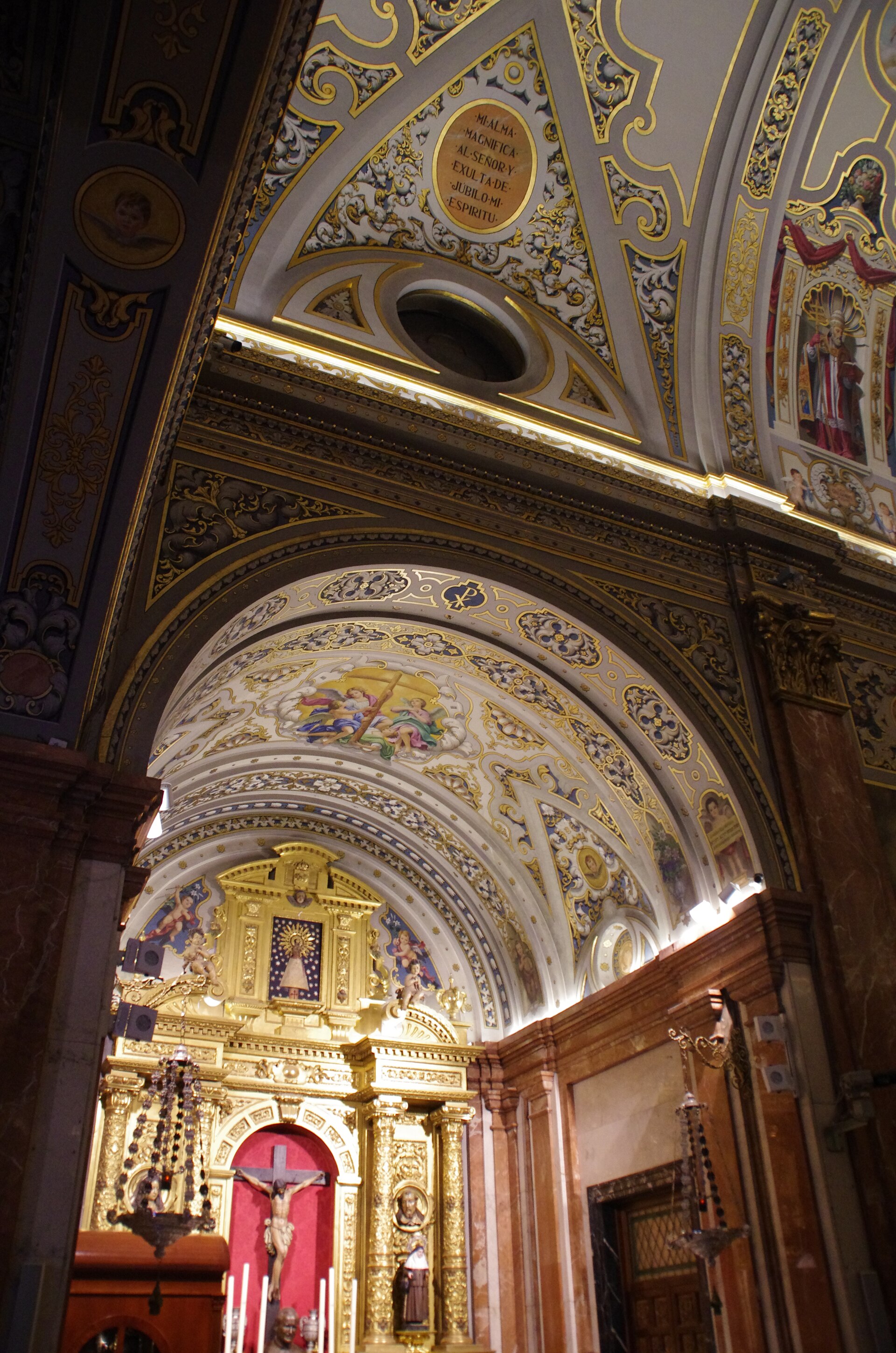
Seville has dozens of churches, but this is the one that makes the city weep. The Basilica de la Macarena houses the Virgen de la Esperanza Macarena — a seventeenth-century wooden statue that is arguably the most beloved religious image in all of Spain. She is not just a figure in a church; she is a living presence in the city's emotional life. Matadors pray to her before entering the ring. Flamenco singers dedicate songs to her. On the night of Good Friday, when her float is carried through the streets for twelve hours, grown men openly cry. The statue itself is a remarkable piece of Baroque craftsmanship, attributed to Pedro Roldan or someone in his workshop around 1680. She stands about 175 centimetres tall, with articulated arms, real human hair, and five teardrops carved on her cheeks. She is dressed in elaborate embroidered robes that are changed seasonally, and her crown — granted by a canonical coronation from Pope John XXIII in 1964 — is encrusted with jewels. A discolored mark on one cheek is said to have come from a bottle of wine thrown by a drunken soldier; according to legend, no restorer has ever been able to remove the stain. The basilica itself is relatively modern — built between 1941 and 1949, and elevated to Minor Basilica status by Pope Paul VI in 1966. But the devotion is ancient. During the Spanish Civil War in 1936, anti-clerical mobs attempted to destroy the image. It was hidden and survived, only deepening the faithful's attachment. The attached museum displays the brotherhood's collection of silver processional items, including the massive paso on which the Virgin rides during Semana Santa. Even if you are not religious, the intensity of devotion here is extraordinary to witness.
Calle Betis & the Triana Waterfront
Calle Betis, Triana, Seville, 41010, Spain
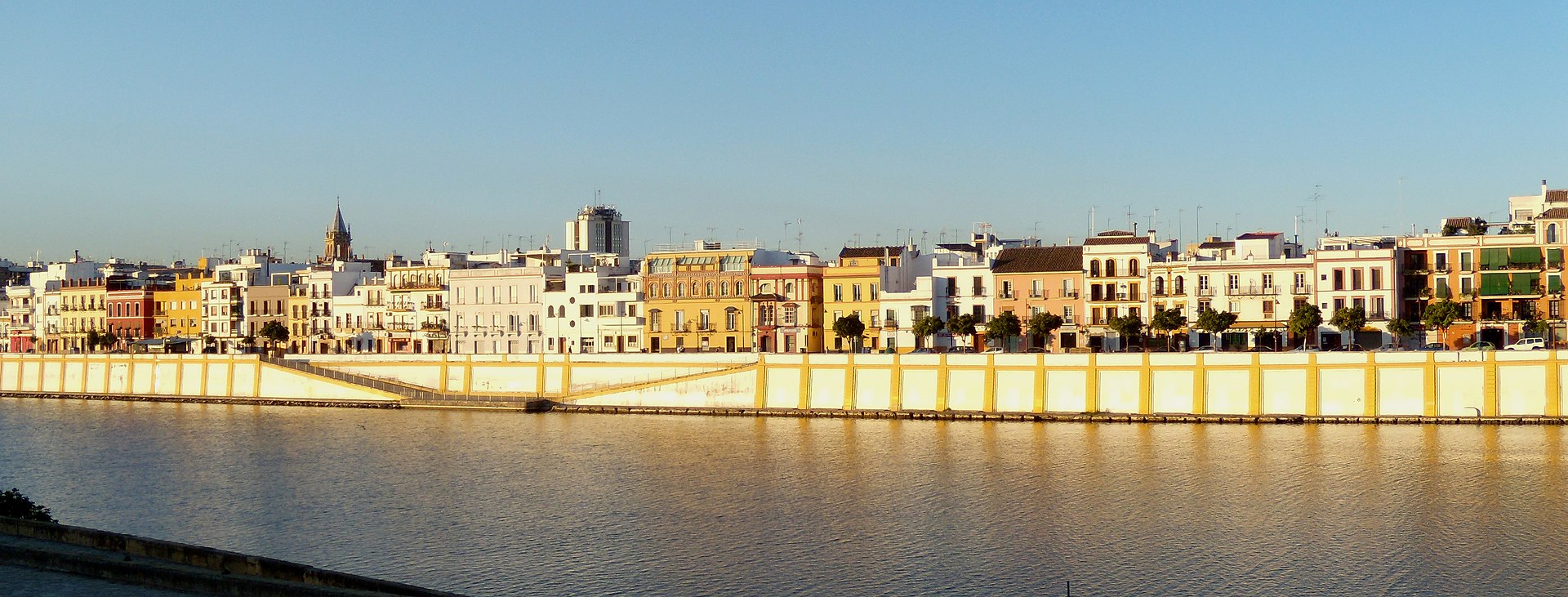
If you ask a Sevillano where to have a drink with the best view in the city, nine out of ten will say Calle Betis. This riverside street on the Triana bank of the Guadalquivir faces directly across the water at the old city skyline — the Torre del Oro, the cathedral, the Giralda — and at sunset the whole scene turns gold and pink in a way that makes even jaded locals stop and stare. The street has been Triana's social spine for centuries. It started as a working waterfront where sailors, fishermen, and dock workers drank in rough taverns after unloading cargo. The buildings along the river still show their origins: the old ice factory (Antigua Fabrica de Hielo) has been converted into one of the city's most popular bar-restaurants, and former warehouses now house flamenco venues and cocktail bars. The transformation from gritty waterfront to nightlife strip happened gradually over the last few decades, but the street never lost its working-class DNA. On summer evenings, Calle Betis becomes an outdoor living room. Tables spill onto the pavement, street musicians play guitar, and the veladores — the terrace seats — fill with a mix of Sevillanos and visitors who all came for the same reason: that view. The tradition is to start with a beer or a tinto de verano (red wine and lemon soda) at one of the terrace bars, then move to a late dinner at one of the restaurants further along. Cross the street to the riverbank and you can walk along the Guadalquivir all the way south to the bridges, watching scullers train on the water and the city lights reflect off the surface. It is the most romantic walk in Seville, and it costs nothing.
Callejón del Agua
Callejón del Agua, Casco Antiguo, Seville, 41004, Spain
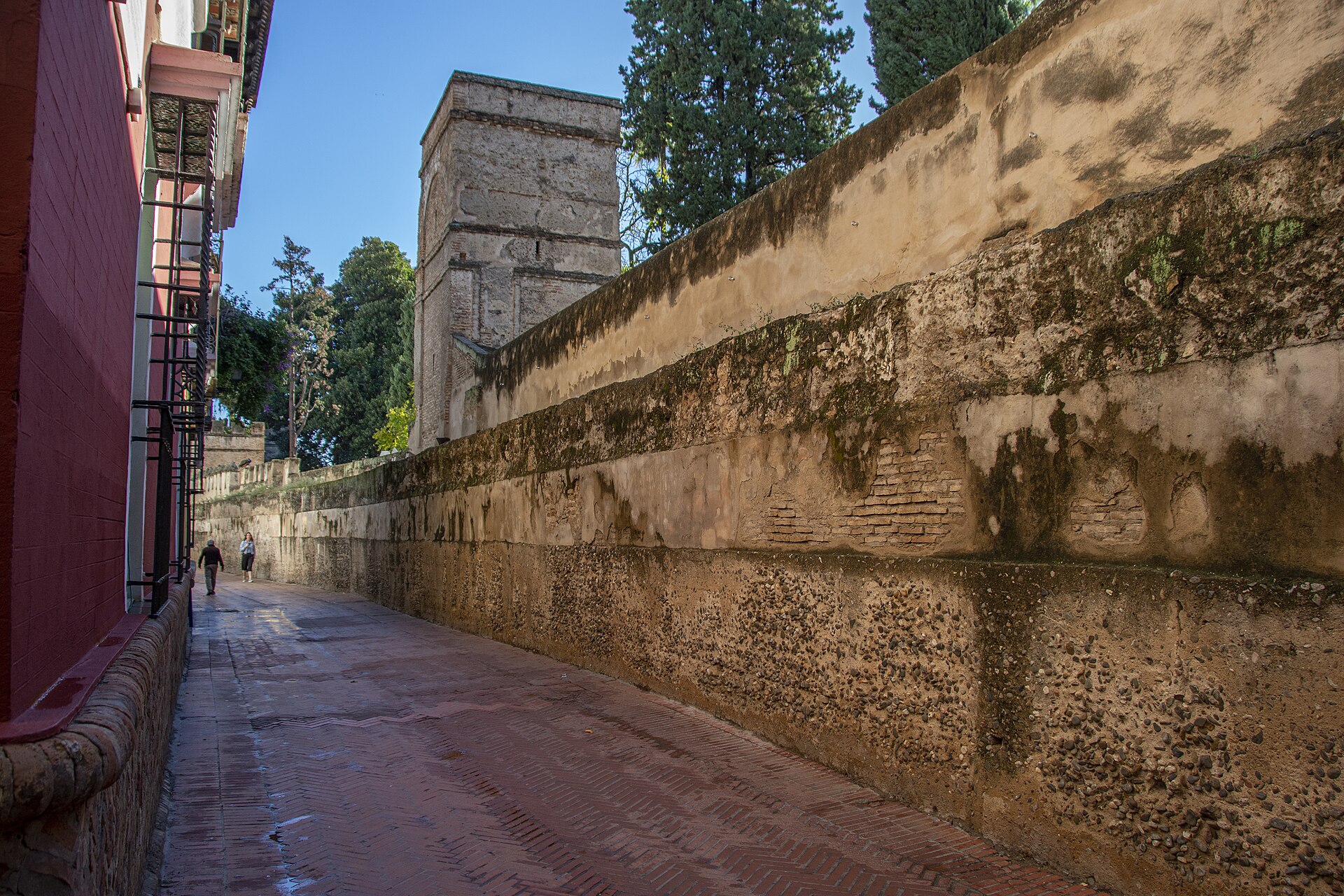
This narrow alley runs along the outer wall of the Real Alcazar, and its name — Water Lane — comes from a clay pipe that once carried water from the Carmona aqueduct into the palace gardens. The pipe is long gone, but the alley remains one of the most atmospheric walks in Seville: a whitewashed corridor draped in jasmine and bougainvillea, with wrought-iron balconies overhead and the distant sound of fountains seeping through the Alcazar walls. Washington Irving lived on this street in 1828 while researching his book "Tales of the Alhambra." He occupied a house whose garden backed onto the Alcazar, and the romantic decay he described — moonlit courtyards, crumbling Moorish plaster, the scent of orange blossoms — is still very much the atmosphere of the callejon today. A small plaque marks his residence, though it is easy to walk past without noticing. The alley connects the Plaza de Alfaro at one end to the Patio de Banderas at the other, and every few metres a locked wooden door hints at the private courtyards hidden behind the walls. These homes belong to some of Seville's oldest families, and during the Cruces de Mayo festival in early May, some open their patios to the public, revealing gardens and tilework that the outside world never normally sees. Walk the callejon at dusk, when the white walls glow pink and the jasmine releases its strongest scent. It is a five-minute walk that captures everything that makes Seville irresistible: the interplay of Islamic and Christian architecture, the obsession with privacy and surprise, and the insistence that beauty should be hidden rather than advertised.
Casa de Pilatos
1 Plaza de Pilatos, Casco Antiguo, Seville, 41003, Spain
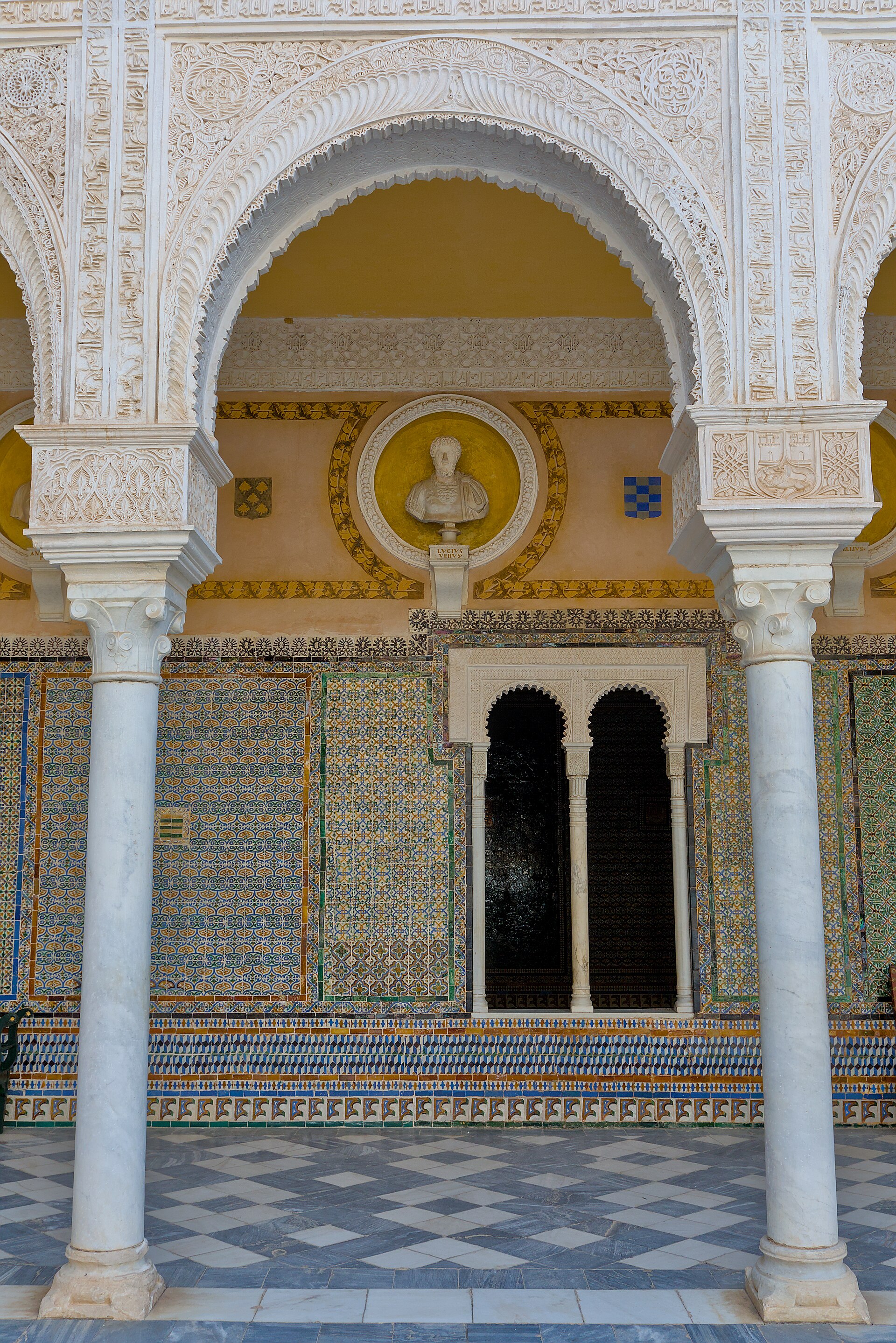
The name of this palace is based on a misunderstanding, but it is a beautiful one. In 1519, Don Fadrique Enriquez de Rivera — first Marquis of Tarifa — returned from a pilgrimage to Jerusalem and noticed that the distance from his Seville palace to the Cruz del Campo was the same as the distance from Pontius Pilate's Praetorium to Calvary. He established a Stations of the Cross route between the two points, and the name Casa de Pilatos — House of Pilate — stuck, even though the building has absolutely nothing to do with Pilate. What it does have is arguably the finest collection of azulejo tilework in all of Andalusia. The Pulido brothers, Diego and Juan, created over 150 different tile designs for the palace in the 1530s, making it one of the largest early-modern azulejo collections in the world. The tiles cover every surface of the ground floor — walls, stairways, even bench seats — in an explosion of geometric and vegetal patterns that blend Mudejar tradition with Renaissance innovation. The palace itself is a masterclass in layered architecture. Started in 1483 by Pedro Enriquez de Quinones and his wife Catalina de Rivera, it mixes Italian Renaissance elements with Mudejar craftsmanship in ways that feel entirely natural. The main patio, with its Roman statues in each corner and central fountain, could be a courtyard in Florence if not for the horseshoe arches and intricate stucco overhead. Upstairs, the rooms hold a collection of Roman antiquities that the marquises brought back from Italy. The palace was declared a National Monument in 1931 and is still owned by the Ducal House of Medinaceli. It receives a fraction of the visitors that the Alcazar gets, which means you can stand alone in the courtyard and hear nothing but the fountain.
Castillo de San Jorge
Triana, Seville, Spain
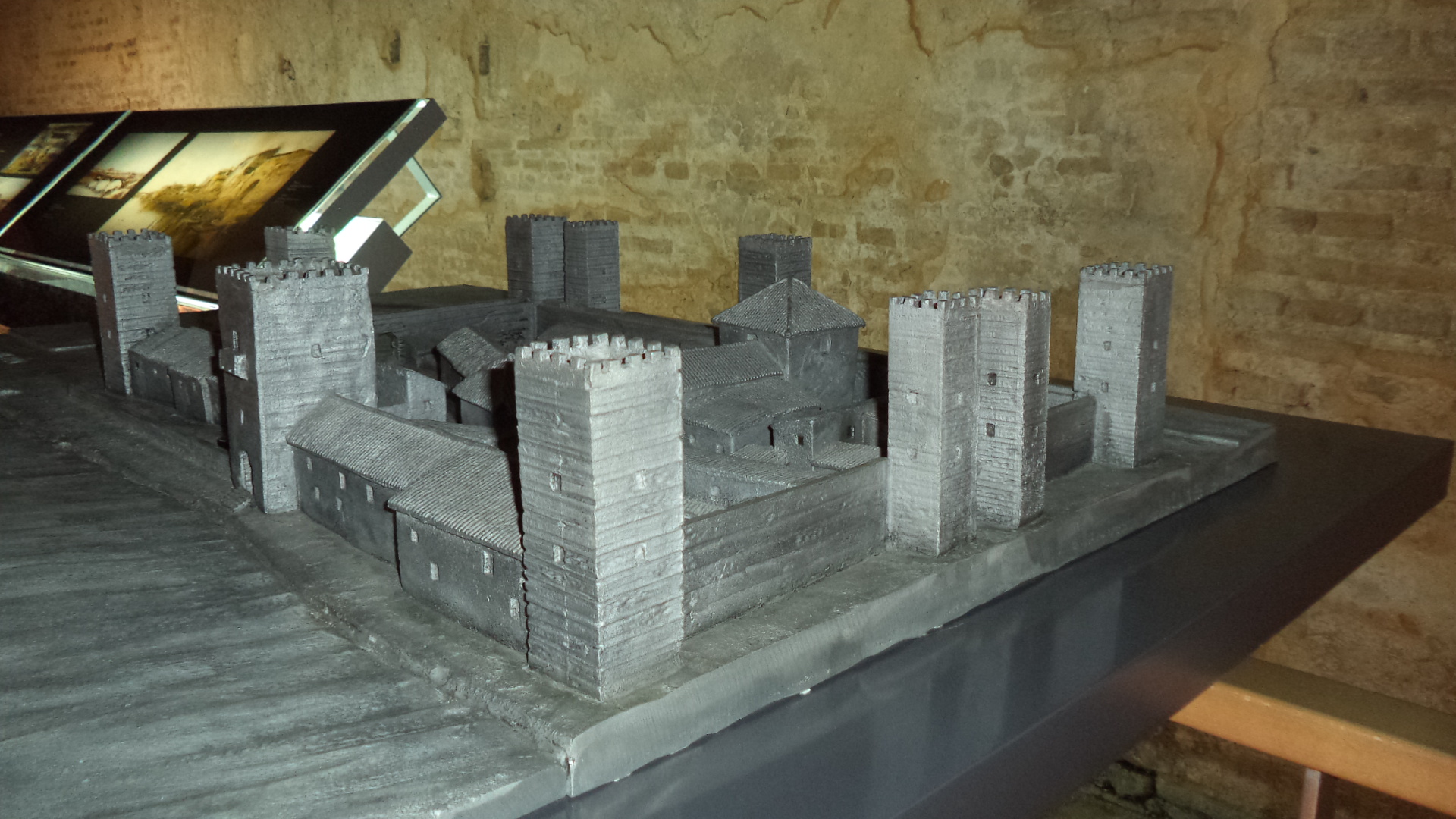
Beneath the cheerful Mercado de Triana — where locals buy their morning fish and tourists sample tapas — lie the excavated ruins of one of the most feared buildings in Spanish history. The Castillo de San Jorge served as the headquarters of the Spanish Inquisition in Seville from 1481 to 1785, more than three centuries during which suspected heretics, crypto-Jews, and conversos were arrested, interrogated, and sentenced within these walls. Many of them never left. The Inquisition chose this location on the Triana side of the river deliberately: it was physically separated from the city center, making it easier to control who came and went. The castle's cells held prisoners who could wait years for trial, and those found guilty faced punishments ranging from public humiliation to being burned at the stake in an auto-da-fe ceremony. The first auto-da-fe in Seville took place on February 6, 1481, when six people were executed. Over the following decades, Seville's tribunal became one of the most active in Spain. The castle was demolished in the nineteenth century, and the site lay buried under the market buildings until archaeologists excavated the foundations in the early 2000s. The free museum that now occupies the ruins is a sobering walk through the underground chambers, with interpretive panels that do not shy away from describing the torture methods and psychological terror the Inquisition employed. The juxtaposition of the sunny, food-filled market above and the grim ruins below is entirely intentional. Look for the information panels that quote directly from Inquisition records — bureaucratic language describing unimaginable cruelty with the detached tone of an accounting ledger. It is a reminder that institutional evil often comes with meticulous paperwork.
Centro Cerámico Triana
16 Calle Callao, Triana, Seville, 41010, Spain
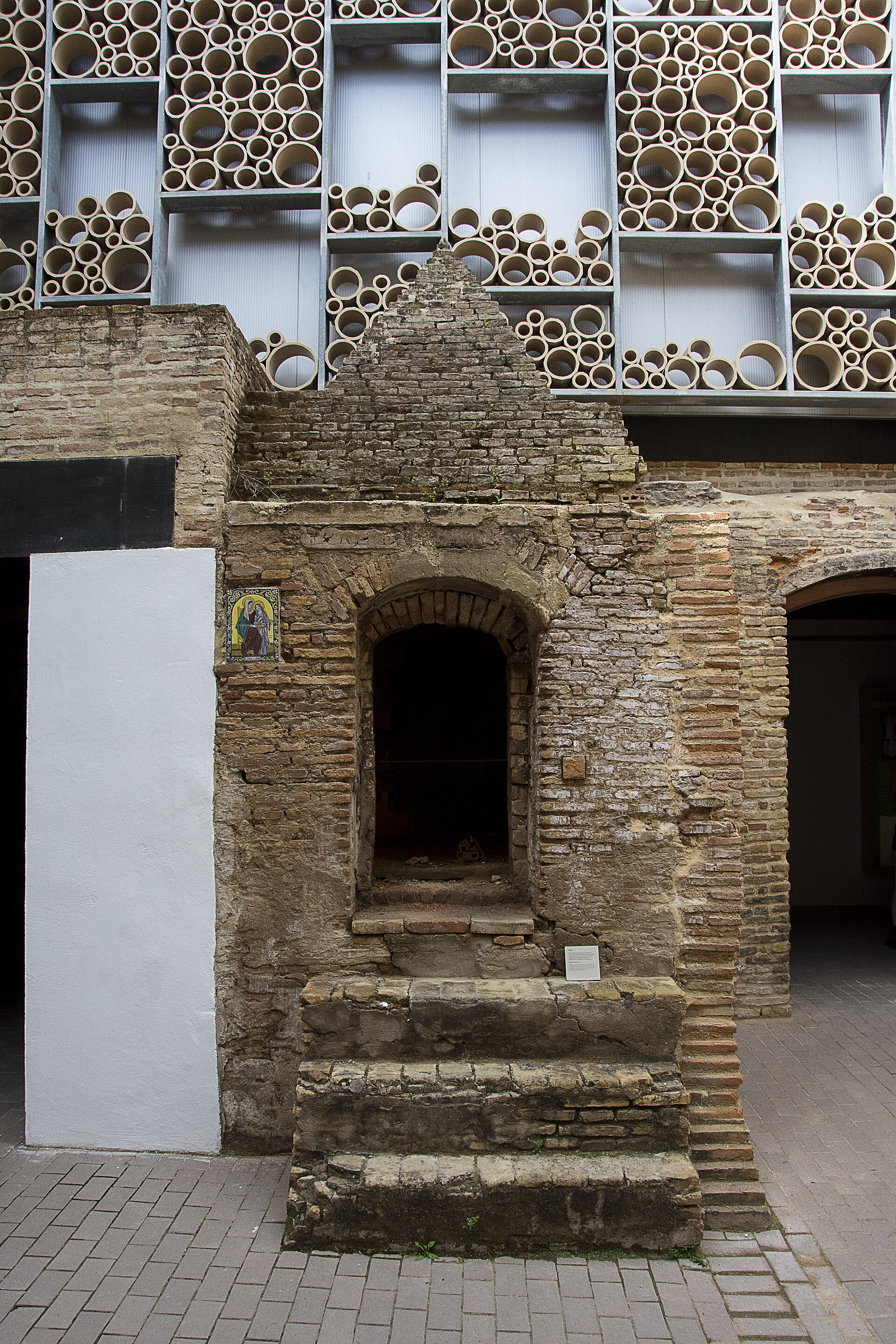
Every tiled bench in the Plaza de Espana, every azulejo facade on a church, every decorative ceramic panel in a Seville courtyard — many of them started life in the kilns of Triana. This neighborhood has been the ceramics capital of Andalusia since at least the fifteenth century, and the Centro Ceramico Triana preserves that tradition on the exact site of the former Santa Ana ceramics factory, one of the last working pottery workshops in the area before industrialization killed the trade. The museum occupies the old factory buildings and the kilns themselves, several of which have been preserved in situ. You can see the bottle-shaped wood-fired ovens where tiles were baked at temperatures exceeding 1,000 degrees Celsius, and the clay-mixing rooms where artisans prepared the raw materials. The exhibition traces the evolution of Triana ceramics from the Moorish cuerda seca technique — where raised lines of manganese separate colored glazes — through the Italian-influenced maiolica style brought by Francesco Niculoso Pisano in the late 1400s. What makes Triana ceramics distinctive is the combination of Moorish geometric patterns with Christian imagery and Renaissance naturalism. The result is a hybrid aesthetic that exists nowhere else in Europe: Islamic star patterns frame Catholic saints, and classical columns are wrapped in vine scrolls that owe as much to Damascus as to Rome. This blending happened naturally over centuries of cultural overlap, and the tiles are arguably the best physical evidence of Andalusia's multicultural history. The museum shop sells contemporary pieces made by local artisans working in traditional methods. Outside, Calle Alfareria — Potter's Street — still has a handful of working studios where you can watch tiles being painted by hand.
Convento de Santa Paula
11 Calle de Santa Paula, Casco Antiguo, Seville, 41003, Spain
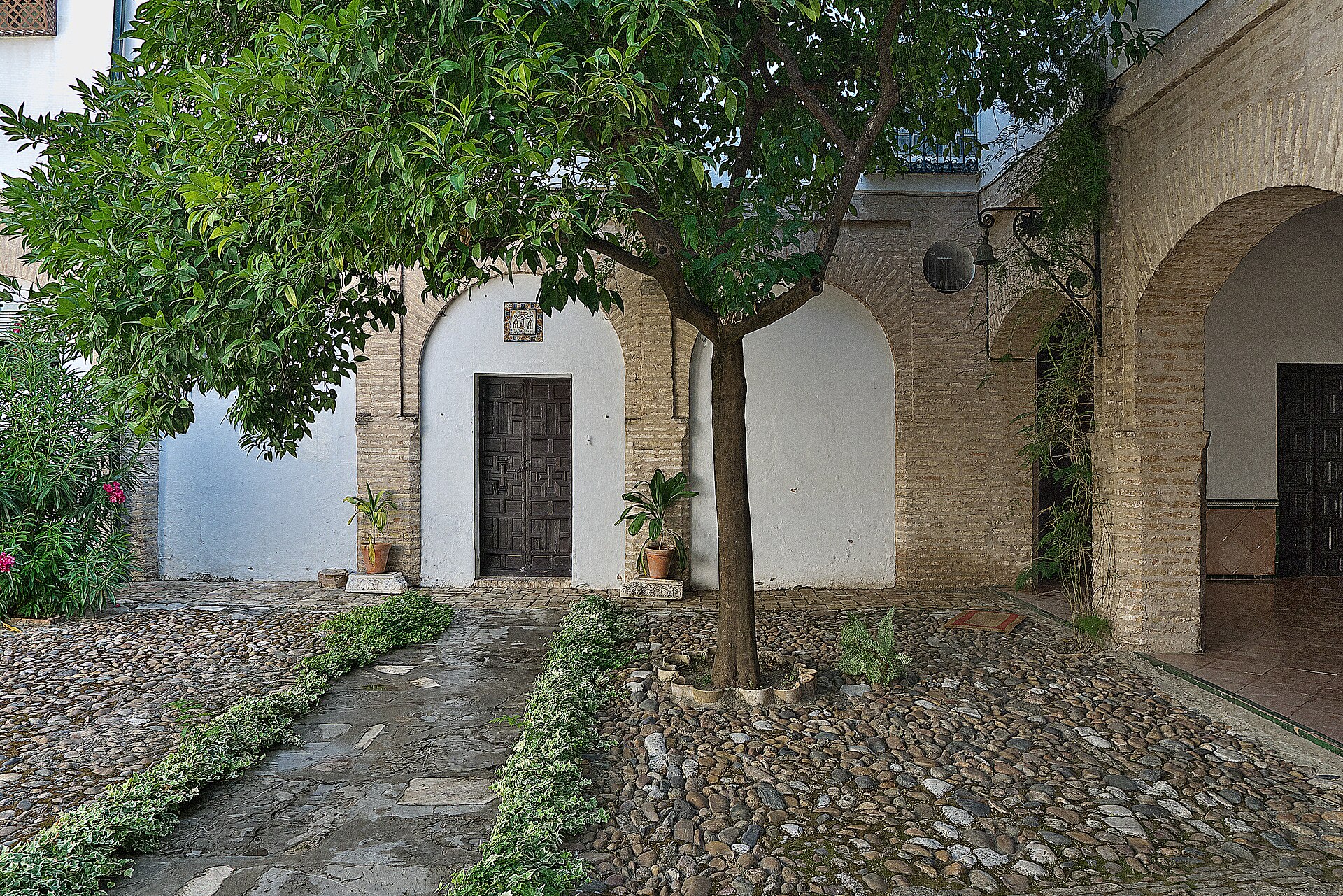
Behind the unassuming walls of this working convent, enclosed Hieronymite nuns have been baking marmalade and sweets since 1473 — more than five and a half centuries of uninterrupted jam production. The nuns follow the same recipes that were old when Columbus sailed, and their bitter orange marmalade, made from fruit picked in the convent garden, is considered some of the best in Spain. You buy it through a torno — a revolving wooden tray set into the wall — so that the nuns can sell their goods without being seen, maintaining the cloistered life they have kept for over 550 years. But this convent is much more than a sweet shop. The entrance portal is a Renaissance masterpiece from 1504, attributed to Niculoso Pisano — the same Italian ceramicist who revolutionized Triana's tile industry. The glazed ceramic roundels depicting saints and putti are considered among the finest examples of Italian-Andalusian ceramic art, and they sit here on a quiet residential street that most visitors to Seville never walk down. Inside, the convent museum holds a small but exquisite collection of religious art and artifacts accumulated over five centuries. The church itself features carved wooden ceilings, Mudejar arches, and paintings by the Sevillian school. The nuns maintain a small gallery where pieces from their collection rotate, including embroidered vestments and silver liturgical objects that would be headline exhibits in any museum. The experience of pressing a bell, waiting, hearing footsteps behind the wall, placing your money on the spinning torno, and receiving a jar of marmalade from an invisible hand is one of the most genuinely unique things you can do in Seville. It is a transaction that has not changed in form since the late Middle Ages.
Hospital de la Caridad
3 Calle Temprado, Casco Antiguo, Seville, 41001, Spain
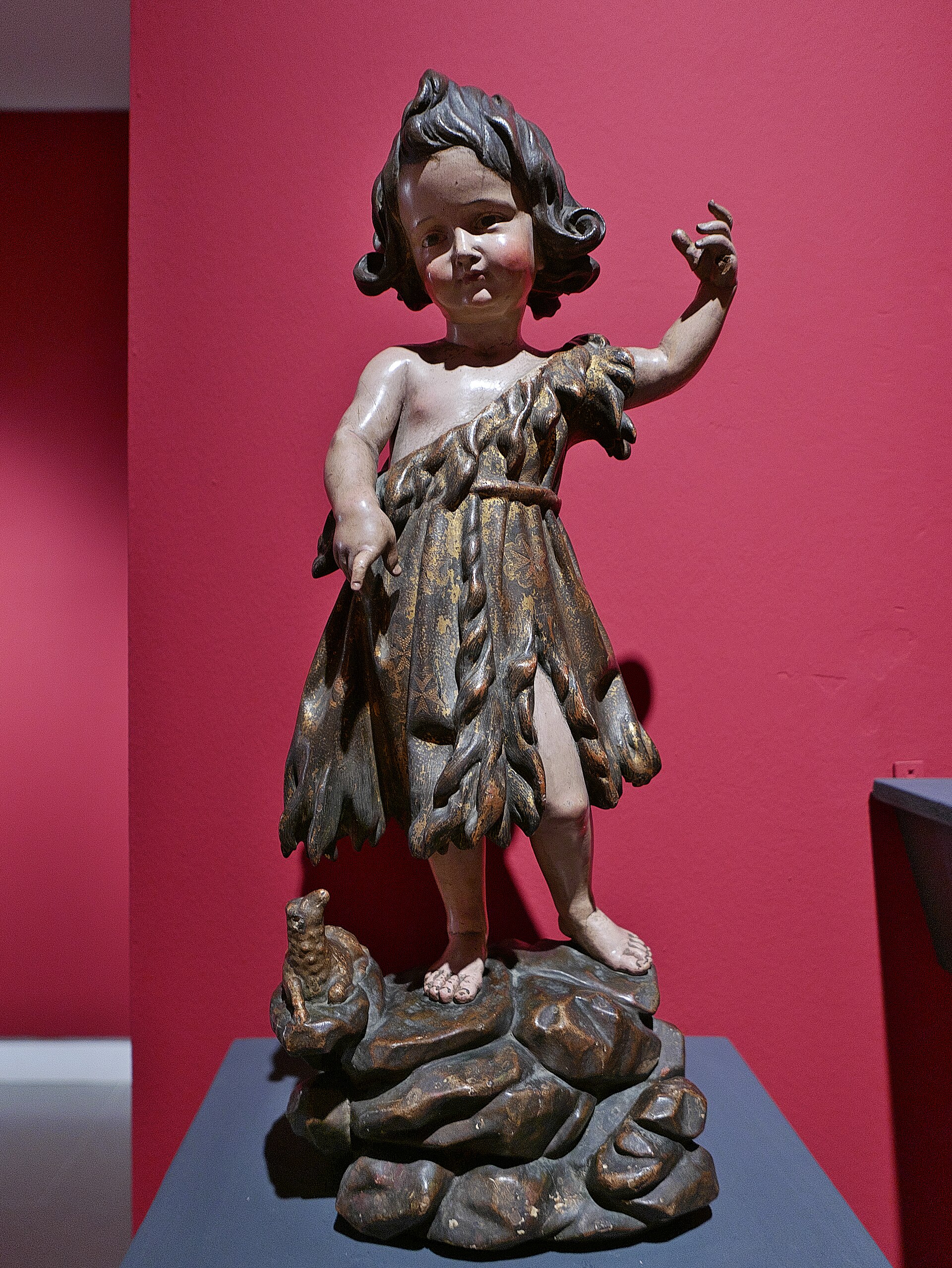
The man who founded this hospital was, by most accounts, the worst person in Seville before he became the best. Don Miguel de Manara was a seventeenth-century nobleman whose reputation for drinking, gambling, and womanizing was so extreme that he became the rumored inspiration for both Byron's Don Juan and Tirso de Molina's Don Giovanni. Then in 1662, after the death of his young wife, Manara experienced a religious conversion so total that he devoted his remaining years and fortune to caring for Seville's abandoned dead and dying. He took over the existing Brotherhood of Charity and in 1674 began building this hospital, which still operates today as a home for the elderly. But it is the chapel that stops visitors cold. Manara commissioned the greatest Baroque painters of his era to fill the walls with images of death, decay, and divine judgment. Juan de Valdes Leal's two masterpieces — "In Ictu Oculi" (In the Blink of an Eye) and "Finis Gloriae Mundi" (The End of Worldly Glory) — are among the most unflinching paintings in Western art. The first shows Death snuffing out a candle over symbols of worldly power; the second depicts rotting corpses of a bishop and a knight being weighed on a divine scale. Bartolome Esteban Murillo, by contrast, provided gentler counterparts: tender paintings of charity and mercy that line the nave. Manara deliberately placed the grim and the hopeful side by side, forcing viewers to confront mortality and then choose compassion. Murillo's works were so prized that several were looted by Napoleon's troops during the Peninsular War. Manara himself is buried in the crypt, directly beneath the threshold of the chapel, having requested that his grave be placed where every visitor would literally walk over him — a final act of humility from a man who spent the first half of his life as anything but.
Iglesia de San Luis de los Franceses
27 Calle de San Luis, Casco Antiguo, Seville, 41003, Spain
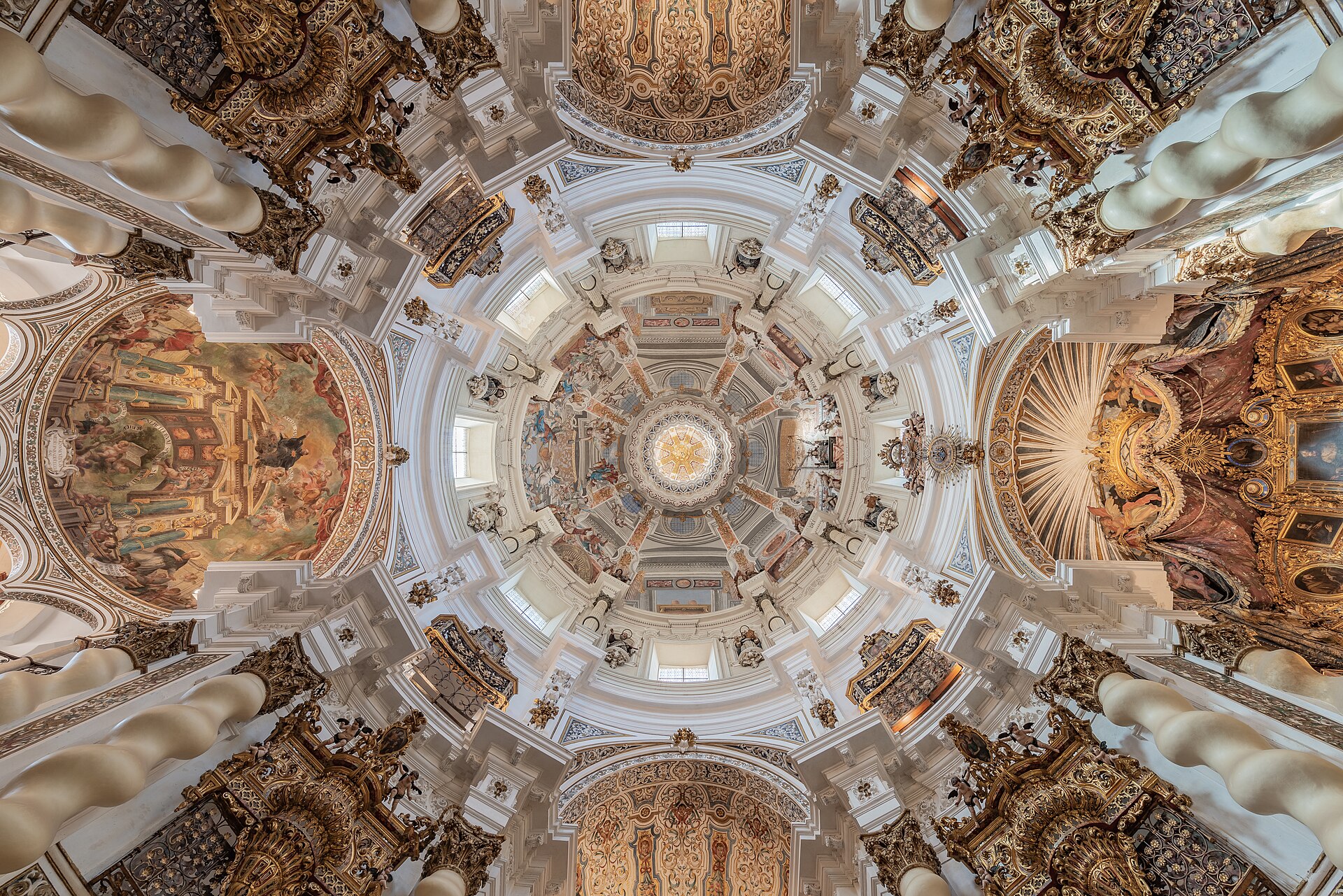
If you can visit only one Baroque church in Seville that is not the cathedral, make it this one. The Iglesia de San Luis de los Franceses was built between 1699 and 1731 by Leonardo de Figueroa — the same architect responsible for the San Telmo portal — and it is considered his masterpiece. The facade is impressive enough, but it is the interior that makes jaws drop: a centralized Greek-cross plan beneath a soaring dome, every surface covered in gilt stucco, polychrome marble, carved wood, and frescoed ceilings that create a total work of Baroque art. The church was commissioned by the Jesuits, who spared no expense. The retablos — the massive carved altarpieces behind each altar — are considered among the finest in Andalusia, dripping with gold leaf and populated by expressive painted saints. The main retablo rises the full height of the apse, a golden cliff face of twisted Solomonic columns and sculptural figures. Look up and the dome fresco shows Jesuit saints ascending to heaven in a swirl of clouds and divine light. When the Jesuits were expelled from Spain in 1767, the church passed through various hands and eventually fell into serious disrepair. It served as a seminary, a hospice, and at one point was nearly demolished. A major restoration completed in the early 2000s brought it back to its original splendor, and today it functions as a cultural center and exhibition space with free entry. The church sits on Calle San Luis, a street that most tourists never walk because it heads away from the historic center toward the Macarena neighborhood. That is precisely why it remains uncrowded. On a quiet afternoon, you can stand beneath the dome and have this Baroque masterpiece entirely to yourself.
Itálica
2 Avenida de Extremadura, Santiponce, Santiponce, 41970, Spain
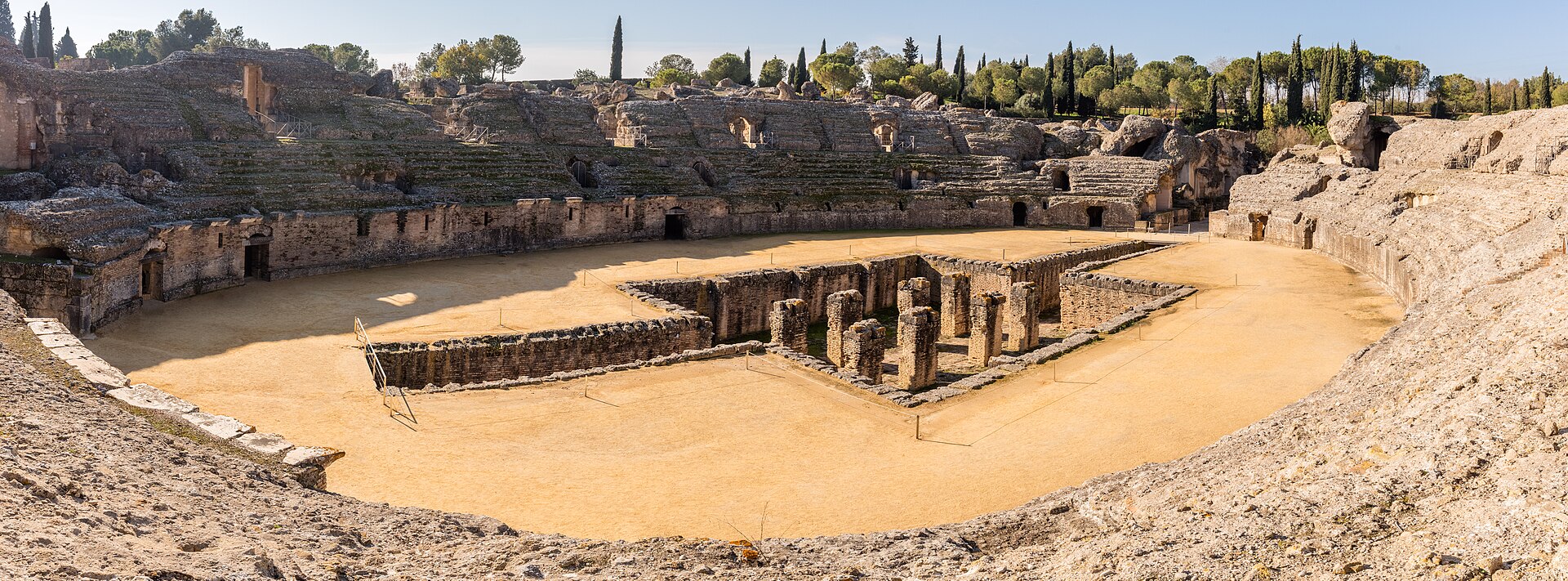
Two Roman emperors were born in this ruined city just eight kilometres north of Seville, and that fact alone makes Italica one of the most historically significant archaeological sites on the Iberian Peninsula. Trajan, who expanded the Roman Empire to its greatest territorial extent, was born here in 53 AD. His successor Hadrian — the man who built the wall across Britain and the Pantheon in Rome — was born here too, in 76 AD. Italica itself was founded in 206 BC by the Roman general Scipio Africanus as a settlement for veterans wounded in the Battle of Ilipa during the Second Punic War, making it the first Roman city in Hispania. The star attraction is the amphitheatre, one of the largest in the Roman Empire with a capacity of 25,000 spectators. It was used as a filming location for the fighting pits of Meereen in Game of Thrones, and standing in the center of the oval, surrounded by crumbling tiers of seats and the tunnels where animals and gladiators waited, the scale of Roman entertainment culture hits differently than any textbook could convey. The residential district — the Nova Urbs, or new city — contains some of the most impressive Roman mosaics still in their original locations. The House of the Birds features a floor depicting 33 different species, each rendered with startling naturalistic detail. The House of Neptune has a massive mosaic of the sea god surrounded by marine creatures. These are not museum pieces behind glass; they are floors you walk alongside in the open air, exactly where they were laid nearly two thousand years ago. Italica is easy to reach by bus from Seville and is criminally under-visited. On a weekday morning you may have the amphitheatre almost to yourself — an experience that the Colosseum in Rome can never offer.
Mercado de Triana
Triana, Seville, Spain
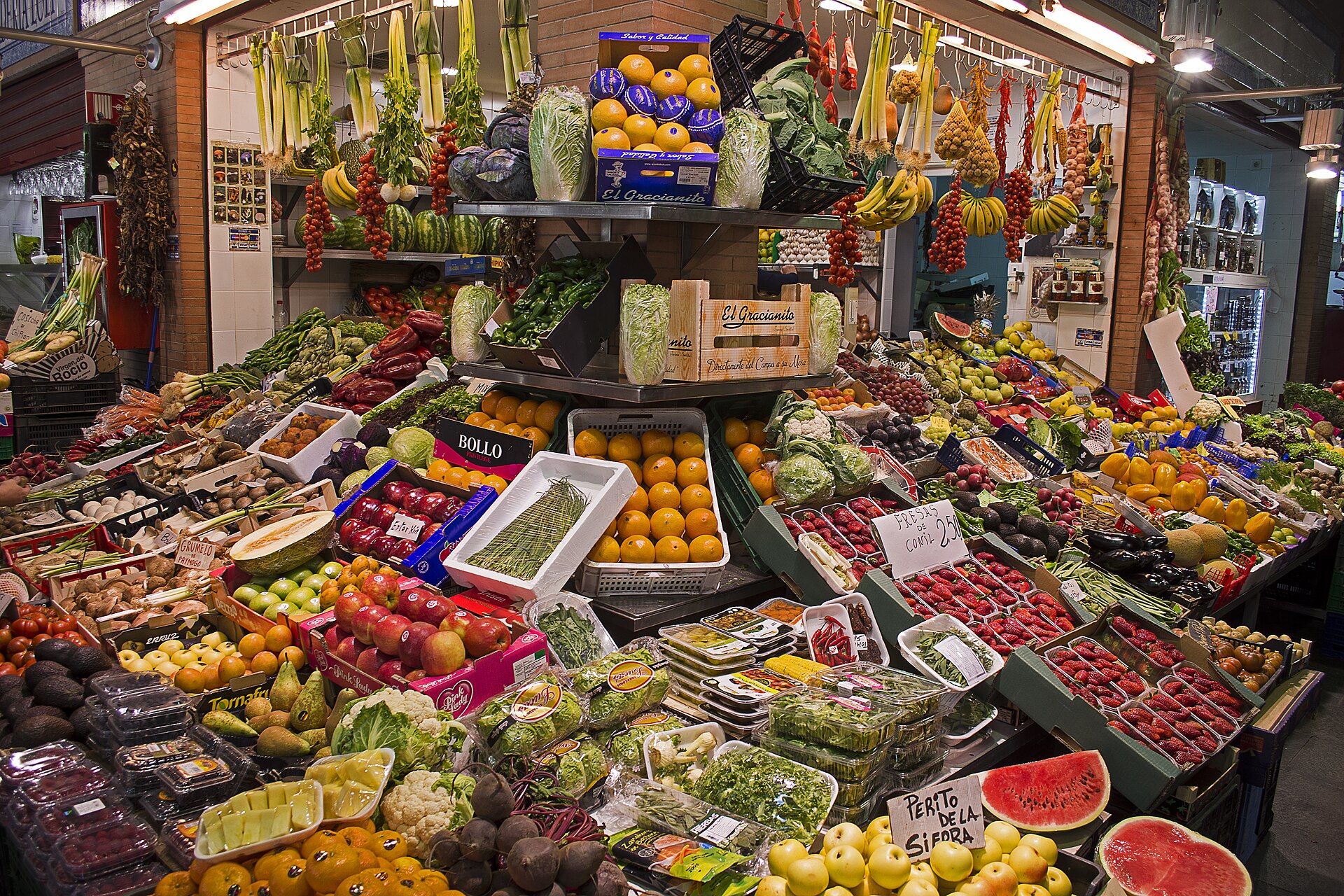
There is something darkly poetic about eating tapas on top of the ruins of the Inquisition. The Mercado de Triana sits directly above the excavated Castillo de San Jorge, and the building makes no attempt to hide this fact — the entrance to the Inquisition museum is right there at ground level. But upstairs, life goes on exactly as it has in Triana for centuries: fishmongers shouting over displays of glistening sea bream, butchers slicing Iberian pork, and produce vendors stacking pyramids of tomatoes that actually taste like tomatoes. The current market building was constructed in 2005 on the site of an earlier market, and the design deliberately incorporated the archaeological remains below. The ground floor has evolved into a mix of traditional food stalls and newer tapas bars where you can eat standing at the counter — the Sevillano way. Order gambas al ajillo, a plate of jamon iberico, or whatever the fish stall is serving that day, and wash it down with a cold manzanilla sherry. What makes this market different from the more famous Mercado de la Encarnacion is its audience: this is primarily a neighborhood market where Triana residents do their daily shopping. The rhythm is local — grandmothers inspecting fish with surgical precision, bartenders who know every regular by name, and a pace that slows down rather than speeds up as the morning progresses. Come early on a Saturday for the fullest experience. The market is at its loudest and most alive before noon, and by early afternoon many stalls begin closing. Save the tapas bars for later — they stay open into the evening and are the perfect place to start a night out in Triana before heading to the bars along Calle Betis.
Metropol Parasol (Las Setas)
Casco Antiguo, Seville, Spain
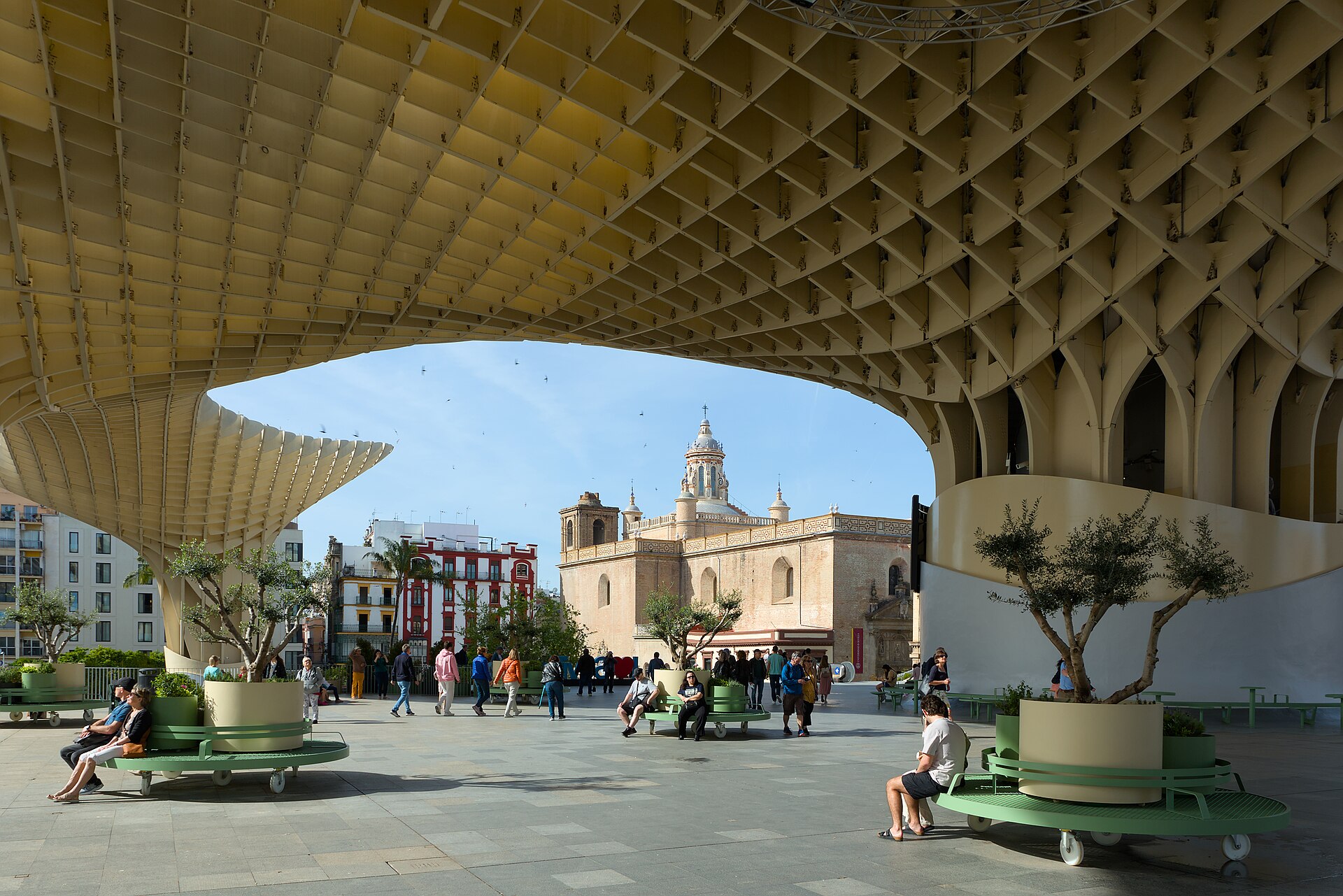
When the city demolished an old market in the Plaza de la Encarnacion and started digging foundations for a new parking garage, they hit Roman ruins. The construction stalled for years while the archaeological remains of a Roman settlement and Moorish-era buildings were excavated. The city then held a design competition for something that could sit above the ruins, and the winning entry from German architect Jurgen Mayer was so bizarre that locals were not sure whether to be thrilled or horrified. The result, completed in 2011 after a decade of delays and cost overruns, is the world's largest wooden structure. Six enormous mushroom-shaped parasols — which Sevillanos immediately nicknamed "Las Setas" (The Mushrooms) — rise up to 26 metres above the plaza, supported by a lattice of micro-laminated birch timber imported from Finland. The engineering required to make wood work at this scale pushed construction costs from an original estimate of 50 million euros to roughly 100 million. Underground, the Antiquarium museum displays the excavated Roman mosaics, Moorish walls, and remains that most visitors to the plaza literally walk over without realizing. The archaeological site includes fragments of a Roman fish-salting factory and the foundations of houses from the Almohad period. It is one of those rare places where you can see 2,000 years of urban history stacked in a single cross-section. The rooftop walkway — El Mirador — curves along the top of the structure and offers the best 360-degree panorama of Seville, including views of the Giralda, the cathedral, and the rolling Andalusian countryside beyond. Come at sunset, when the waffle-pattern wooden lattice casts intricate shadows across the plaza below.
Museo de Bellas Artes
9 Plaza del Museo, Casco Antiguo, Seville, 41001, Spain
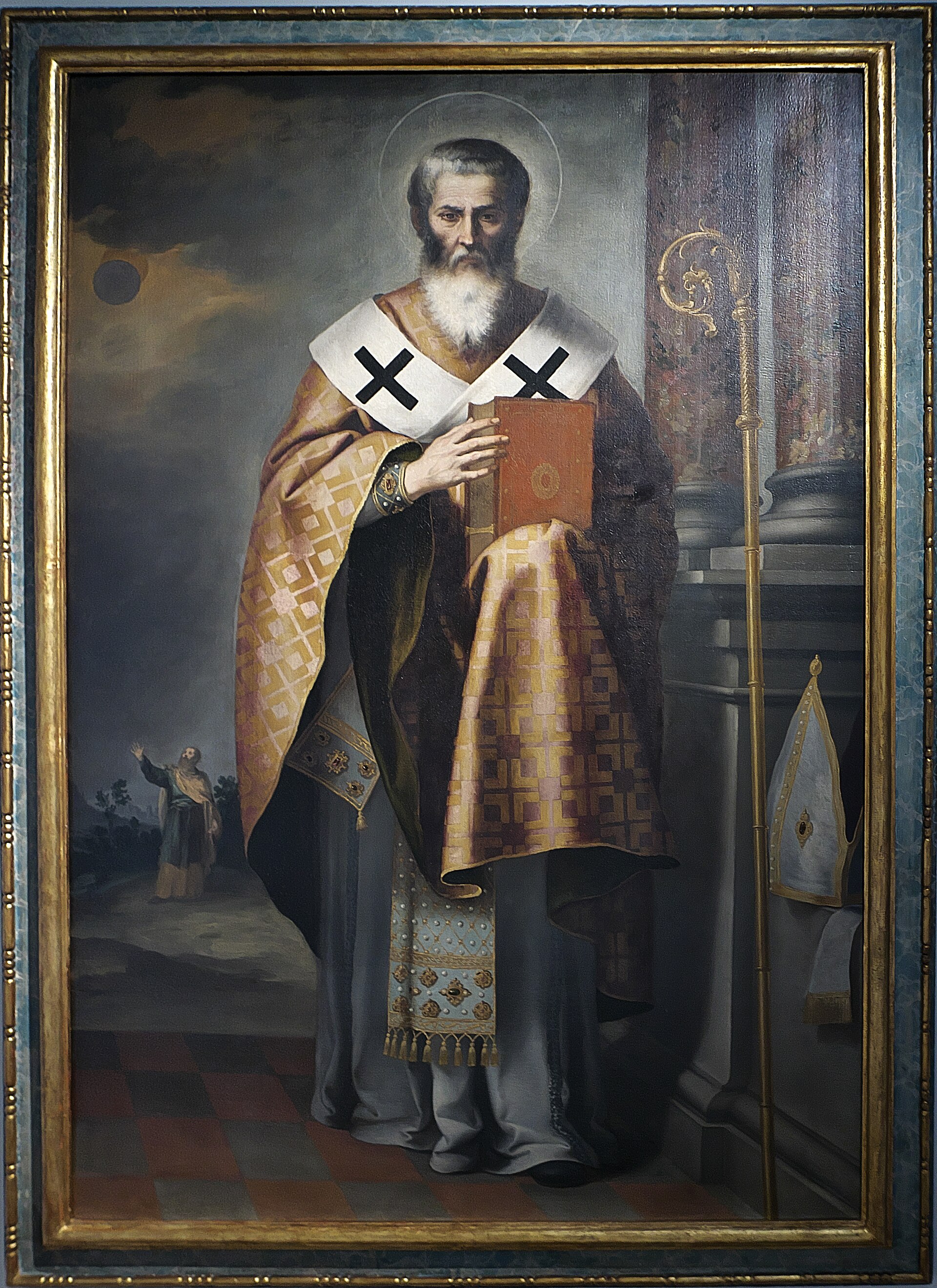
Spain's second-most important art museum — after the Prado — is housed in a former convent that is itself a work of art. The Convento de la Merced was built in the seventeenth century and converted to a museum in 1841 after the church confiscations that dissolved many of Spain's religious orders. The building's courtyards, tiled cloisters, and Baroque chapel provide a setting that makes most purpose-built museums look sterile by comparison. The collection is a deep dive into the Seville School of painting, the artistic movement that made this city one of the most important centers of European art in the seventeenth century. Bartolome Esteban Murillo dominates several rooms — his tender Madonnas and unflinching portraits of street children defined how the world imagined Seville for centuries. The museum holds the largest collection of Murillo works in the world, including the monumental "Immaculate Conception" that hangs in the former church nave. But Murillo is only part of the story. Francisco de Zurbaran's austere, dramatically lit paintings of monks and saints fill another gallery, and Juan de Valdes Leal's graphic depictions of death and vanity — the same artist whose work shocks visitors at the Hospital de la Caridad — appear here too. Earlier rooms cover medieval and Renaissance Sevillian art, while the upper floors move into the modern era with works by Gonzalo Bilbao and other Andalusian painters. The museum sits on the quiet Plaza del Museo, fronted by a bronze statue of Murillo and surrounded by orange trees. Entry is free for EU citizens and remarkably cheap for everyone else. Despite this, the galleries are often nearly empty, which means you can stand alone in front of a Murillo and take as long as you want — a luxury that the Prado will never offer.
Museo del Baile Flamenco
3 Calle de Manuel Rojas Marcos, Casco Antiguo, Seville, 41004, Spain
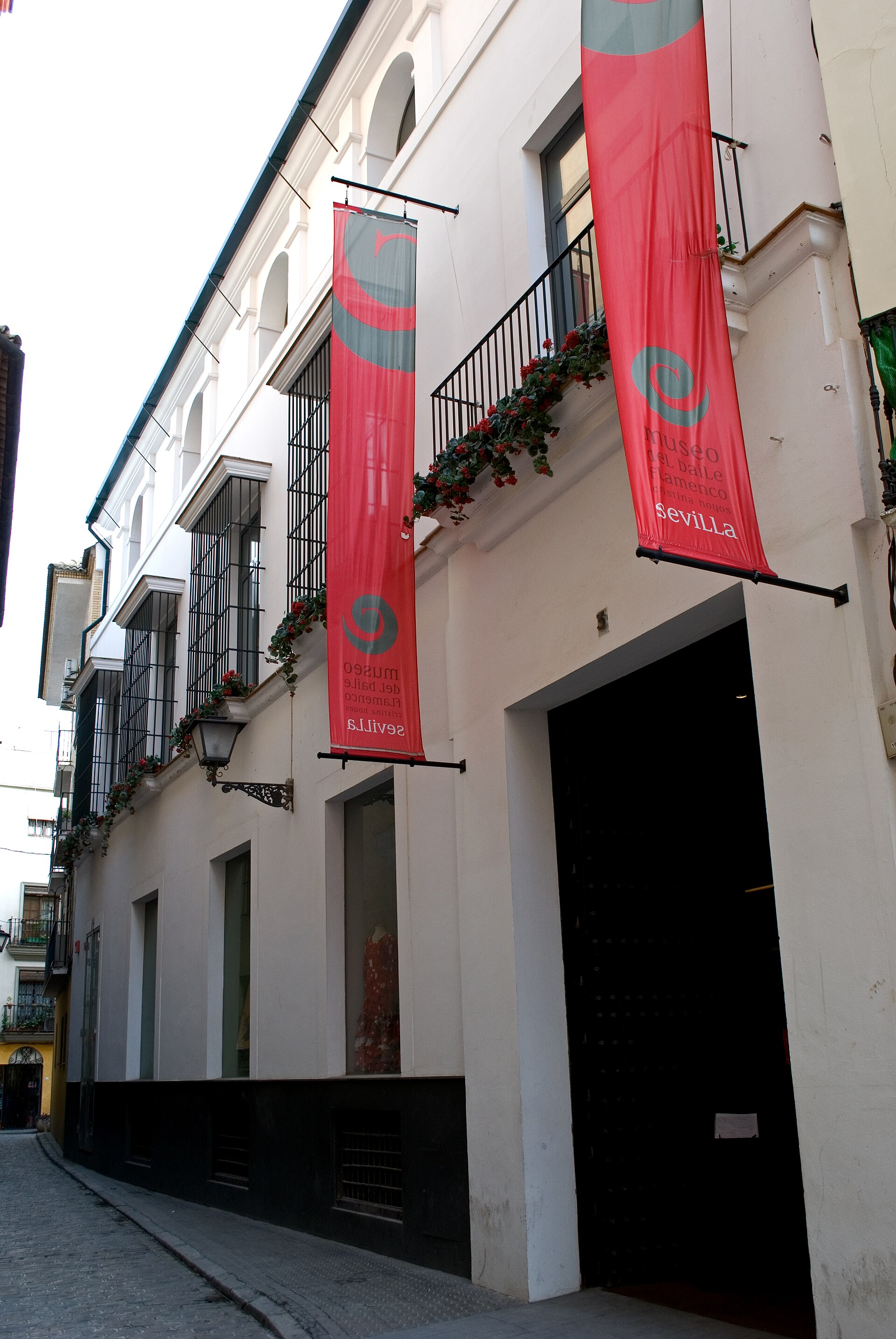
In a city that claims to be the birthplace of flamenco — and will fight anyone who says otherwise — there was no dedicated museum to the art form until 2006. That changed when Cristina Hoyos, one of the greatest flamenco dancers in history, opened this museum in an eighteenth-century palace in the heart of the Santa Cruz quarter. Hoyos danced in Carlos Saura's films, performed at the 1992 Seville Expo, and used her fame to create a space that treats flamenco as serious art rather than tourist spectacle. The museum spreads across three floors of the restored palace, tracing flamenco from its murky origins in the converging cultures of Andalusia — Romani, Jewish, Moorish, and Christian — through its codification in the nineteenth century to its modern global reach. Interactive screens demonstrate the differences between the major palos (styles), from the devastating soleá to the celebratory bulerías, and motion-capture technology lets you see the geometry of a bailaora's movements broken down to the millisecond. The basement holds a genuine flamenco tablao where nightly performances happen in an intimate stone-vaulted space that seats fewer than a hundred people. This is not the dinner-show flamenco you find on every tourist street in Seville; the performers are professionals who have spent decades mastering an art form that cannot be faked. The footwork alone — intricate zapateado rhythms that can exceed twelve beats per second — demands years of training. What makes this museum matter is its insistence that flamenco is not quaint folklore. It is a living art born from persecution, poverty, and cultural collision, and it continues to evolve. The top floor hosts temporary exhibitions on contemporary flamenco artists who are pushing the form into new territory.
Palacio de la Condesa de Lebrija
8 Calle Cuna, Casco Antiguo, Seville, 41004, Spain
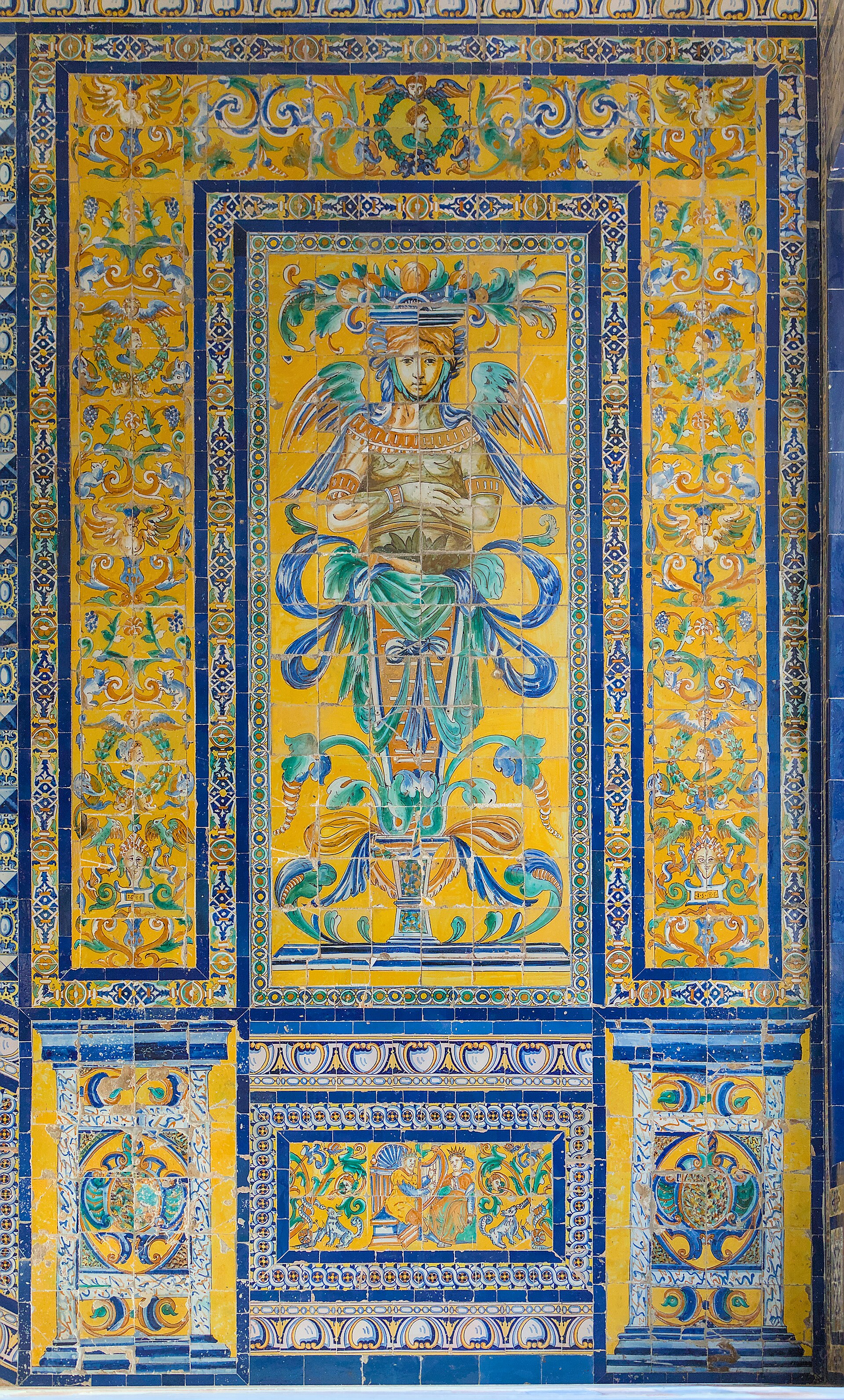
In the early twentieth century, the Countess of Lebrija did something that would be a jailable offence today: she bought Roman mosaics excavated from the ruins of Italica, the ancient city just outside Seville, and had them installed as the floors of her sixteenth-century palace. The result is one of the most eccentric and beautiful private homes in Spain — a place where you walk across 2,000-year-old Roman artwork to get to the living room. The centerpiece is the main patio, whose floor is dominated by a mosaic depicting the god Pan surrounded by satyrs, maenads, and grapevines. It was found at Italica in 1914 and carefully reassembled in the palace. Around it, additional mosaics from different Roman sites cover the floors of adjoining rooms, making this the largest collection of Roman mosaics in a private residence anywhere in the world. The Countess was not merely collecting; she was rescuing — many of these mosaics were in danger of being destroyed by agricultural plowing. Above the Roman floors, the palace itself is a showcase of Mudejar architecture. Arabic-style arches frame the courtyard, carved wooden ceilings show Islamic geometric patterns, and the tilework blends seamlessly with the classical mosaic underfoot. The upper floor is decorated in a mix of European and Asian styles, reflecting the Countess's wide-ranging taste and extensive travels. The palace sits on Calle Cuna, a busy shopping street, and most passersby have no idea what is behind the unassuming entrance. Step through the door and you travel from twenty-first-century Seville to second-century Rome in a single stride. It is one of the city's genuine hidden gems, visited by a fraction of the tourists who crowd the Alcazar a few blocks away.
Palacio de San Telmo
Avenida de Roma, Casco Antiguo, Seville, 41013, Spain
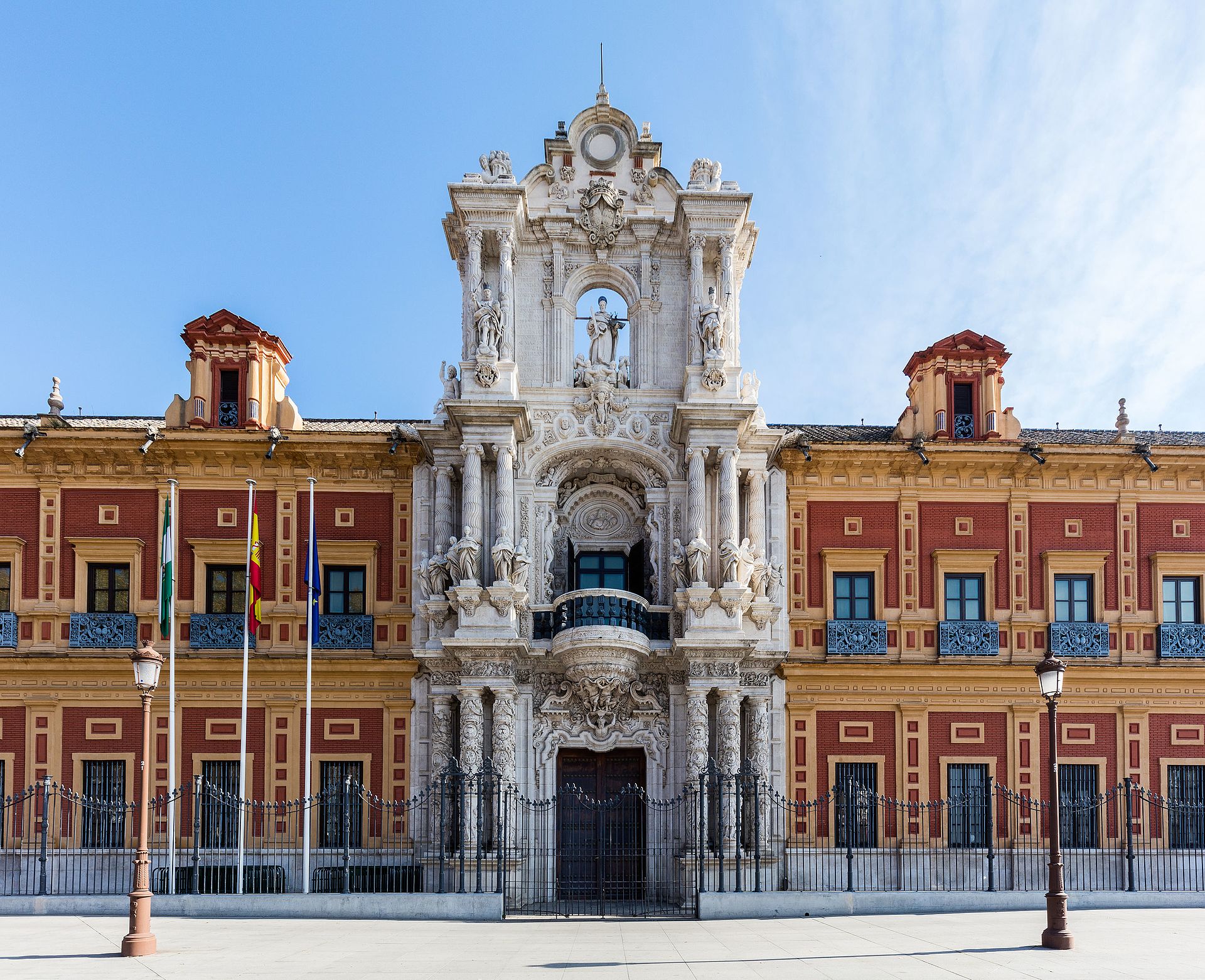
This extravagant Baroque palace has had more career changes than most buildings dream of. Built starting in 1682 as a school for orphans of sailors — San Telmo being the patron saint of navigators — it trained young men for the maritime trade during Seville's waning years as a major port. When the school closed, the palace became the residence of the Dukes of Montpensier, the royal family who donated the adjacent gardens that became the Parque de Maria Luisa in 1893. The portal is the building's showpiece: a churrigueresque masterpiece designed by Leonardo de Figueroa in 1734, encrusted with columns, saints, angels, and maritime symbols so densely carved they look like they are melting. Above the entrance, San Telmo himself presides over the facade, surrounded by allegorical figures representing the arts and sciences. The twelve statues of famous Sevillanos lining the rooftop were added in the nineteenth century and include Velazquez, Murillo, and Rodrigo Ponce de Leon. After the Montpensier era, the building passed through several hands. It served as a seminary for much of the twentieth century, which is why the interior is less ornate than you might expect — seminarians are not known for gilded excess. Since 2010, it has been the seat of the Presidency of the Junta de Andalucia, the regional government, which means the interior is generally closed to the public except during special open-day events. Even from outside, the facade alone justifies a visit. The contrast between the sober stone walls and the explosive Baroque portal is one of the great architectural surprises in Seville. Walk around to the garden side for views of the building's relationship to the Parque de Maria Luisa next door.
Parque de María Luisa
Paseo de las Delicias, Casco Antiguo, Seville, 41013, Spain
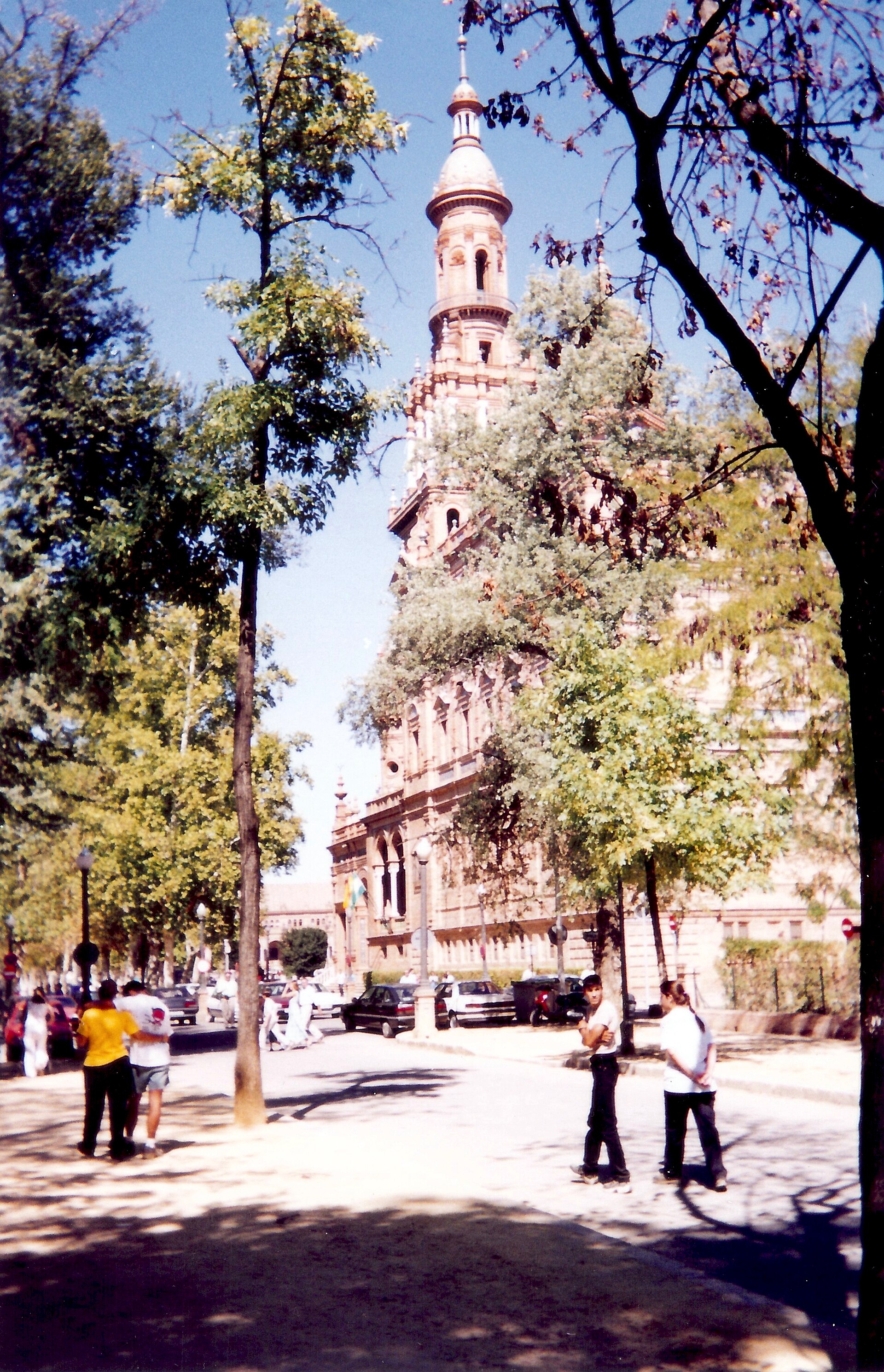
Half of this park was a private garden that belonged to the Palacio de San Telmo until 1893, when the Infanta Maria Luisa Fernanda — Duchess of Montpensier and sister of Queen Isabel II — donated the grounds to the city of Seville. For three decades it remained a pleasant but unremarkable green space. Then came the 1929 Ibero-American Exposition, and French landscape architect Jean-Claude Nicolas Forestier was hired to transform it into something worthy of a world's fair. Forestier blended formal French garden design with the Moorish water-garden traditions already embedded in Andalusian culture. The result is a park that feels like walking through a dream sequence: tiled benches along shaded avenues, fountains surrounded by glazed ceramic frogs and ducks, and the famous Plaza de America with its pair of ornate pavilions — one Mudejar, one Renaissance — facing each other like architectural rivals. Parrots roost in the tall palms, and peacocks strut across the paths as if they own the place. The park's most photogenic spot might be the Glorieta de Becquer, a monument to the Romantic poet Gustavo Adolfo Becquer featuring three bronze women seated around the base of a massive Taxodium tree. The sculptures represent love gained, love possessed, and love lost. It is peak nineteenth-century melodrama, and Sevillanos love it. At 34 hectares, the park is large enough to absorb the crowds, and on hot afternoons the shade under the ancient rubber trees and Washington palms drops the temperature by several degrees. Locals come here to run, nap on benches, and feed the pigeons at the Plaza de America. It is the closest thing Seville has to Central Park, but with better weather and more tiles.
Plaza de España
Avenida Isabel la Católica, Seville, Seville, 41013, Spain
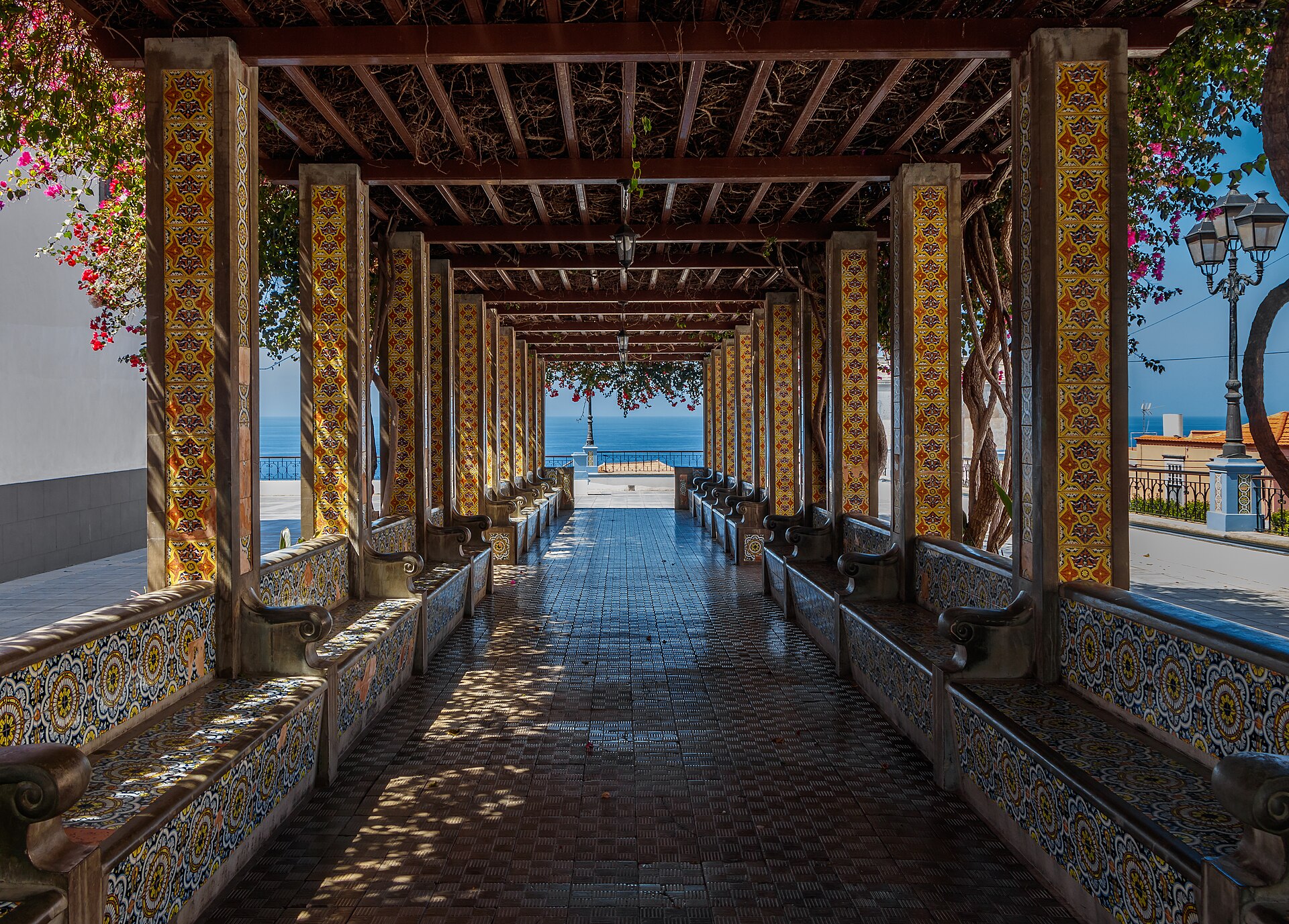
If this plaza looks like it was built for a movie set, that is because it essentially was — just not the movie you might think. Architect Anibal Gonzalez designed this enormous semicircular complex for the 1929 Ibero-American Exposition, a world's fair meant to rekindle ties between Spain and its former Latin American colonies. The result is a 50,000-square-metre explosion of Regionalism architecture that mixes Baroque Revival, Renaissance Revival, and Neo-Mudejar elements into something that has no real equivalent anywhere else in Europe. The plaza's canal and four bridges represent the four ancient kingdoms of Spain: Castile, Leon, Aragon, and Navarre. Along the curved wall, 48 tiled alcoves depict historical scenes from each of Spain's provinces, arranged alphabetically from Alava to Zaragoza. Locals play a game of finding their home province and posing for photos in the corresponding alcove — it is a tradition that predates Instagram by decades. In September 2000, George Lucas showed up with a film crew and spent 48 hours shooting what would become two minutes of footage in Star Wars: Episode II — Attack of the Clones. The plaza doubled as the city of Theed on the planet Naboo, where Anakin and Padme stroll before going into hiding. The location scouts chose it partly because the building's exaggerated grandeur already looked like science fiction. After the Exposition ended, the building housed military offices for decades. Today it is home to government offices, but the real life of the plaza is on the canal, where visitors rent rowboats for a few euros and paddle under bridges that look like they belong in a fairy tale. Come early morning or at sunset to see the tilework catch the light.
Plaza de Toros de la Real Maestranza
12 Paseo de Cristóbal Colón, Casco Antiguo, Seville, 41001, Spain
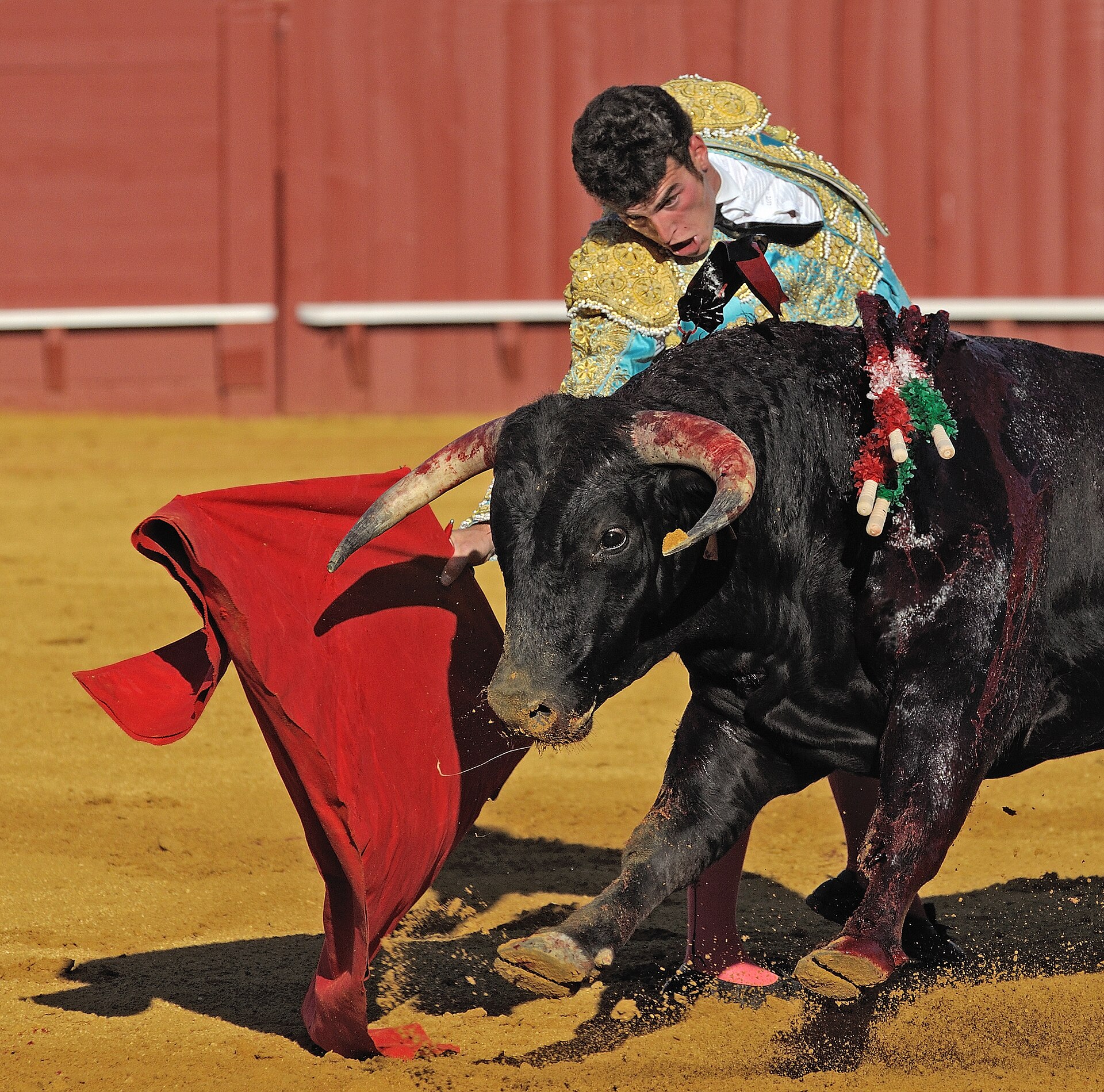
This is the cathedral of bullfighting, and that is not hyperbole — it is the phrase Spaniards themselves use for the oldest and most prestigious bullring in the country. Construction began in 1761 under the Royal Maestranza de Caballeria, a noble equestrian order that had been practicing mounted combat in Seville since the thirteenth century. But the ring was built so slowly — funds came and went with the fortunes of the aristocracy — that it was not completed until 1881, a construction timeline of 120 years. The Baroque white-and-ochre facade curves along the riverbank near the Torre del Oro, and the interior seats up to 14,000 spectators in a sand arena that measures just 60 metres across. That intimate diameter is significant: it forces the bull and the matador closer together than in larger rings, making Maestranza fights notoriously intense. The most coveted seat is in the tendido section near the Puerta del Principe — the Prince's Gate — through which a matador exits only if his performance has been judged triumphant. Beyond the ring itself, the Museo Taurino houses an extraordinary collection of bullfighting memorabilia, including paintings by Goya and Picasso, ornate trajes de luces (suits of lights) worn by famous matadors, and mounted bull heads from legendary fights. Whether or not you care for the spectacle, the museum offers an unvarnished look at a tradition that has shaped Seville's identity for centuries. The Feria de Abril, held each spring, brings the most important corridas of the season to this ring. Even if you never attend a fight, walk past at dusk when the ring is lit and the facade seems to float above the riverbank promenade.
Plaza del Cabildo
Plaza el Cabildo, Casco Antiguo, Seville, 41001, Spain
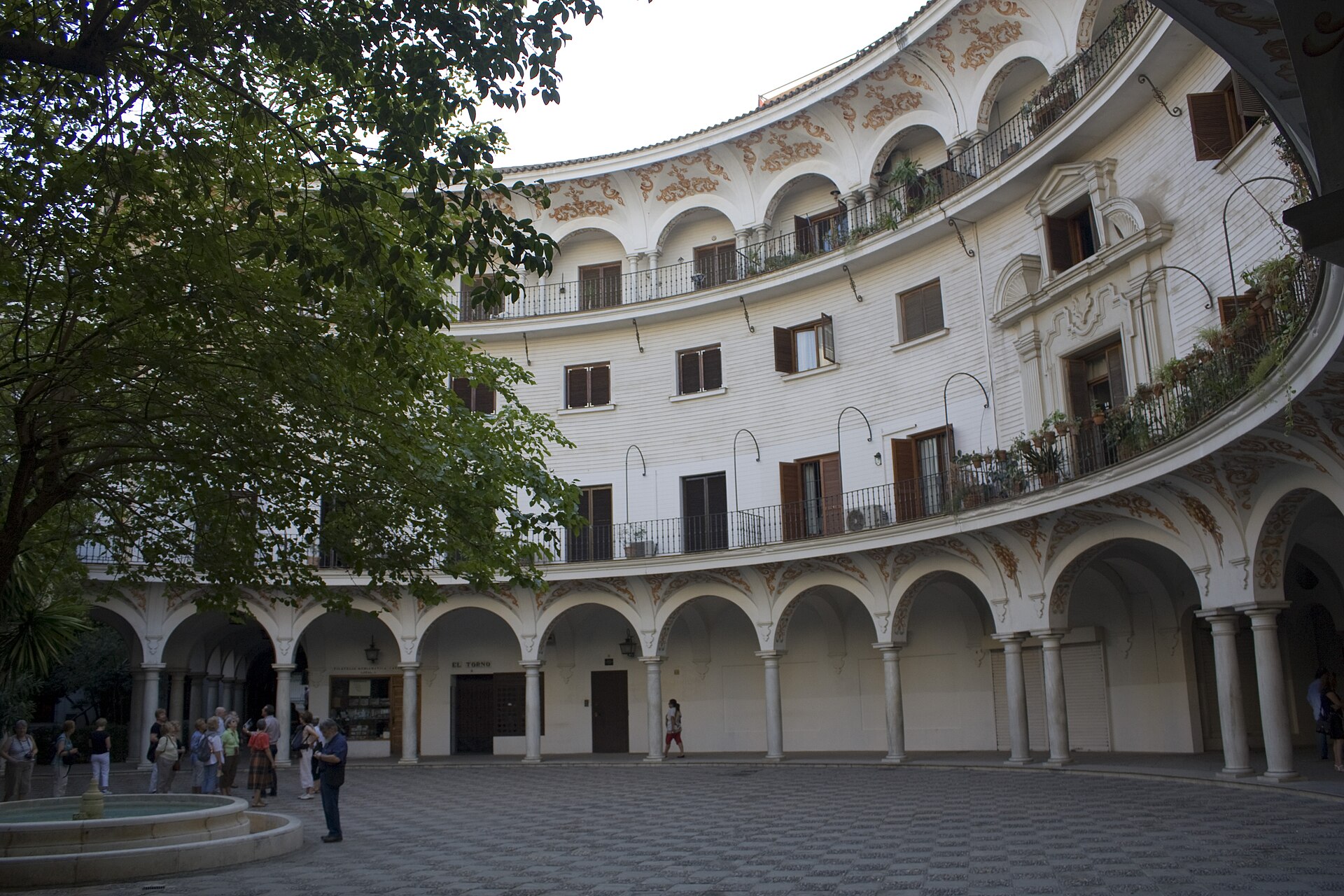
Hundreds of thousands of tourists walk within twenty metres of this square every year and never find it. The Plaza del Cabildo is hidden behind a curved row of buildings just south of the cathedral, accessible only through three narrow arched passageways that look like they lead to someone's private courtyard. Step through, and you find yourself in a perfect semicircular plaza with painted arches, a central fountain, and a serenity that feels impossible given how close you are to the cathedral crowds. The square was created in the 1930s when a convent on this site was demolished and the city decided to build a public space in the cleared lot. Architect Juan Talavera y Heredia designed the elegant curved colonnade in Seville's signature blend of Baroque and Regionalist styles, with arched openings painted in the ochre and white that defines the city's palette. The frescoed ceiling under the colonnade depicts allegorical scenes and is easy to miss if you do not look up. On Sunday mornings, the plaza hosts a small collectors' market where dealers sell old coins, stamps, postcards, and other ephemera. It is a far cry from the tourist shops lining the surrounding streets, and the atmosphere is pleasantly local — Sevillano collectors arguing amiably over the provenance of a Civil War medal or a stack of 1950s bullfighting posters. The rest of the week, the plaza is simply a quiet place to sit. The fountain murmurs, pigeons strut across the tiles, and you can look up at the walls of the cathedral rising above the rooftops and wonder how a space this peaceful exists in the middle of one of Spain's busiest tourist zones. The answer is that most people never find the entrance.
Puente de Isabel II (Triana Bridge)
Puente de Isabel II, 41001 Sevilla
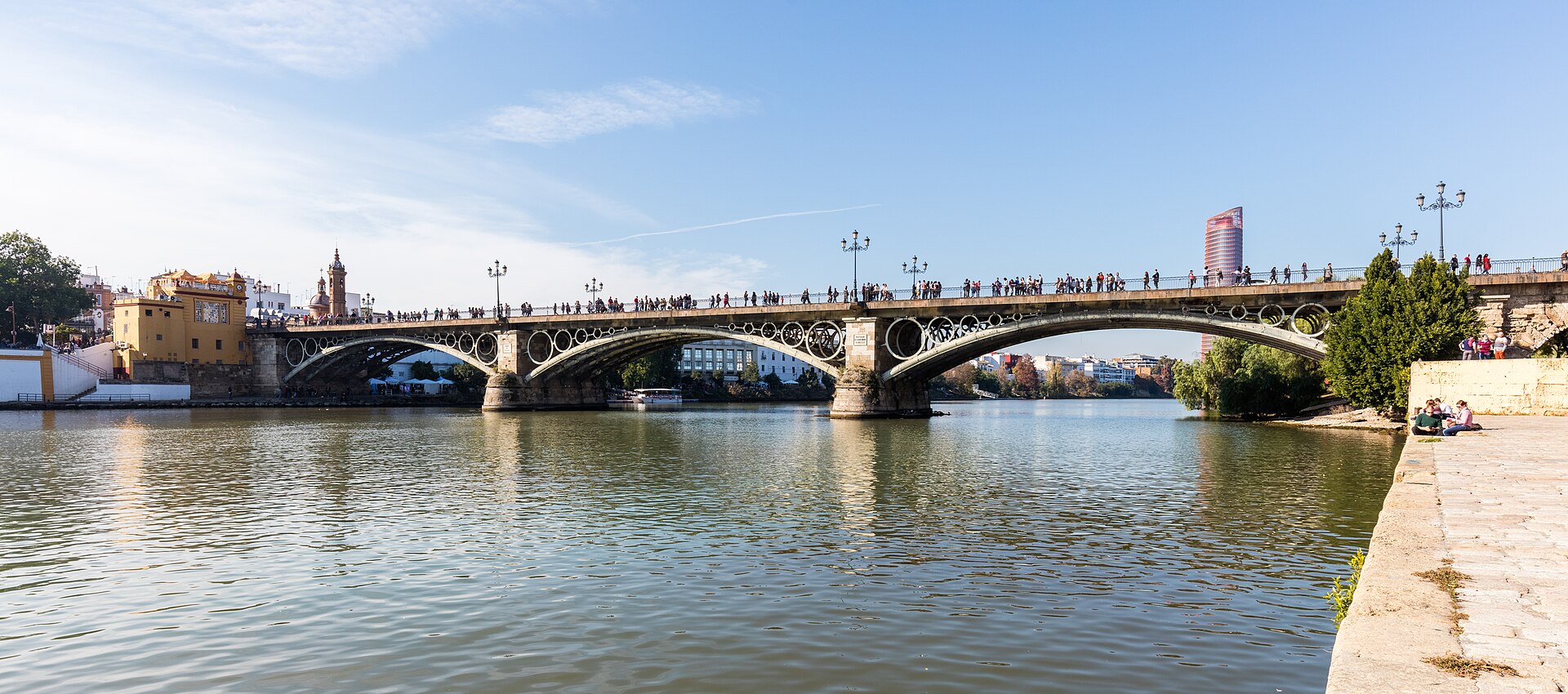
Every city with a river has a bridge that defines its identity, and for Seville that bridge is the Puente de Isabel II — known universally as the Triana Bridge. It connects the historic center to the Triana neighborhood, and crossing it has been a daily ritual for Sevillanos since it opened in 1852. Before this bridge existed, the only way across the Guadalquivir was a precarious pontoon bridge made of boats lashed together, which regularly broke apart during floods and had to be rebuilt. The iron truss bridge was designed by French engineers Gustave Steinacher and Ferdinand Bernadet, and its construction used material from the same foundries that later supplied components for other famous iron structures of the era. At about 150 metres long, it was an engineering achievement for mid-nineteenth-century Spain and was named for Queen Isabel II, who was on the throne at the time. The design is restrained and elegant — nothing like the decorative excess of the city's Baroque buildings — which makes it stand out against the Seville skyline. For Trianeros, the bridge is more than infrastructure; it is the boundary of their world. Triana has always considered itself separate from Seville proper — a working-class neighborhood with its own saints, its own flamenco traditions, and its own fierce pride. Crossing the bridge in either direction is a cultural transition, and the views from the middle span are among the most photographed in the city: the Torre del Oro to the south, the Giralda to the east, and the colorful facades of Calle Betis to the west. Stand on the bridge at sunset and watch the light hit the water. Rowers from local clubs train below, their oars cutting through the Guadalquivir's green current, while fishermen cast lines from the banks on both sides. It is daily life framed by history.
Real Alcázar
Patio de Banderas, s/n, 41004 Sevilla
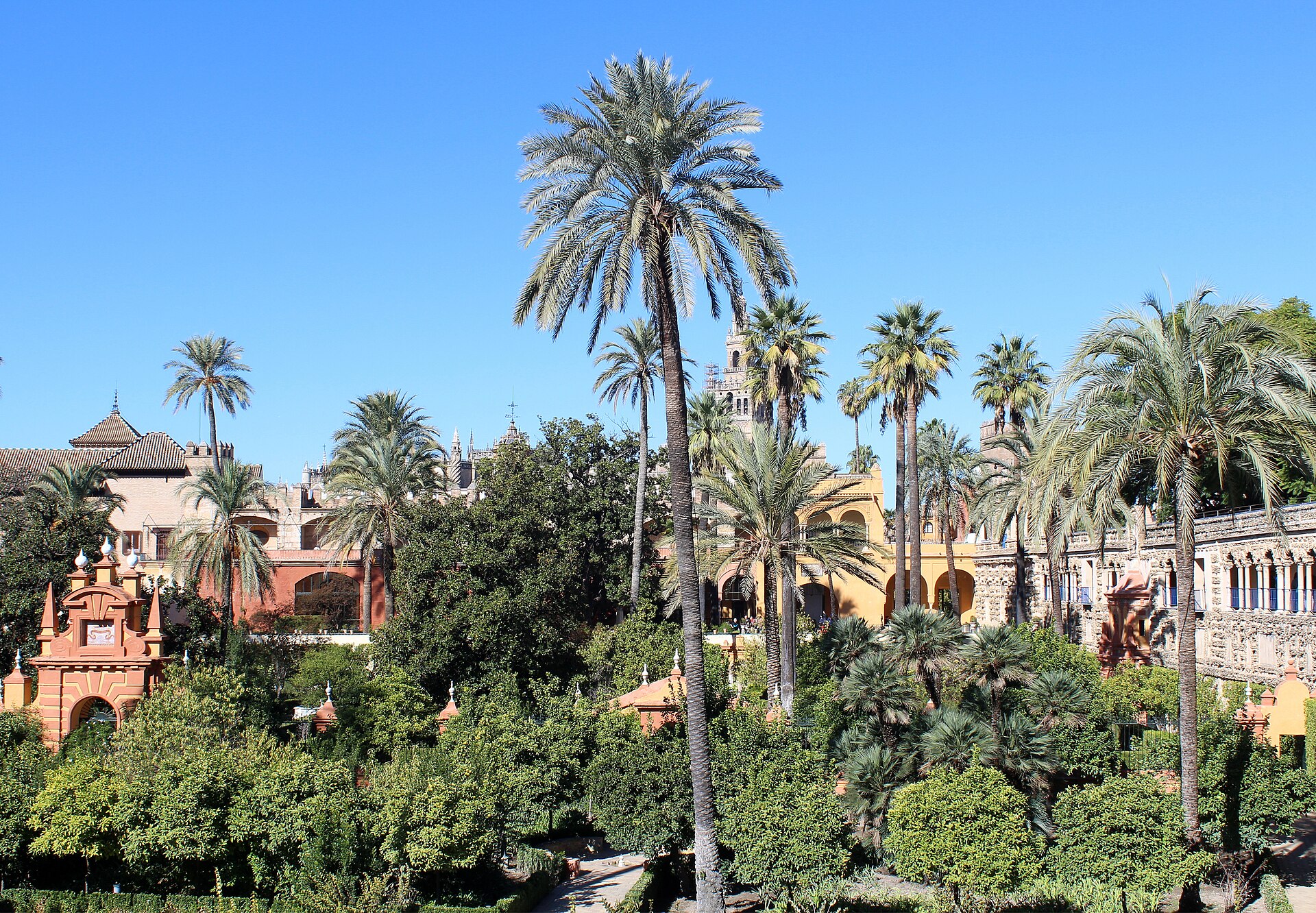
This palace has been continuously occupied by royalty for over a thousand years, making it one of the oldest royal residences still in active use anywhere in the world. The Spanish royal family still stays here when visiting Seville, sleeping in rooms whose foundations were laid by the Abbadid dynasty in the tenth century. Every ruler since has added, demolished, and redecorated something, which is why you can walk from a Moorish courtyard into a Gothic hall and then stumble into a Renaissance garden without ever leaving the building. The most jaw-dropping section is the Palacio de Don Pedro, built in the 1360s by King Pedro I — known to friends as "the Just" and to enemies as "the Cruel." Pedro hired Muslim craftsmen from Granada and Toledo to create a Mudejar masterpiece that rivals the Alhambra itself. The intricate stucco work, horseshoe arches, and geometric tilework were not relics of Moorish rule; they were commissioned by a Christian king who simply thought Islamic art was the most beautiful thing he had ever seen. The gardens sprawl across seven hectares of fountains, pavilions, and a hedge maze that was famously used as the Water Gardens of Dorne in Game of Thrones. Long before HBO arrived, Emperor Charles V walked these paths after his marriage here in 1526, and the mercury-filled pool in the Jardin de la Danza supposedly reflects light in ways that enchanted visitors for centuries. More than 2 million visitors pass through each year, but the Alcazar still feels surprisingly intimate. The Patio de las Doncellas — the Courtyard of the Maidens — is the masterpiece: a sunken garden surrounded by arches and tilework so precise that modern restorers needed laser scanners to understand the original geometry.
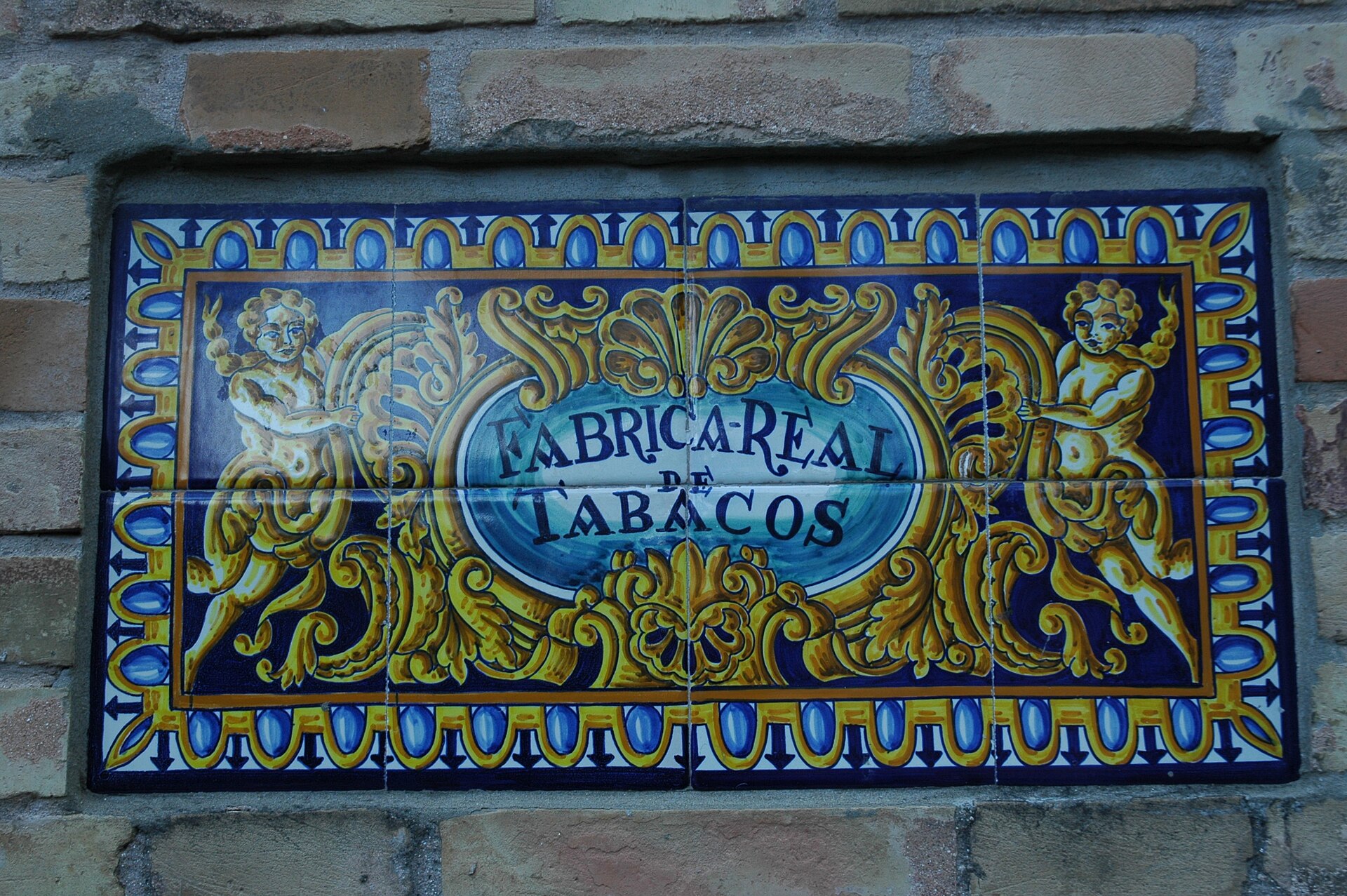
Real Fábrica de Tabacos
C. San Fernando, 4, 41004 Sevilla
This massive neoclassical fortress was not built to defend Seville from armies — it was built to defend tobacco from thieves. Constructed between 1728 and 1771 by order of the Spanish crown, the Royal Tobacco Factory was the largest industrial building in Spain and the second-largest building in the entire country after the Escorial monastery. Its walls were deliberately fortress-like, its moat genuinely filled with water, and guards patrolled the exits to prevent workers from smuggling out cigars in their clothing. At its peak in the early nineteenth century, the factory employed more than 10,000 workers, the vast majority of them women — the cigarreras — who rolled cigars by hand in enormous halls. These were tough, independent women in an era when female industrial labor was rare, and their reputation for beauty, fierceness, and occasional knife fights became legend across Europe. French writer Prosper Merimee visited in the 1840s, and the cigarreras inspired his novella Carmen, which Georges Bizet turned into one of the most performed operas in history. A statue of Carmen now stands outside the building. The factory continued producing tobacco until the 1950s, when operations moved to a modern facility on the outskirts of the city. The building was then handed to the University of Seville, which it houses today. Students attend lectures in former tobacco halls, and the grand staircase that once led to the director's offices now leads to the faculty library. Walk through the main entrance and look up: the coat of arms above the door features carved tobacco plants, a uniquely honest bit of architectural decoration. The interior courtyards are open to the public and give a sense of the building's absurd scale — you can walk for ten minutes without reaching the far wall.
Seville Cathedral & La Giralda
Av. de la Constitución, s/n, 41004 Sevilla
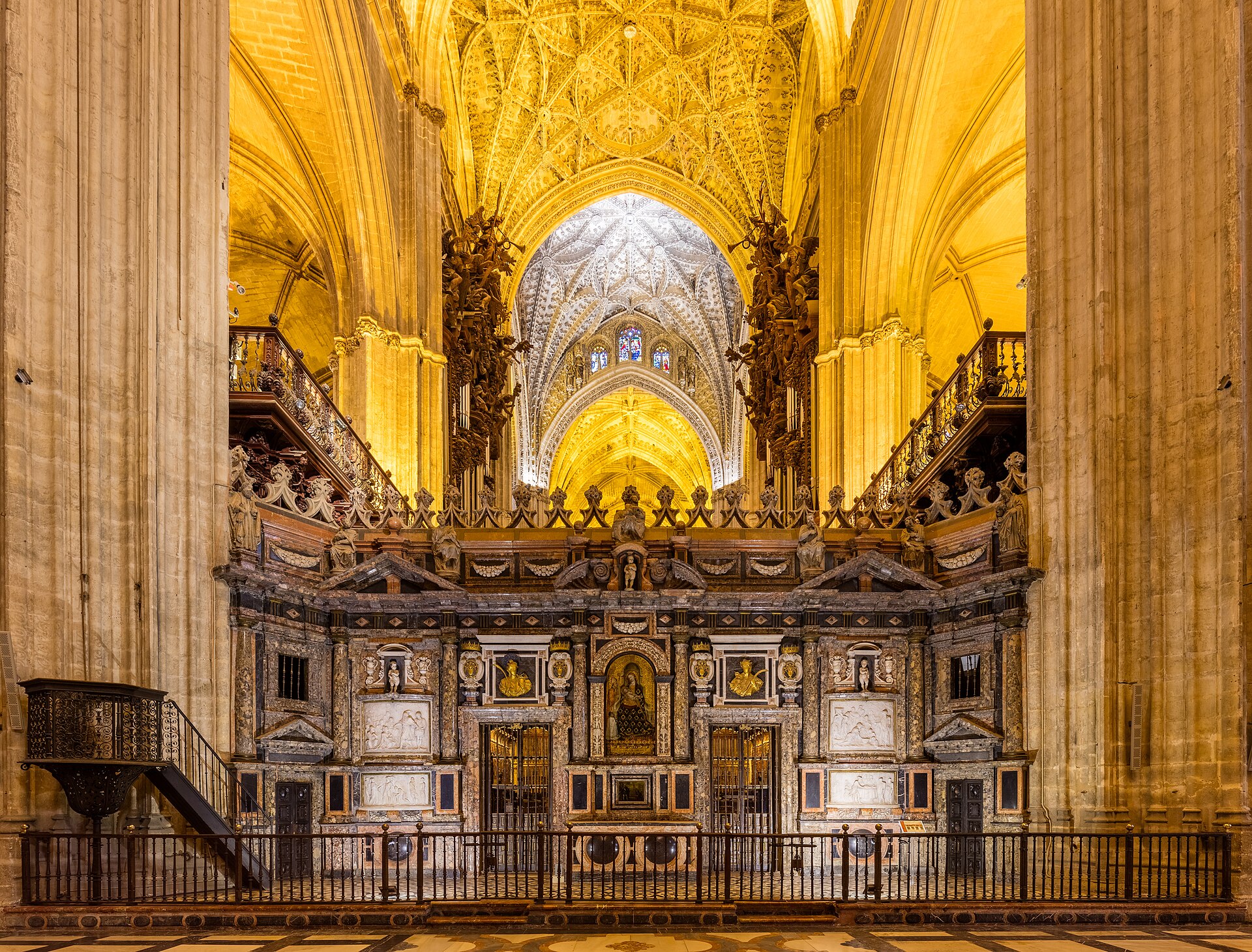
The clergy who commissioned this building in 1403 allegedly declared, "Let us build a church so great that those who see it finished will think we were mad." They may have succeeded. Seville Cathedral is the largest Gothic cathedral in the world by volume, stretching 127 metres long and 83 metres wide, with a central nave soaring 42 metres overhead. The whole project took just over a century to complete, rising on the footprint of the Almohad mosque that had stood here since 1182. The mosque is not entirely gone. The Patio de los Naranjos — the old ablutions courtyard — still holds its original fountain and rows of bitter orange trees, and the mosque's minaret survives as the cathedral's bell tower, La Giralda. Built in 1198 under the Almohad dynasty, the tower was so admired by the Christian conquerors that they kept it rather than tear it down. A Renaissance belfry was stacked on top in the sixteenth century, bringing its total height to 105 metres. Instead of stairs, the tower has 35 ramps spiraling through seven vaulted chambers — wide enough that the muezzin could ride a horse to the top. Christopher Columbus is buried here, though he took a scenic route to get there. His remains were shipped from Valladolid to Santo Domingo, then Havana, and finally back to Seville in 1898. The elaborate tomb in the transept shows four kings carrying his coffin, representing the kingdoms of Castile, Leon, Aragon, and Navarre. DNA tests in 2006 confirmed the bones are indeed his, settling a century-old dispute with the Dominican Republic. The cathedral and the adjacent Alcazar and Archivo de Indias were jointly declared a UNESCO World Heritage Site in 1987, forming one of the most remarkable clusters of historic architecture in Europe.
Torre del Oro
Paseo de Cristóbal Colón, 41001 Sevilla
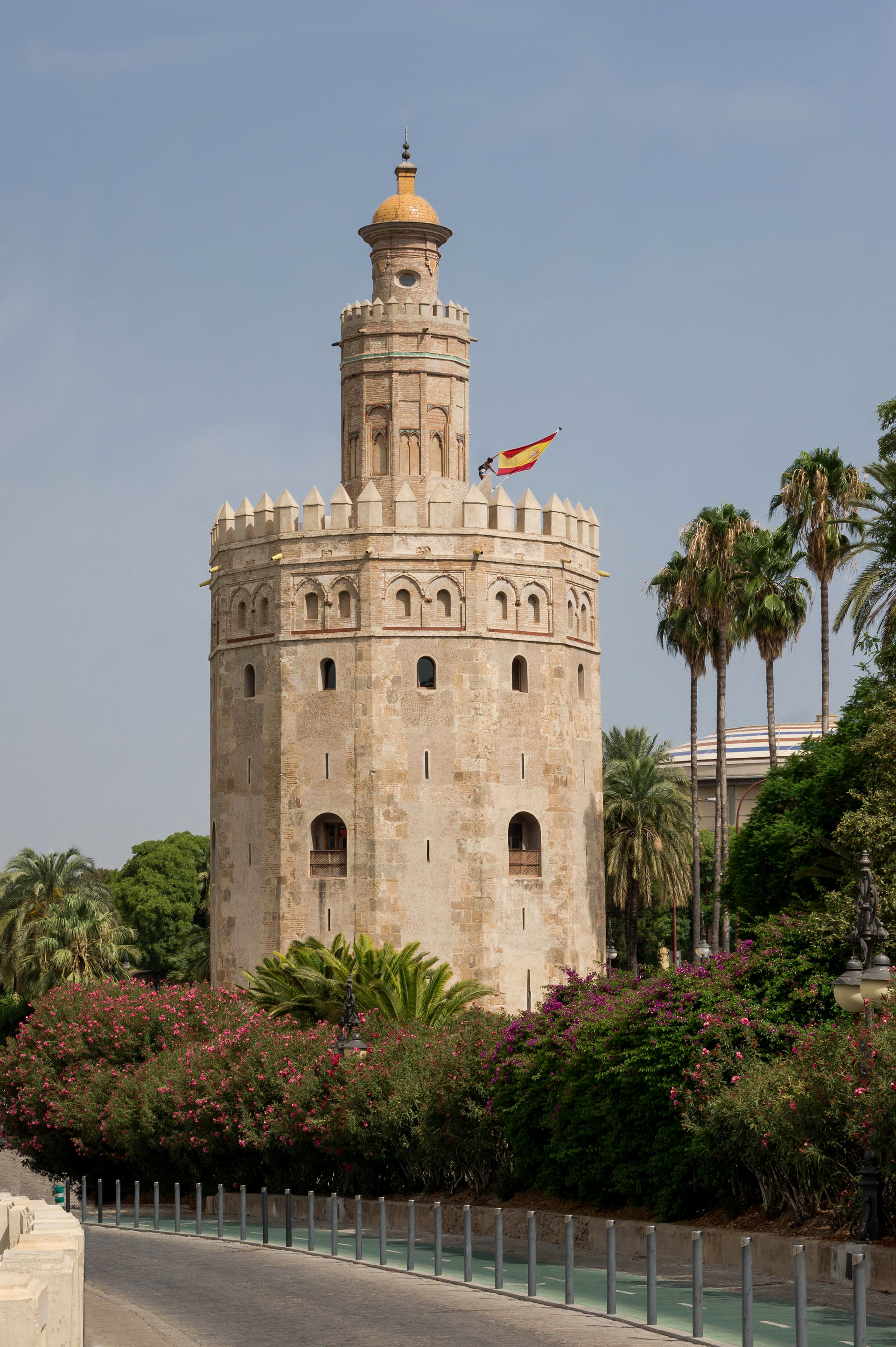
For eight centuries this twelve-sided tower has watched over the Guadalquivir River, and for most of that time its job was making sure nobody got in without permission. Built between 1220 and 1221 by the Almohad governor Abu al-Ulaa, the tower was part of a defensive system that included a massive iron chain stretched across the river to a matching tower on the opposite bank. Any enemy ship trying to reach the city would hit the chain and stall under a rain of arrows. The system worked until 1248, when the Castilian fleet under Admiral Ramon de Bonifaz smashed through it during the Reconquest of Seville. The name "Tower of Gold" has sparked debate for centuries. Some say it comes from the golden tiles that once covered the exterior, glinting in the Andalusian sun. Others claim it refers to the gold unloaded here from treasure ships returning from the Americas. The most prosaic explanation is that the tower's dodecagonal shape and limestone construction simply catch the sunset in a way that makes the whole thing glow. Whatever the reason, the name stuck. Today the tower houses a small but charming Naval Museum spread over three floors, documenting Seville's improbable career as a major port despite being 80 kilometres from the ocean. The Guadalquivir was navigable all the way to the city until the eighteenth century, making Seville the gateway to the New World. Every ship carrying gold, silver, and exotic goods from the Americas had to dock here and register its cargo. The third section at the top was added in 1760 and offers panoramic views of the river, Triana, and the city skyline. Visit at sunset for the full golden effect that gave the tower its name.
Triana
Barrio de Triana, 41010 Sevilla
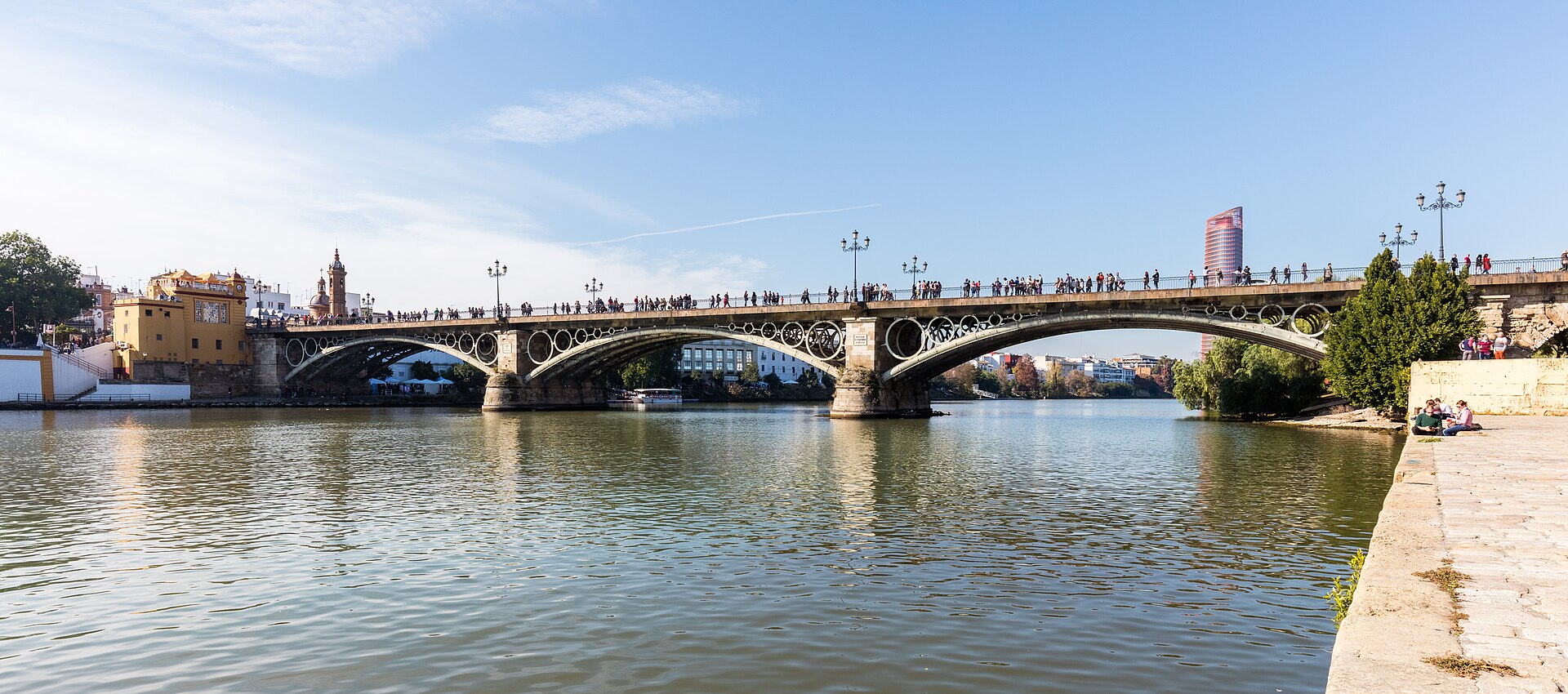
Cross the Guadalquivir on the Puente de Isabel II and you leave tourist Seville behind. Triana is the neighborhood that gave the world flamenco, and it has never let the rest of the city forget it. For centuries this was where the outsiders lived — sailors, potters, bullfighters, Romani communities, and the working-class families who made the tiles that decorate every grand building across the river. It was rough, it was loud, and it produced an art form born from that exact combination of hardship and defiance. The bridge itself is a piece of history: opened in 1852 and named for Queen Isabel II, its iron trusses were built in the same foundry that supplied parts for the Crystal Palace in London. Underneath the Triana end of the bridge, the ruins of the Castillo de San Jorge sit like a scar — this was the headquarters of the Spanish Inquisition in Seville from 1481 to 1785, where heretics were tried, imprisoned, and sentenced to burn. Today a small museum in the excavated foundations tells the story with unflinching honesty. Triana's ceramics tradition goes back to the fifteenth century, when Italian craftsman Francesco Niculoso Pisano arrived and revolutionized Andalusian tile-making. The Centro Ceramica Triana, housed in a former factory, preserves the neighborhood's artisan heritage, and you can still buy hand-painted azulejos from workshops along Calle Alfareria — the "potter's street." The real Triana experience is an evening at the Mercado de Triana, where the old market building built on the Inquisition ruins now houses tapas stalls serving everything from fried fish to Iberian ham. After that, find a bar on Calle Betis where the tables face the river and the city skyline glitters across the water.