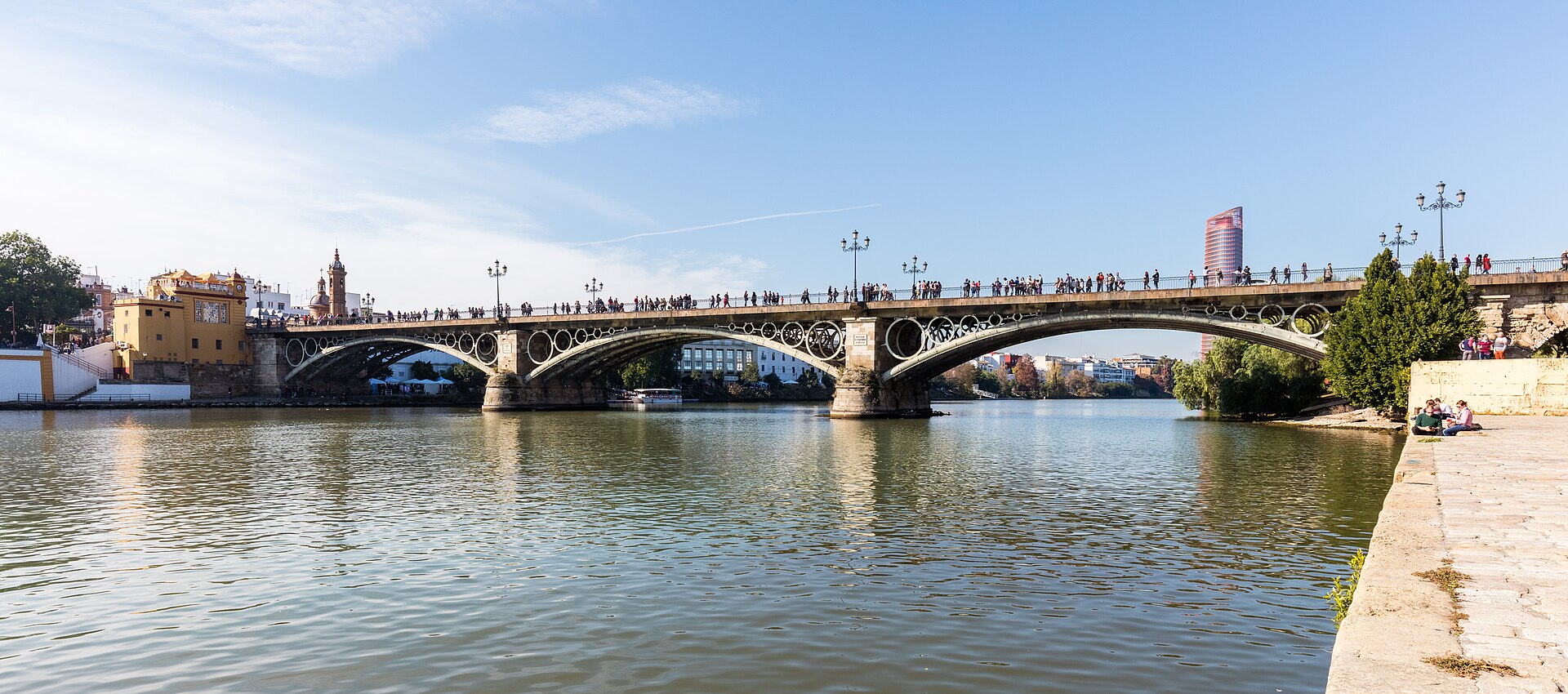
Cross the Guadalquivir on the Puente de Isabel II and you leave tourist Seville behind. Triana is the neighborhood that gave the world flamenco, and it has never let the rest of the city forget it. For centuries this was where the outsiders lived — sailors, potters, bullfighters, Romani communities, and the working-class families who made the tiles that decorate every grand building across the river. It was rough, it was loud, and it produced an art form born from that exact combination of hardship and defiance.
The bridge itself is a piece of history: opened in 1852 and named for Queen Isabel II, its iron trusses were built in the same foundry that supplied parts for the Crystal Palace in London. Underneath the Triana end of the bridge, the ruins of the Castillo de San Jorge sit like a scar — this was the headquarters of the Spanish Inquisition in Seville from 1481 to 1785, where heretics were tried, imprisoned, and sentenced to burn. Today a small museum in the excavated foundations tells the story with unflinching honesty.
Triana's ceramics tradition goes back to the fifteenth century, when Italian craftsman Francesco Niculoso Pisano arrived and revolutionized Andalusian tile-making. The Centro Ceramica Triana, housed in a former factory, preserves the neighborhood's artisan heritage, and you can still buy hand-painted azulejos from workshops along Calle Alfareria — the "potter's street."
The real Triana experience is an evening at the Mercado de Triana, where the old market building built on the Inquisition ruins now houses tapas stalls serving everything from fried fish to Iberian ham. After that, find a bar on Calle Betis where the tables face the river and the city skyline glitters across the water.
Verified Facts
Triana is widely considered the birthplace of flamenco, rooted in the neighborhood's Romani communities
The Castillo de San Jorge beneath the bridge served as the seat of the Spanish Inquisition from 1481 to 1785
Italian craftsman Francesco Niculoso Pisano arrived in the 15th century and revolutionized Andalusian ceramic tile production
The Puente de Isabel II opened in 1852 with iron trusses from the same foundry that supplied the Crystal Palace in London
Get walking directions
Barrio de Triana, 41010 Sevilla