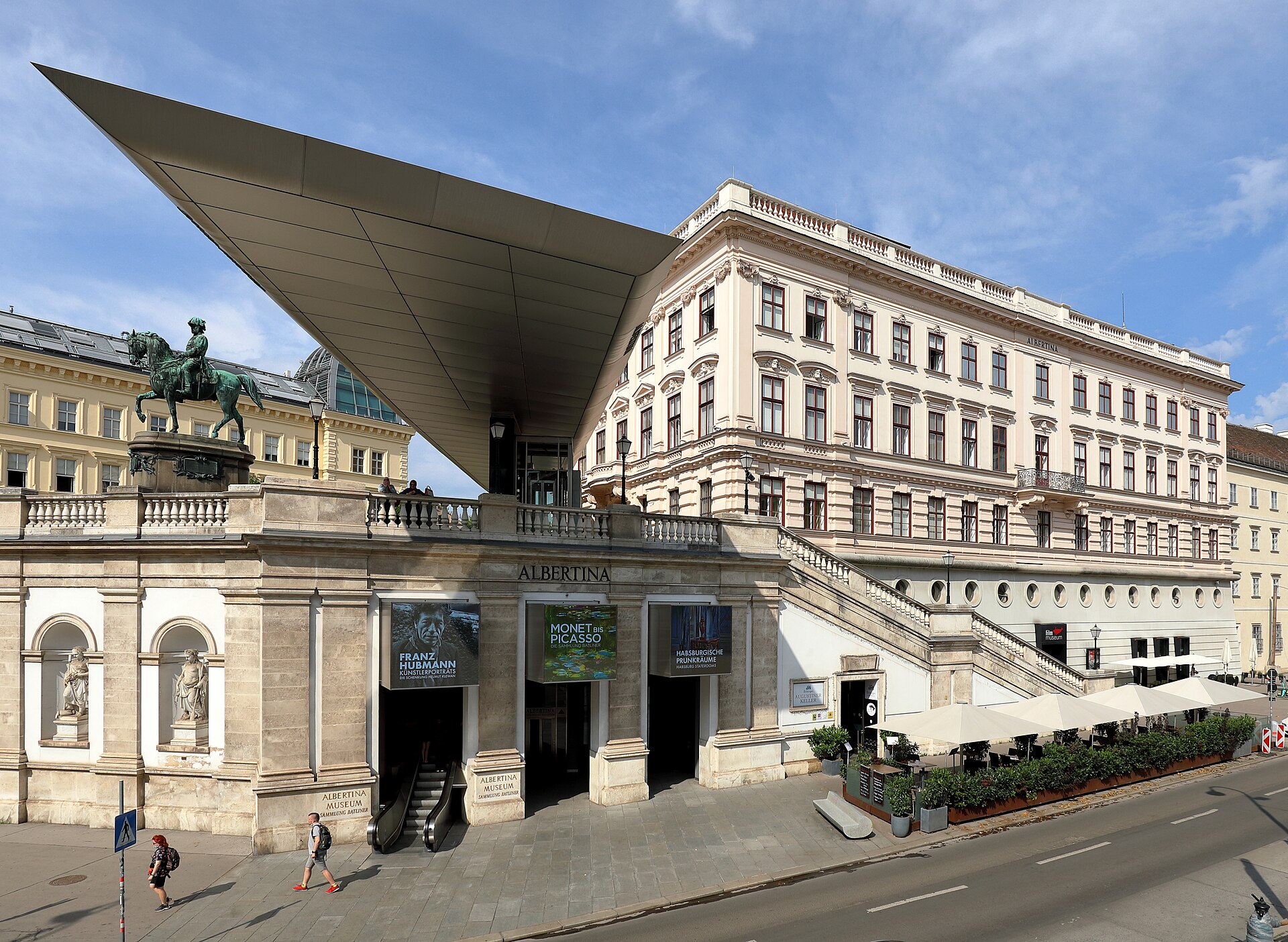
Duke Albert of Saxe-Teschen started collecting drawings in 1776 the way some people start collecting stamps — obsessively, expensively, and with impeccable taste. His collection became the Albertina, which today holds approximately 65,000 drawings and over one million prints spanning five centuries, making it one of the most comprehensive graphic art collections on the planet.
The star of the collection is Albrecht Dürer's "Young Hare," a watercolour from 1502 that's so precisely rendered you can count individual whiskers. The painting measures just 25 by 23 centimetres — small enough to hold in your hands — yet it anticipated scientific illustration by centuries. Emperor Rudolf II acquired it and brought it to the Habsburg collection, from where it eventually found its way to the Albertina. It's too fragile for permanent display, so catching it on show is something of an event.
The museum building itself is a palimpsest of Viennese power. Originally built as a palace for Archduchess Maria Christina — Maria Theresa's favourite daughter — it passed through various Habsburg hands before being nationalised and opened to the public as a state museum in 1919, when the empire dissolved. The 21 Habsburg State Rooms have been restored to their imperial glory: gilded mirrors, crystal chandeliers, and silk wallpaper in colours that would make a Pantone swatch card jealous.
The modern collection is equally strong. Monet to Picasso, Rothko to Rauschenberg — the Albertina pivoted from old masters to contemporary art with the kind of institutional flexibility that would make most museums envious. The rooftop terrace, added during a 2003 renovation, offers one of the best views over the Burggarten to the State Opera.
Verified Facts
Founded in 1776 by Duke Albert of Saxe-Teschen, the collection holds approximately 65,000 drawings and over one million prints
Dürer's "Young Hare" (1502) measures just 25 by 23 centimetres and was acquired by Emperor Rudolf II
The museum was nationalised and opened to the public in 1919 after the end of the Habsburg monarchy
The building contains 21 restored Habsburg State Rooms from the original palace
Get walking directions
Albertinapl. 1, 1010 Vienna