The Spanish Riding School exists because a 16th-century Habsburg grew up in Spain and missed his horses. Ferdinand I introduced Andalusian horses to the Viennese court around 1565, and the Habsburgs began breeding them at a stud farm in Lipica (now in Slovenia) from 1580. Five centuries later, the Lipizzaner stallions are still performing in the same Baroque riding hall, executing movements that were originally designed for battle but now look like the most elegant choreography ever performed on four legs.
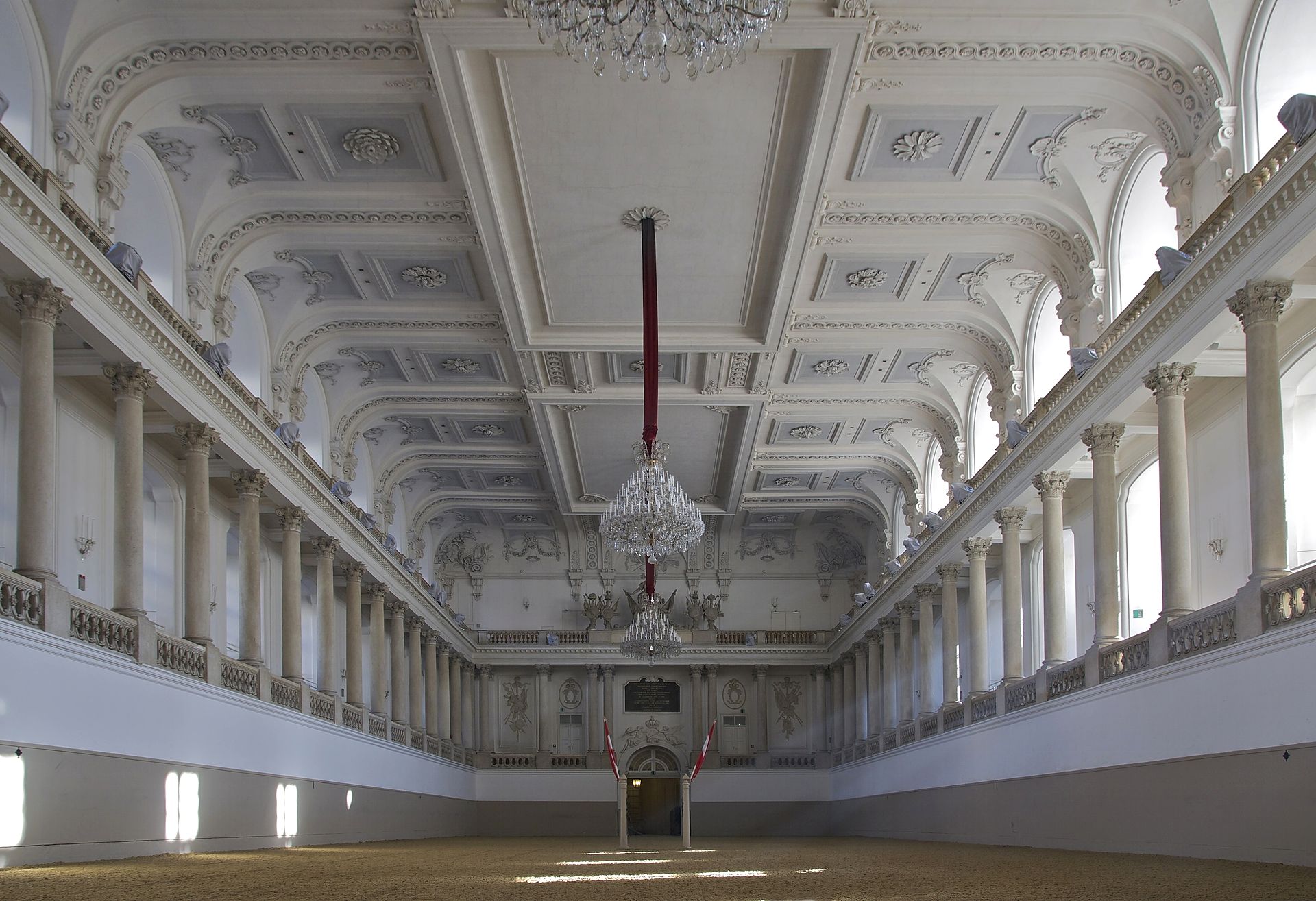
The Winter Riding School, built between 1729 and 1735, is where the magic happens. With white walls, crystal chandeliers, and a balcony supported by columns, it looks more like a ballroom than a stable — which is precisely the point. The Habsburgs believed that horsemanship was an art form on par with painting or music, and they built a venue to match that belief. A portrait of Charles VI hangs at one end; every rider salutes it before performing, maintaining a 300-year-old tradition.
The horses themselves are born dark brown or black and gradually turn white over six to ten years — which means the rare dark horse you might see performing is simply young, not a different breed. Training a Lipizzaner in the haute école takes between eight and twelve years, making each horse a living decade of institutional knowledge. The movements they perform — the levade, courbette, and capriole — were originally war manoeuvres: leaping, kicking, and rearing to unseat attackers.
This is the only institution in the world where classical haute école has been preserved unbroken since the Renaissance. UNESCO recognised both the riding school and the Lipizzaner breeding traditions as intangible cultural heritage. Every other European riding school was destroyed by revolution or war. Vienna's survived because, in the final days of World War II, General Patton personally ordered the rescue of the Lipizzaner stallions from advancing Soviet forces.
Verified Facts
Founded around 1565; Ferdinand I introduced Andalusian horses to Vienna, breeding began at Lipica in 1580
The Winter Riding School was built between 1729 and 1735 in the Hofburg
Lipizzaner horses are born dark and gradually turn white over six to ten years
It is the only institution in the world preserving classical haute école unbroken since the Renaissance, UNESCO-recognised
Get walking directions
Michaelerplatz 1, 1010 Vienna