Vienna's Central Cemetery is the second-largest cemetery in Europe by area and holds roughly three million burials across 2.5 square kilometres — meaning the dead outnumber the living in Vienna by a comfortable margin. When it opened in 1874, Viennese citizens complained it was too far from the city centre. "Well," someone supposedly replied, "but it's nice and far for the residents." The Viennese sense of humour about death is world-class.
Group 32A is the reason most people visit: a cluster of honorary graves containing the greatest concentration of musical genius in any single location on Earth. Beethoven, Schubert, Brahms, and Johann Strauss II lie within metres of each other, their graves marked by elaborate monuments. Mozart has a cenotaph here — his actual burial site at St. Marx Cemetery was unmarked, so in 1891, a hundred years after his death, the memorial was moved to the Zentralfriedhof to keep him in good company.
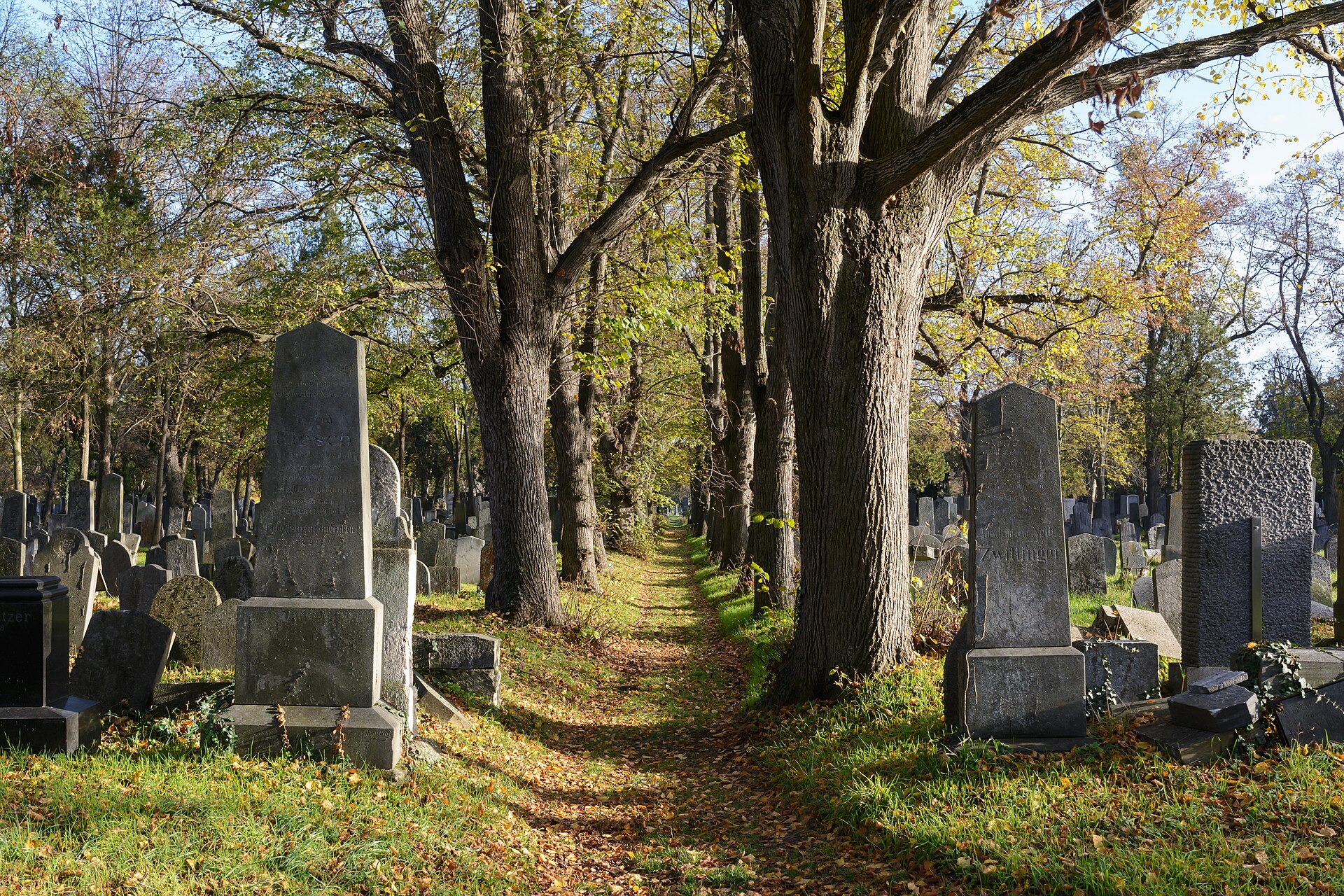
The cemetery's architecture is as grand as the people it contains. The Karl-Lueger-Kirche, the domed Art Nouveau church at the centre, was designed by Max Hegele and completed in 1911. The grounds feature Jewish, Protestant, Orthodox, and Islamic sections, reflecting the cosmopolitan empire that Vienna once governed. The old Jewish section, devastated during Kristallnacht and decades of neglect, has an eerie beauty — mature trees growing through cracked headstones, nature reclaiming what history tried to destroy.
Deer wander the outer reaches. Foxes are common at dusk. The Zentralfriedhof is as much a park as a cemetery, and Viennese treat it accordingly — jogging through the paths, walking dogs, sitting on benches with coffee. Death in Vienna isn't morbid; it's just another neighbourhood.
Verified Facts
The Zentralfriedhof spans 2.5 square kilometres with approximately 330,000 graves and 3 million burials
Beethoven, Schubert, Brahms, and Johann Strauss II are buried in Group 32A
Mozart's cenotaph was moved from St. Marx Cemetery to the Zentralfriedhof in 1891
The Karl-Lueger-Kirche was designed by Max Hegele and completed in 1911 in Art Nouveau style
Get walking directions
Simmeringer Hauptstraße 234, 1110 Vienna